
/https://tf-cmsv2-journeys-media.s3.amazonaws.com/filer/75/22/7522eccf-2b87-43ea-9ad4-440d8ff7d012/cze_prague_charlesbridge_ss_1481738702_copy.jpg)
Historic Cities of Central Europe
16 days from $8,097 | includes airfare, taxes and all fees
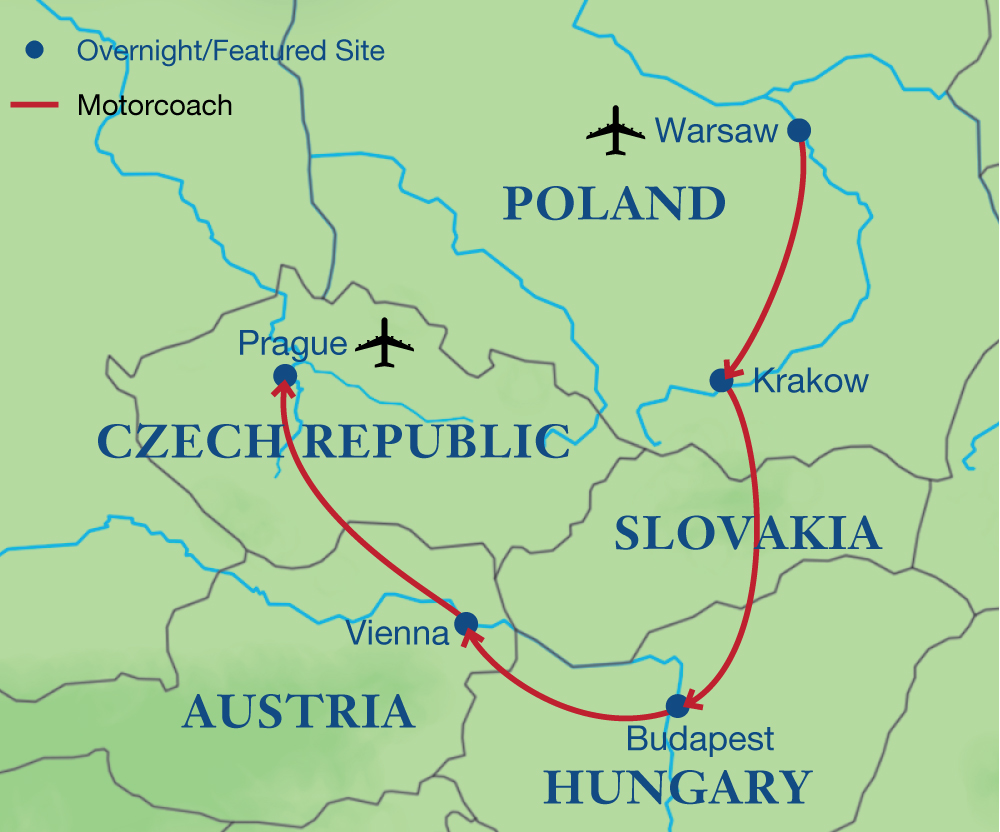
Featuring Krakow, Budapest, Vienna, and Prague
Embark on a journey through Eastern and Central Europe that celebrates the culture and history of five distinct countries. Encounter the extraordinary architecture of Warsaw and Krakow, and travel through Slovakia to majestic Budapest. Explore the legacy of the Hapsburgs in Vienna and cap off your experience amid the fabled spires of Prague. Soak up local traditions, meeting artisans, savoring culinary specialties, attending concerts, and enjoying curator-led museum tours.

Highlights
- Poland: Experience a range of World Heritage sites, including the Old Towns of Warsaw and Kraków, the 700-year-old Wieliczka Salt Mine, and the haunting camps of Auschwitz and Birkenau. Soak up Poland’s classical music traditions at a private piano recital.
- Hungary: Explore the stunning twin cities of Buda and Pest on guided tours, and take a curator-led tour of the Hungarian National Gallery. Visit art galleries and artisan shops in the hilltown of Szentendre.
- Austria: Follow the Danube past medieval castles on the way to Vienna. Trace the footsteps of imperial Habsburgs on tours of the opera house and Schönbrunn Palace, and attend a concert of classical music. Venture to the Vienna Woods, once a royal hunting ground, and visit the spa town of Baden, the former summer residence of Habsburg monarchs.
- The Czech Republic: Immerse yourself in the fairytale city of Prague. Tour the Hradčany castle district and the Jewish area of Josefov, and visit the privately owned Lobkowicz Palace to see an impressive collection of European art and artifacts. Enjoy time at leisure to explore on your own.
The capitals of Old World Europe tour was the most thought-provoking and emotionally intense tour I've ever experienced. It will live on in my memory after the others have faded.
— Sylvia L.
/https://tf-cmsv2-journeys-media.s3.amazonaws.com/filer/f5/54/f5544df4-5c69-4145-9766-02707995ee3c/hng_budapest_parliament_moody_ist_000033604380.gif)
Itinerary
To see itinerary, please click on an option below.
Days 1–2 — Depart the U.S. for Warsaw, Poland
Fly overnight to Warsaw and transfer to your centrally located hotel upon arrival. Meet your fellow travelers at a welcome dinner at the hotel tonight. (D)
Day 3 — Warsaw
Largely destroyed by the Nazis during World War II, the historic center of Warsaw was carefully rebuilt in the years that followed, its churches and palaces restored to their original glory. With the fall of Communism, the city became a dynamic and progressive capital while retaining much of its distinct old world character. Delve into the Historic Center of Warsaw, now a World Heritage site, on a guided tour that includes the Old Town and its remarkable architecture, the Royal Castle, the Jewish Cemetery, and the evocative remnants of the Warsaw Ghetto. In the evening, enjoy a private classical piano recital. (B)
Day 4 — Krakow
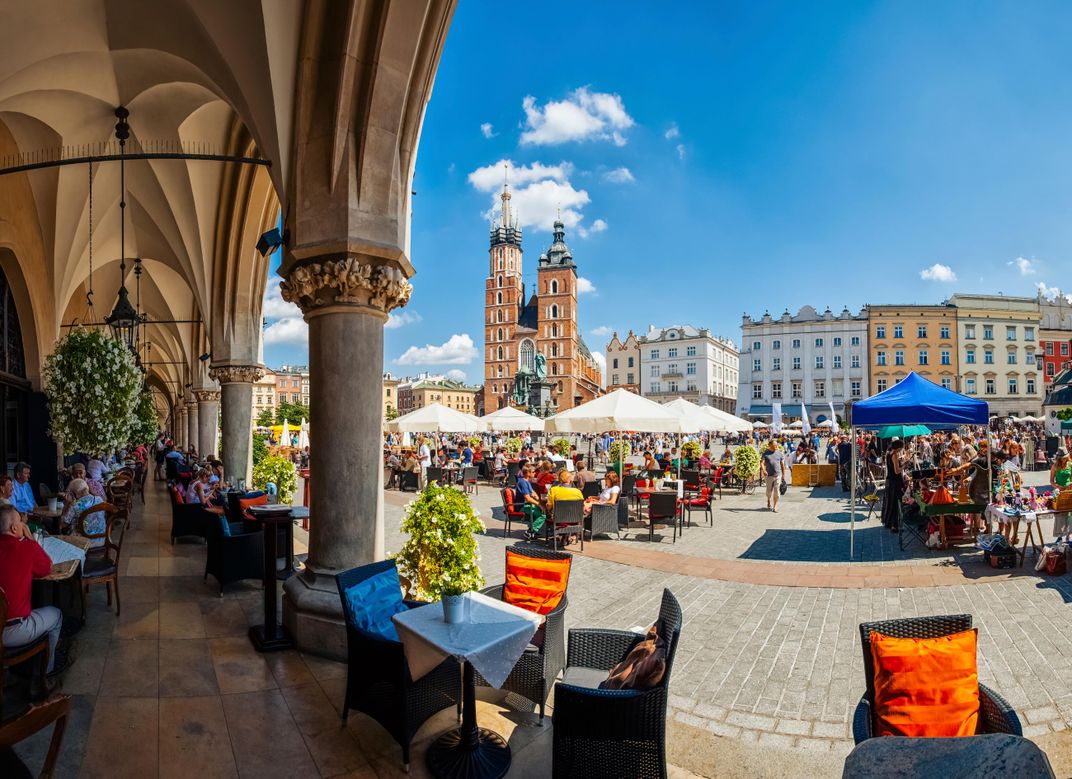
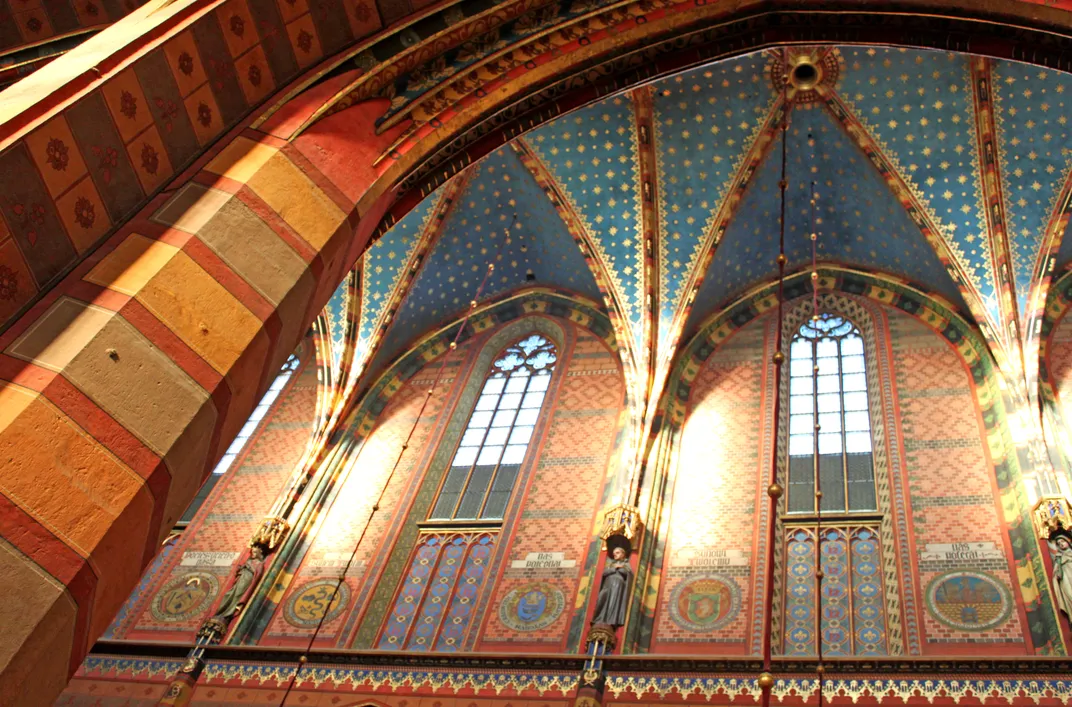
Travel south to Krakow, a thriving hub of Polish culture that served as the country’s royal capital for centuries. Its charming Old Town is a World Heritage site that illustrates the city’s tumultuous history of prosperity and calamity, and the Main Market Square is the largest medieval square in Europe. Explore St. Mary’s Church, famous for its hand-carved wooden altarpiece; the Royal Chambers of Wawel Castle, the seat of Poland’s monarchs for more than 500 years; and Wawel Cathedral, Poland’s national sanctuary. The remainder of the day is yours to discover this delightful city at your own pace. (B,D)
Day 5 — Auschwitz and Krakow
Trace some of history’s darkest moments on a visit to Auschwitz (Oswiecim in Polish) and Birkenau this morning. Tour the grounds of the concentration camps, where the original prison blocks have been converted to museum spaces that display poignant reminders of those who lived and were killed here. Return to Krakow in the late afternoon and explore the city on your own. (B,L)
Day 6 — Krakow and Wieliczka
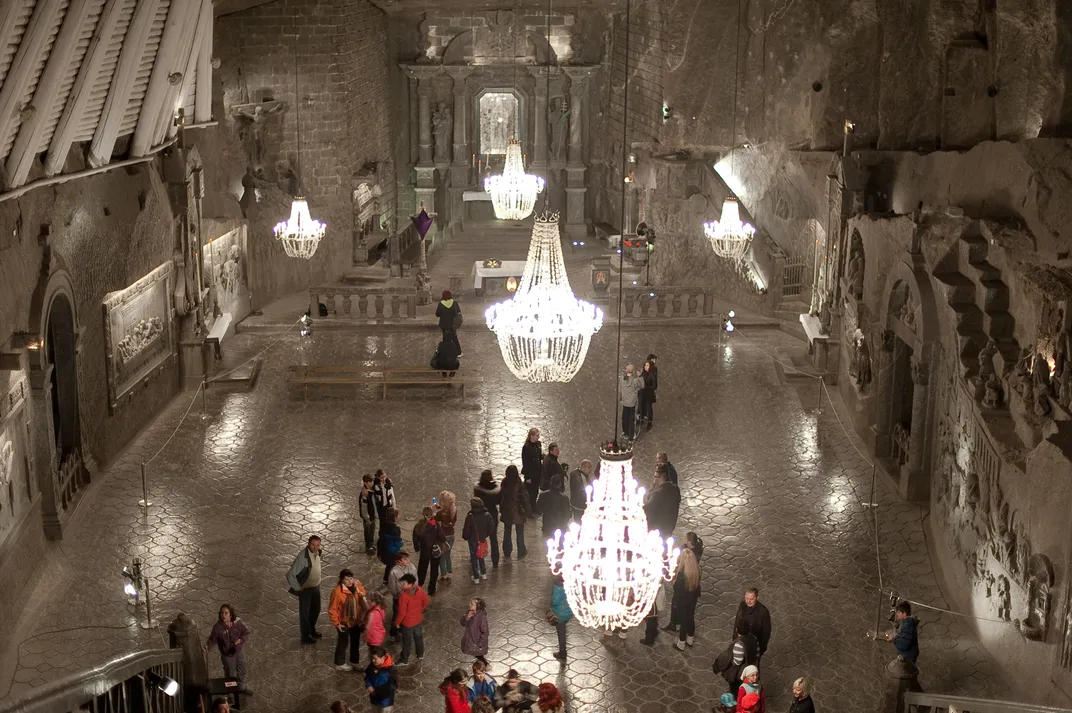
Descend into the Wieliczka Salt Mines, a maze of 700-year old tunnels that stretch nearly 200 miles. Marvel at rock-salt wonders of this World Heritage site, which include statues of historical figures sculpted by miners and contemporary artists, as well as an immense chamber deep underground that houses the Chapel of Saint Kinga. Carved into the rock salt, the chapel boasts a salt chandelier and carving of The Last Supper. The afternoon is free for independent exploration in Krakow. (B)
Day 7 — Slovakia/Budapest, Hungary
Journey south today through the snowcapped Tatra Mountains into Slovakia, where you stop for lunch. Early this evening, reach our hotel in Budapest’s elegant Castle District located in the Buda side of the Danube River. Gather for dinner together this evening. (B,L,D)
Day 8 — Budapest
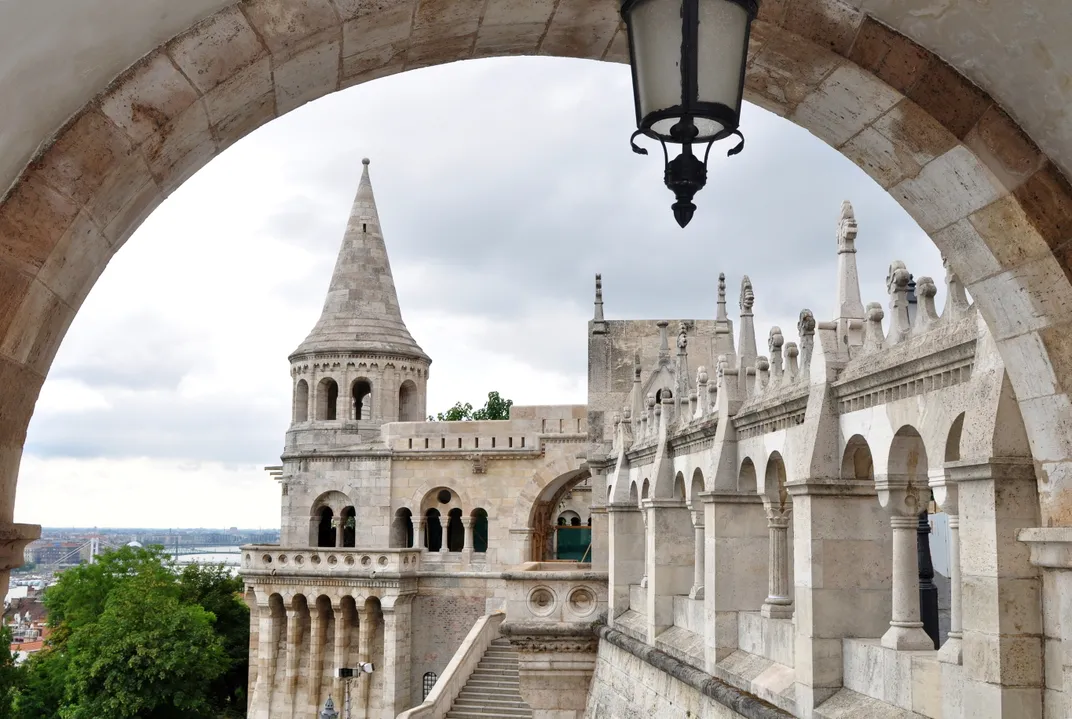
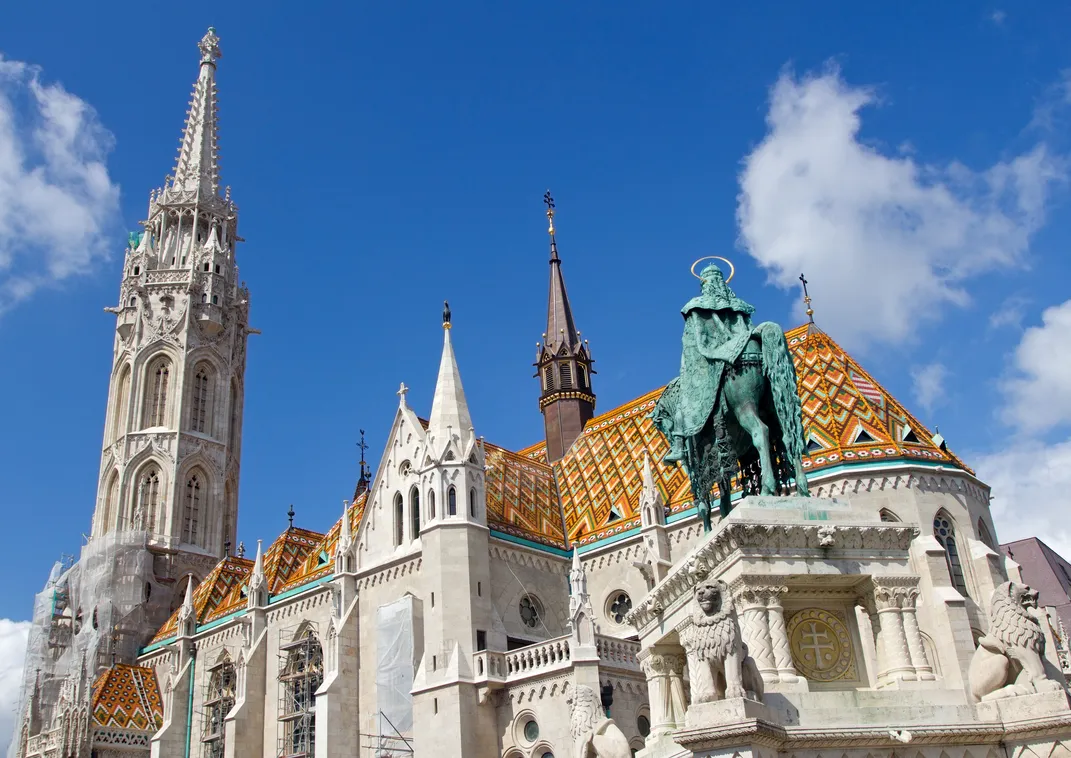
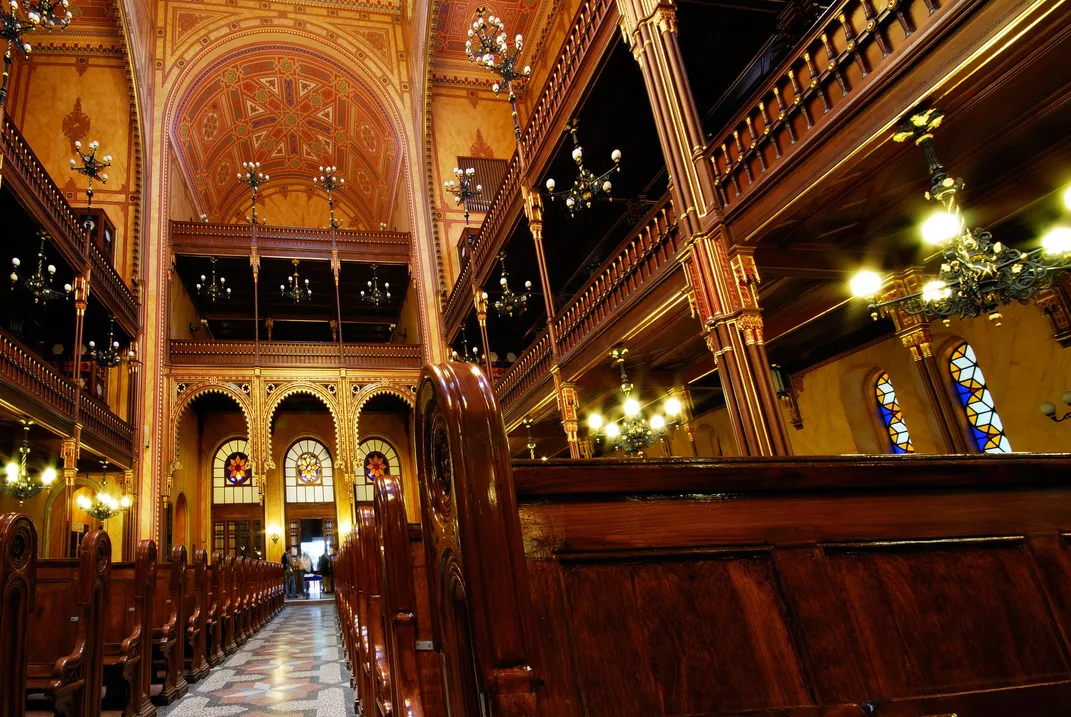
Flanking both sides of the Danube, Budapest is a beautiful city with a rich cultural and historical heritage. On a tour of hilly Buda, explore the magnificent Matthias Church, scene of numerous Habsburg coronations, and stroll around the Fisherman’s Bastion for outstanding views across the Danube to Pest. Visit the Dohany Street Synagogue, where Franz Liszt and Camille Saint-Saëns once performed, and enjoy a curator-led tour of the prestigious Hungarian National Gallery. Tonight, savor a typical Hungarian dinner at a local restaurant. (B,D)
Day 9 — Budapest
Enjoy a full day to discover the “Paris of the east” at your leisure. You might wander amid the bustling stalls of the Central Market Hall and savor a traditional dish, or visit one of the thermal baths for which the city is famous. (B)
Day 10 — Danube Bend and Vienna, Austria
Travel through the lovely countryside of Western Transdanubia en route to Vienna and take in the scenic views of forested hills, medieval castles, and the meandering Danube. Stop to visit Szentendre, a charming small town with inviting artisan shops and galleries, and a museum displaying the work of acclaimed ceramicist Margit Kovacs. (B,L)
Day 11 — Vienna
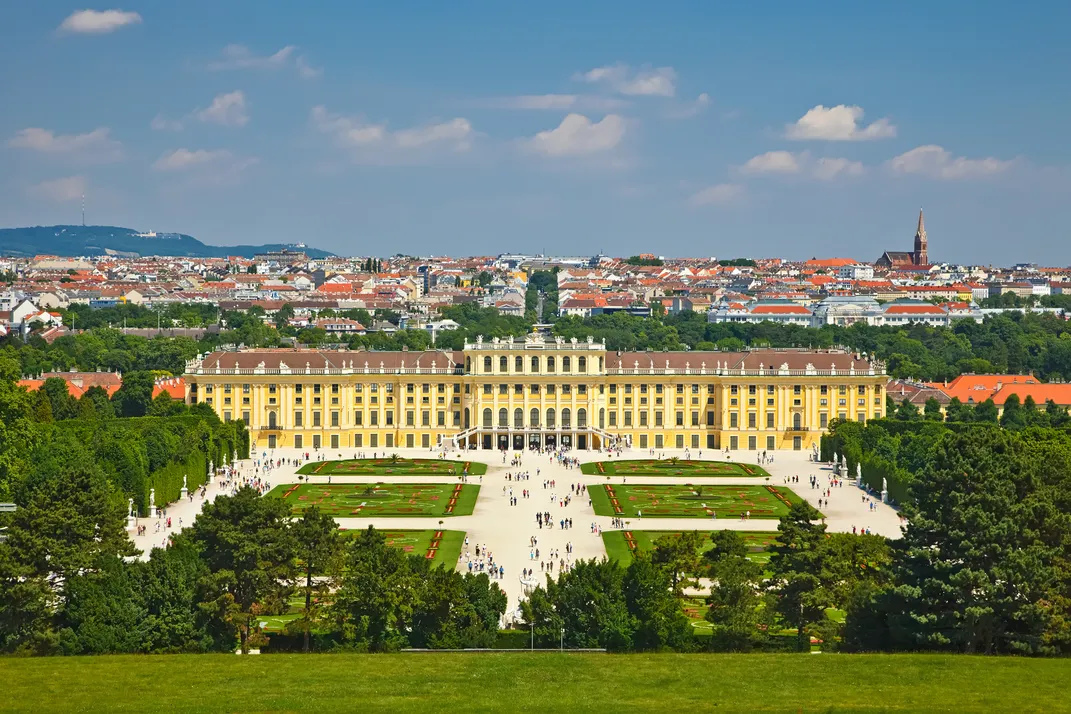
Follow the footsteps of imperial Habsburgs as you explore the ornate Vienna Opera House and majestic Schönbrunn Palace, which richly demonstrates the tastes and aspirations of Habsburg royalty. This evening, sample the flavors of Vienna with a traditional Wiener schnitzel, then enjoy a concert of classical music. (B,D)
Day 12 — Vienna Woods
Set out on an excursion to the Vienna Woods, once a royal hunting ground outside the city and now a UNESCO Biosphere that’s home to a rich diversity of birdlife and plants. Then visit the medieval abbey of Heiligenkreuz, one of the oldest continuously occupied Cistercian monasteries in the world, and continue to the spa town of Baden, once the summer residence of Habsburg monarchs. (B)
Day 13 — Prague, Czech Republic
Depart for Prague, the enchanting capital of the Czech Republic, and arrive in the late afternoon. Brimming with magnificent historic monuments, medieval architecture, and art, Prague has long been one of Europe’s capitals of culture. Take the rest of the day to get acquainted with this wondrous city on your own or join an informal walk with your tour director through the stunning Old Town, a World Heritage site. (B,L)
Day 14 — Prague
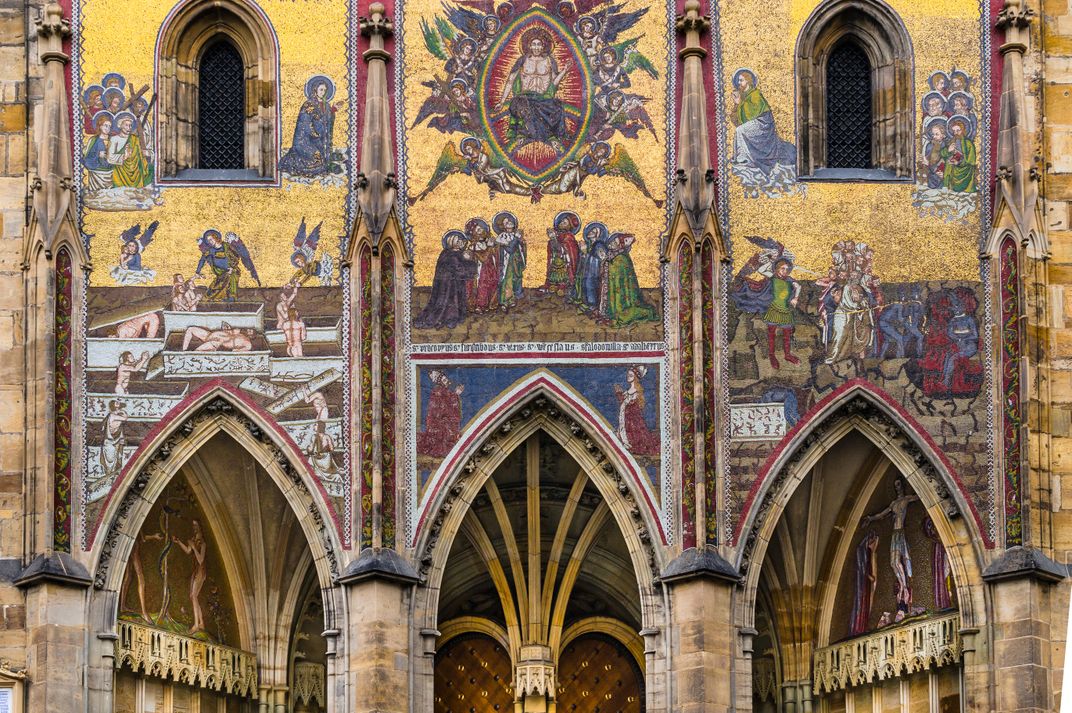
Spend the morning exploring the Hradcany castle district, home of the distinctive 9th-century Prague Castle, the seat of the Czech president, which towers above the Vltava River. Considered the biggest ancient castle in the world, Prague Castle proudly displays virtually every architectural style of the last millennium. Continue to St. Vitus Cathedral, a Gothic masterpiece that houses the tombs of many Bohemian kings; then enjoy a stroll along Golden Lane. The remainder of the day is yours to pursue your own interests in Prague. (B)
Day 15 — Prague
Step into history in Josefov, Prague’s Jewish ghetto, founded by 10th-century Jewish tradesmen. Visit the historic Old Jewish cemetery and several of the once-thriving synagogues that are now part of the Jewish Museum. Take a tour of the 16th-century Lobkowicz Palace, the only privately owned palace within Prague Castle, and browse its impressive collection of Bohemian and European art and artifacts. Tonight celebrate your Eastern European adventure during a festive farewell dinner at a local restaurant. (B,D)
Day 16 — Depart Prague for the U.S.
Following a very early breakfast, transfer to the airport for your return flights to the U.S. (B)
Included meals are denoted as follows: Breakfast (B), Lunch (L), Reception (R), Dinner (D)
/https://tf-cmsv2-journeys-media.s3.amazonaws.com/filer/75/22/7522eccf-2b87-43ea-9ad4-440d8ff7d012/cze_prague_charlesbridge_ss_1481738702_copy.jpg)
/https://tf-cmsv2-journeys-media.s3.amazonaws.com/filer/75/22/7522eccf-2b87-43ea-9ad4-440d8ff7d012/cze_prague_charlesbridge_ss_1481738702_copy.jpg)
/https://tf-cmsv2-journeys-media.s3.amazonaws.com/filer/f5/54/f5544df4-5c69-4145-9766-02707995ee3c/hng_budapest_parliament_moody_ist_000033604380.gif)
/https://tf-cmsv2-journeys-media.s3.amazonaws.com/filer_public/1b/6a/1b6a3548-f3a2-46c4-b335-229289729d50/aut_vienna_mozartstatue_burggartenpark_ist_1702787564.jpg)
/https://tf-cmsv2-journeys-media.s3.amazonaws.com/filer/41/e6/41e6afbd-5a61-4e90-8700-c45ef2148632/cze_prague_clockmainsq_ist-650696700.jpg)
/https://tf-cmsv2-journeys-media.s3.amazonaws.com/filer/8a/c4/8ac4f162-6c6b-4583-87a9-0a72060fd0cc/hng_budapest_danubeparl_ist_65080443_xlarge.jpg)
/https://tf-cmsv2-journeys-media.s3.amazonaws.com/filer/ea/d6/ead605c2-f380-4c6c-b72d-7350eebc1e3b/pol_krakow_mainsq_ist_580115446.jpg)
/https://tf-cmsv2-journeys-media.s3.amazonaws.com/filer/eb/98/eb988579-b107-4d0a-ae91-43f69ac73c61/pol_krakow_mainsquare_dt_l_32951606.jpg)
/https://tf-cmsv2-journeys-media.s3.amazonaws.com/filer/f6/ca/f6ca8685-cda6-4f2a-92c2-cd2d66388cc8/pol_warsaw_royalcastlesq_ss_09.jpg)
/https://tf-cmsv2-journeys-media.s3.amazonaws.com/filer_public/06/86/0686f778-92f4-404b-b0cd-9e90f7e84895/aut_vienna_cityfromroofofststephenscathedral_ist_27052244.jpg)
/https://tf-cmsv2-journeys-media.s3.amazonaws.com/filer/66/dc/66dc250b-30a5-448c-8ecd-8f70a63d4f29/aut_vienna_ststephenscathedral_ist_499122504.jpg)
/https://tf-cmsv2-journeys-media.s3.amazonaws.com/filer_public/b4/3e/b43e49d1-a7c4-4b9a-b1a5-60157285dbec/aut_vienna_viennastateopera_viennatb_christianstemper_40519.jpg)
/https://tf-cmsv2-journeys-media.s3.amazonaws.com/filer/e7/27/e7272561-d22f-40db-a8b7-a84914dd8594/cze_prague_castle_dt_m_71735013.jpg)
/https://tf-cmsv2-journeys-media.s3.amazonaws.com/filer/0f/fb/0ffb5380-94c6-4e37-8604-c55a06b6c415/cze_prague_jewish_museum_dt_m_9857320.jpg)
/https://tf-cmsv2-journeys-media.s3.amazonaws.com/filer/89/d9/89d94145-ec86-4f5d-9eb3-28966a1f872d/cze_prague_charlesbridge_dt_l_53278753.jpg)
Optional Extension
Post-Tour Ext.: Berlin
Berlin Post-Tour Extension— 4 Days, 3 Nights
Explore the cosmopolitan German capital— a city of art, culture, and history— as you wish.
Day 1 – Prague/Berlin, Germany
Board a morning train for Berlin, arriving early in the afternoon. Check into your hotel and enjoy the remainder of the day to discover Germany’s cultural capital as you wish. (B)
The Westin Grand Berlin (May 5, 2026 and August 25, 2026 departures)
Days 2-3 – Berlin
Enjoy two full days to explore one of the most exciting, eclectic, and historic cities in Europe. Hail a cab or use Berlin’s underground subway (the “U-Bahn”) to experience everything Berlin has to offer. Visit historic sites such as the imperial Reichstag Building, the sobering Holocaust Memorial, Brandenburg Gate, and the eye-opening Berlin Wall Museum at Checkpoint Charlie. Art and culture abound, as the city boasts more than 170 museums, five of which are clustered on the appropriately named Museum Island, situated in the middle of Berlin’s Spree River.
Take a walk down the Kurfürstendamm, Berlin’s premier shopping street, and stop in a café to people-watch, or stroll through the Tiergarten, Berlin's largest park.
Berlin is Germany’s top culinary city as rated by the Michelin guide, but the city doesn’t only cater to high-end dining – quick-service restaurants and food carts are plentiful, and immigration from Asia and the Middle East has given rise to quality international dining options including sushi, Thai, doner kebab, and falafel. Take in this great European city at your leisure – and don’t forget to sample the local beer! (B daily)
The Westin Grand Berlin (May 5, 2026 and August 25, 2026 departures)
Day 3& – Return to U.S.
Early this morning, transfer to the airport to catch your flight home. (B)
Your hotels:
First opened in 1913, Roomers Berlin (formerly the Hotel am Steinplatz) has undergone a thorough renovation and was reopened as a boutique hotel in 2013. The distinctive art nouveau façade and desirable location in the center of Berlin have combined to make this hotel a landmark in Germany’s capital. Amenities include a restaurant, bar, gift shop, spa with massage and beauty services (for a fee), fitness center, sauna, laundry and dry-cleaning services (for a fee), and complimentary Wi-Fi internet access. Each of the 87 individually designed guest rooms have private marble bath with hair dryer, minibar, tea- and coffee-making facilities, in-room safe, TV, and phone.
The Westin Grand Berlin stands in the heart of Berlin’s historic city center, just a few minutes’ walking distance from famous sites such as Museum Island, the New Palace and Humboldt Forum, and the Italianate Gendarmenmarkt. Guests may recognize the hotel’s luxurious lobby, featuring a grand staircase within a 100-foot-tall atrium; it has appeared as a backdrop in many films, including The Bourne Supremacy (2004). Amenities include a restaurant and bar, fitness center, spa with massage and beauty services (for a fee), bicycle rental (for a fee), and complimentary Wi-Fi internet access. Each air-conditioned guest room has private marble bath with hair dryer, minifridge, tea- and coffee-making facilities, in-room safe, TV, and phone.
Your program includes:
- Rail transportation Prague/Berlin
- Three (3) nights accommodations at Roomers Berlin (Superior First Class) or The Westin Grand Berlin
- Meal inclusions: three (3) breakfasts
- Transfer from rail station and to airport
Dates & Prices
Click on the departure date to see pricing. Click the for more information.
Dates
Availability
Price
Sep 15 - 30, 2026
Available
from $8,497
Special Value
Airfare Included! This tour is specially designed for a small group of 16 to 24 Smithsonian travelers and offers outstanding travel value. Along with airfare, prices also include airline taxes and departure fees, as well as transportation, accommodations, daily activities and excursions, and most meals.
Tour cost including airfare: Boston, New York
| Occupancy | Double | Single |
|---|---|---|
| Price | $8,497 | $10,092 |
| Post Ext. | $1,445 | $1,990 |
Tour cost including airfare: Chicago, Washington DC
| Occupancy | Double | Single |
|---|---|---|
| Price | $8,797 | $10,392 |
| Post Ext. | $1,445 | $1,990 |
Tour cost including airfare: Atlanta, Baltimore, Charlotte, Cincinnati, Cleveland, Dallas, Denver, Detroit, Houston, Philadelphia
| Occupancy | Double | Single |
|---|---|---|
| Price | $8,897 | $10,492 |
| Post Ext. | $1,445 | $1,990 |
Tour cost including airfare: Los Angeles, Miami, Minneapolis, Orlando, Phoenix, Portland (OR), San Francisco, Seattle, Tampa
| Occupancy | Double | Single |
|---|---|---|
| Price | $8,997 | $10,592 |
| Post Ext. | $1,445 | $1,990 |
Land only (tour cost not including airfare)
| Occupancy | Double | Single |
|---|---|---|
| Price | $7,195 | $8,790 |
| Post Ext. | $1,445 | $1,990 |
Please call if your city is not listed in the price chart above or if you wish to customize your arrival and departure dates. Customization may come at an additional cost. Air-inclusive prices include airline taxes, fuel surcharges, and departure fees of $1,102 (2026) or $802 (2027), which are subject to change until final payment is made. Business Class upgrade on round-trip transatlantic flight: $4,495 (2026) or $4,195 (2027) per person (subject to change). Premium economy upgrade on round-trip transatlantic flight: $1,995 (2026) or $1,795 (2027) per person (subject to change). Prices are per person based on double occupancy and all upgrades are subject to availability. Limited to 24 Smithsonian Journeys guests.
Prices are based on rates of exchange, airfare & fuel (where applicable), tariffs, taxes, and other costs as of the tour publication date. We reserve the right to correct errors and to increase program prices to cover increased costs, tariffs, and taxes received after prices are published and to reflect currency fluctuations.
/https://tf-cmsv2-journeys-media.s3.amazonaws.com/filer_public/1b/6a/1b6a3548-f3a2-46c4-b335-229289729d50/aut_vienna_mozartstatue_burggartenpark_ist_1702787564.jpg)
Experts
/https://tf-cmsv2-journeys-media.s3.amazonaws.com/journeys/expert/Koloski_Laurie_2020.jpg)
Laurie Koloski
Historian
Laurie Koloski traveled to Poland for the first time in 1981, knowing little about the country and maybe a dozen words of the language. It …
Laurie Koloski traveled to Poland for the first time in 1981, knowing little about the country and maybe a dozen words of the language. It didn’t take long to realize what a special place it was, and she lived there for four years before returning to the U.S. to complete her undergraduate studies. She has been traveling to and studying Central and Eastern Europe ever since.
Recently retired from William & Mary’s Department of History, Laurie received degrees from the University of Michigan, Yale University, and Stanford University, as well as certificates from the Center for Polish Language and Culture in the World at the Jagiellonian University in Kraków, Poland. While her training and research focused on social and cultural history in communist-era Poland, her teaching interests have encompassed modern European and global history, communism and socialism, historical interpretation, and material culture. Her favorite course at W&M was Stuff: Objects and Their (Hi)Stories, in which she worked with first-year students to read material objects and critically evaluate the past and present-day stories of their favorite (and sometimes least favorite) things.
Laurie uses case studies to highlight key historical themes and lessons, often by focusing on the ways that things such as monuments, maps, food, buildings, and even mustaches can help us understand broad developments such as identity, imperial power, and ideology. She has enjoyed traveling with Smithsonian Journeys tours since 2016 and is always eager to meander back streets with her fellow travelers, looking for that little café, shop, or street sign that has a larger story to tell.
+ Show more
/https://tf-cmsv2-journeys-media.s3.amazonaws.com/journeys/expert/Brennan_Christopher_2025.jpg)
Christopher Brennan
Historian
Christopher Brennan, guest researcher at the Austrian Academy of Sciences and lecturer at Masaryk University in Brno in the Czech Republic, is a historian who …
Christopher Brennan, guest researcher at the Austrian Academy of Sciences and lecturer at Masaryk University in Brno in the Czech Republic, is a historian who specializes in Central and Eastern Europe with a particular interest in the former Austro-Hungarian Empire, the Holy Roman Empire, Germany, and the history of the Czechs. Though British, he grew up in southwestern France. He obtained a BA in Modern Languages (German and Russian, plus Czech) at the University of Bristol and a master’s in Slavonic Studies from Oriel College at the University of Oxford.
Chris studied for a PhD at the London School of Economics on the subject of the disintegration of the Habsburg Empire and the degree of responsibility of its last monarch, Emperor Karl I. He taught undergraduates there for four years, with a one-year hiatus in Paris lecturing American undergraduates on French history and on the history of Eastern European communism. He has written on the memory of World War I and of the Habsburg Dynasty, on the Balkan Wars, on the author Joseph Roth, and on interwar Austria. He has also authored chapters for several volumes on the collapse of Austria-Hungary and its aftermath, and is now working on a biography of Karl I.
+ Show more
/https://tf-cmsv2-journeys-media.s3.amazonaws.com/journeys/expert/Motyl-Aleksander.jpg)
Alexander J. Motyl
Political Scientist
Alexander J. Motyl is a professor of political science at Rutgers University–Newark. He served as associate director of the Harriman Institute at Columbia University from …
Alexander J. Motyl is a professor of political science at Rutgers University–Newark. He served as associate director of the Harriman Institute at Columbia University from 1992 to 1998 and of the Division of Global Affairs at Rutgers from 1999 to 2009. He has taught at Harvard, Lehigh, and Kyiv Mohyla Universities and lectured throughout Europe.
Trained as a Sovietologist and East Europeanist, Alexander has expanded his research interests to western and Central Europe, especially with respect to the historical development of nations and nationalism, the rise and fall of empires, and the causes and consequences of revolutions. He is a regular contributor to Foreign Policy and Foreign Affairs and is the author of seven academic books, nine novels, and two collections of poetry. Also a painter, Alexander has exhibited in solo and group shows in New York, Philadelphia, and Toronto. Learn more about Alexander Motyl at alexmotyl.com.
+ Show more
/https://tf-cmsv2-journeys-media.s3.amazonaws.com/journeys/expert/Hugh_Agnew_Bavarian_Alps.jpg)
Hugh Agnew
Historian
Hugh Agnew has been fascinated by the lands and peoples of Central and Eastern Europe and Russia since he first walked into a Russian language …
Hugh Agnew has been fascinated by the lands and peoples of Central and Eastern Europe and Russia since he first walked into a Russian language class in 10th grade. Having decided as an undergraduate to major in history and focus on the region, he pursued doctoral study at Stanford and became a history professor. He has taught graduate and undergraduate courses on the history of East Central Europe and the Balkans, the Russian Revolution, Europe from Cold War to Detente, the Habsburg Empire, and nationalism at Queen’s University in Canada, the National University of Singapore, and—since 1988—at George Washington University, where he is a member of the Institute for European, Russian, and Eurasian Studies at the Elliott School of International Affairs. Hugh has also served as associate dean, senior associate dean, and interim dean of the Elliott School. He has published numerous articles and books on Czech and Eastern European history, Bohemia, and the Habsburgs, and has lived in Austria and the Czech Republic for extended periods, most recently as a Fulbright Scholar teaching at Palacky University in the Czech Republic. Hugh has accompanied trips to Central and Eastern Europe for Smithsonian Journeys for more than twenty years, and his insightful talks have made him a favorite with Smithsonian travelers.
+ Show more
/https://tf-cmsv2-journeys-media.s3.amazonaws.com/filer/41/e6/41e6afbd-5a61-4e90-8700-c45ef2148632/cze_prague_clockmainsq_ist-650696700.jpg)
Tour Details
Accommodations
Polonia Palace Hotel
Warsaw, Poland
Opened more than 90 years ago, the French-style Polonia Palace Hotel preserves the unique characteristics of early 20th-century architecture while incorporating many contemporary features. The conveniently located hotel stands near the Palace of Culture and Science and numerous shopping areas. Hotel amenities include a restaurant, bar, Fitness Center, and sauna. Each of the 206 air-conditioned rooms come fully equipped with a private bath with hair dryer, in-room safe, mini-bar, TV, and phone.
Hotel Pod Roza
Krakow, Poland
Located in the center of Old Town on beloved Florianska Street, this is Krakow's oldest hotel. The neoclassical building's origins date to the 14th century, when it was built as a private home; it became a hotel in the 17th century. The hotel offers a restaurant, café, bar, currency exchange, and shops. Your room features contemporary amenities, including private bath with hair dryer, mini-bar, Internet access, TV, and phone.
Hilton Budapest
Budapest, Hungary
A Gothic building incorporating part of a 16th-century Jesuit college and a 13th-century monastery, the Budapest Hilton is located in the Castle District of Buda, near Fisherman's Bastion and Matthias Church. Hotel amenities include two restaurants and a lounge, fitness center, casino, and elevator service. Your climate-controlled room has a private bath with hair dryer, in-room safe, mini-bar, Internet access, TV, and phone.
Hilton Vienna Plaza
Vienna, Austria
The Vienna Plaza is located on the famous Ringstrasse, opposite the Vienna Stock Exchange and within walking distance of the city center. Among its facilities are a restaurant, bar, health club, sauna, massage treatments, whirlpool, solarium, and elevator and laundry service. Your air-conditioned room has a private bathroom with hair dryer, mini-bar, in-room safe, Internet access, TV, and phone.
Grand Hotel Bohemia Prague
Prague, Czech Republic
Ideally located in the center of Prague next to Powder Tower, the Grand Hotel Bohemia has been a fixture in Prague since the 1920s, when it opened to welcome dignitaries and celebrities to the newly independent Czechoslovakia. Just steps from Old Town Square and the stunning Municipal Building, the 78-room Grand Hotel Bohemia offers an elegant restaurant, bar, and coffee shop.
Activity Description
Expectations: One of our Classic Land Journeys, this tour features five countries in Central and Eastern Europe with visits to cities, iconic sites, and hidden gems. Although comprehensive, it is not rushed, but well-paced and finely tuned. Expectations include longer touring days with many full-day motor coach excursions and six different hotels. Most full-day excursions are from four to six hours; seven afternoons are at leisure and there is one free day in Budapest. Expect standing and walking for long periods of time during city tours, museum visits, and outdoor activities; daily walks of up to four miles, sometimes over difficult terrain that includes cobblestones and city hills, and uneven pavement; stairs without handrails and absence of elevators; and longer walks to get to city centers where coaches are prohibited. There are three longer coach rides of approximately four to six and a half hours duration.
Appropriate for: Travelers who are physically fit and comfortable with longer days of touring (both walking tours and coach time).
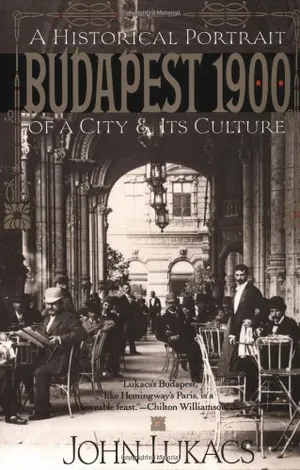
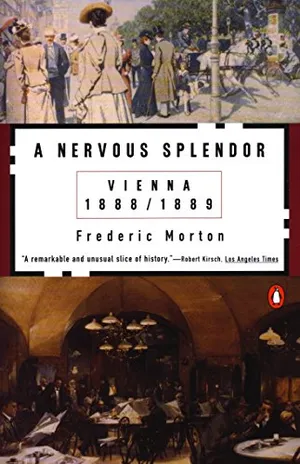
Reading List
*As an Amazon Associate, Smithsonian Journeys earns from qualifying purchases.
Highly Recommended


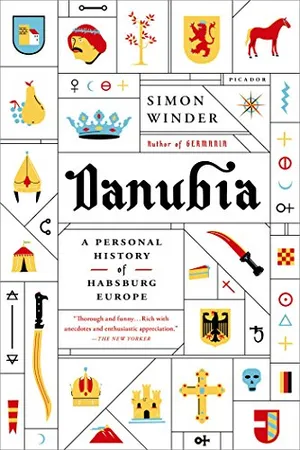
Also Recommended






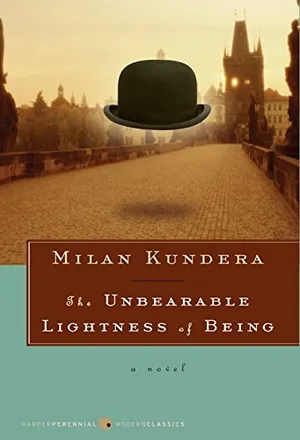
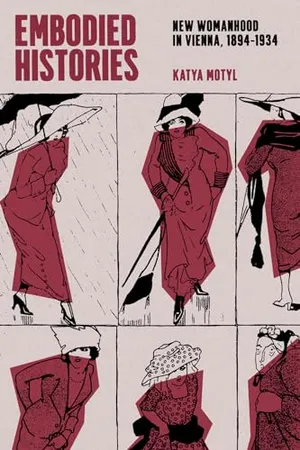
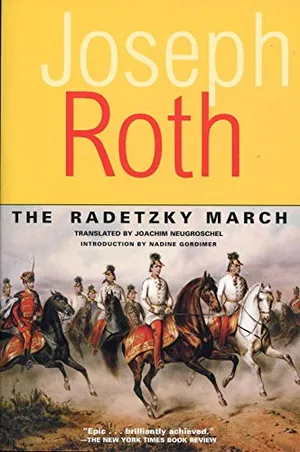
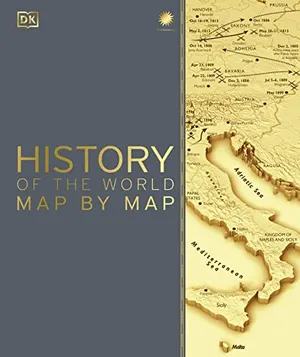
Special Air Rates/Services
The Flexible Travel Option program allows air-inclusive guests to customize their travel experience in several ways.
Please contact us if you want to customize your arrival and departure dates.*
Air-inclusive guests are free to take advantage of any or all these benefits:
- Arrive at your destination up to three days before the tour’s scheduled start date
- Extend your travel beyond the tour’s end date
- Reserve transfers from the arrival airport to the tour’s first hotel, or from the tour’s final hotel to the departure airport, to coincide with your alternate travel dates (at an additional cost)
- Reserve extra nights at the first and/or final hotel on your tour to coincide with your alternate travel dates (at an additional cost)
*A one-time fee of $50 per person will be added to your reservation if you opt to use the Flexible Travel Option program.
Testimonials
What our travelers are saying...
— Sylvia L.The capitals of Old World Europe tour was the most thought-provoking and emotionally intense tour I've ever experienced. It will live on in my memory after the others have faded.
— Tom M.Our trip was an outstanding learning experience that came without the stress of planning and executing a 15-day tour through five countries. Smithsonian did everything for us!
— Kate H.The Old World Europe tour gave us an intimate view of the history and culture of eastern Europe. We learned a lot and enjoyed every minute.
— Ken & Karen O.The total Smithsonian experience was excellent from the tour director to the hotels, itinerary, and logistics. We wouldn't hesitate to use Smithsonian again.
Travel Insurance
For the convenience of our travelers, Smithsonian Journeys includes a basic medical expense and evacuation plan through Trip Mate, a Generali Global Assistance & Insurance Services brand, at no additional charge. This plan provides post-departure Medical and Dental coverage of $250,000 per person and Emergency Assistance and Transportation coverage of $1,000,000 per person (U.S. Residents Only). Note: For full details regarding these coverages please review the following Plan Documents here.
In addition, we recommend that travelers purchase a travel protection plan to help protect their travel investment from unforeseen events such as cancellation due to illness, flight delays due to adverse weather, baggage loss, and more. For your convenience, Smithsonian Journeys offers an optional Travel Protection Plan administered by Trip Mate, a Generali Global Assistance & Insurance Services brand. For those interested, optional "Cancel for Any Reason" coverage is available for an additional charge. Note: Certain eligibility requirements apply and Cancel for Any Reason coverage is not available to New York residents. For full details regarding this coverage please review the following Plan Documents here.
To learn more about the Travel Protection Plan, you may visit https://www.generalipartner.com/smithsonianjourneys or call the administrator, Trip Mate, a Generali Global Assistance & Insurance Services brand at (866) 501-3252.
Related Tours
/https://tf-cmsv2-journeys-media.s3.amazonaws.com/filer/87/8f/878fb0d5-a047-418e-8fd1-06729e750304/aut_vienna_straussmemorial_dt_m_1562624.jpg)
/https://tf-cmsv2-journeys-media.s3.amazonaws.com/filer/41/e6/41e6afbd-5a61-4e90-8700-c45ef2148632/cze_prague_clockmainsq_ist-650696700.jpg)
/https://tf-cmsv2-journeys-media.s3.amazonaws.com/filer_public/73/08/730816e0-bdeb-4a5b-b37f-409e77fba78d/bsh_mostar_ist_982413458.jpg)
/https://tf-cmsv2-journeys-media.s3.amazonaws.com/filer_public/f0/e2/f0e2119f-59cd-49dc-8465-91a5c70e2877/cze_prague_mainsq_ist_1488321283.jpg)
Prague: A One-Week Stay in the Czech Republic
9 days
|
from:
$5,990
Multiple departures between 2026 & 2027
/https://tf-cmsv2-journeys-media.s3.amazonaws.com/filer_public/c8/8e/c88ef3ad-8b44-4195-a046-31487190afce/aut_vienna_viennaatnight_austriantourismb_julius-silver.jpg)