
/https://tf-cmsv2-journeys-media.s3.amazonaws.com/filer/8b/61/8b61cad9-fed2-4333-873c-1daa49844ac7/ita_polignanoamare_ist_1033101684.jpg)
Italy's Apulia: A One-Week Stay in Polignano a Mare
9 days from $5,290
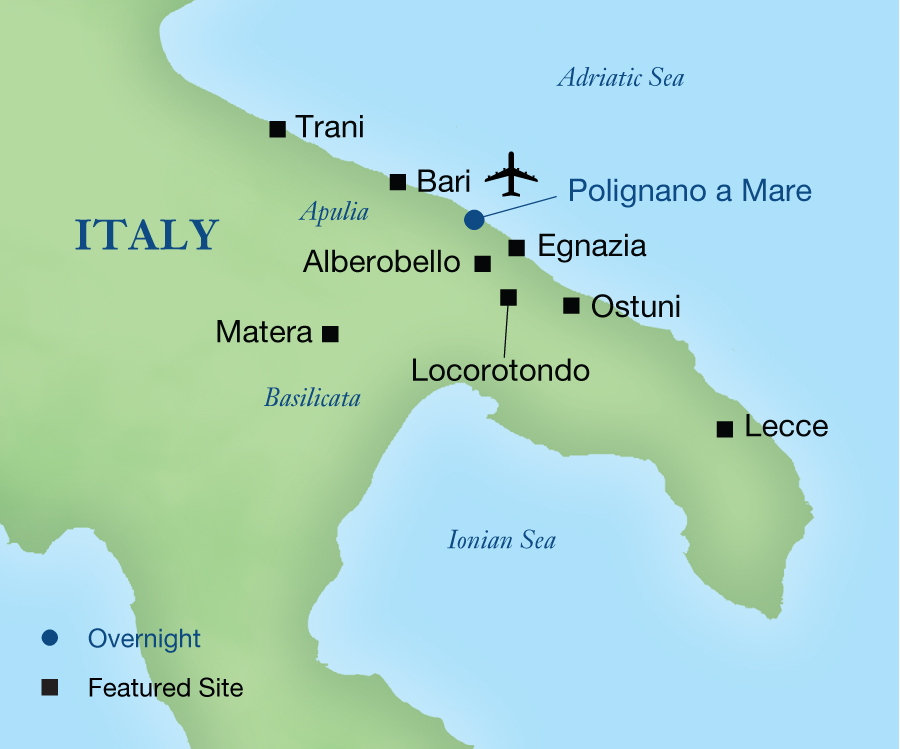
Discover the charm of Italy’s Apulia region—also known as Puglia—from Polignano a Mare, a cliffside town overlooking the Adriatic. Encounter the conical trulli houses of Alberobello and the baroque treasures of Lecce, and venture into sassi cave dwellings in the World Heritage site of Matera. Explore ancient Greco-Roman ruins and fortified medieval towns, and get acquainted with local life in Italy’s “heel” on visits to family-owned vineyards and farms.

Highlights
- Unique Trulli and Sassi: In Alberobello, walk amid iconic trulli, the whitewashed limestone buildings with conical roofs found nowhere else in the world. Named European Capital of Culture in 2019, Matera (located in nearby Basilicata), is home to the rock-hewn cave dwellings known as Sassi. Experience this unique town during a walking tour, including a visit inside a cave house and rock church. Both the trulli and sassi are World Heritage sites.
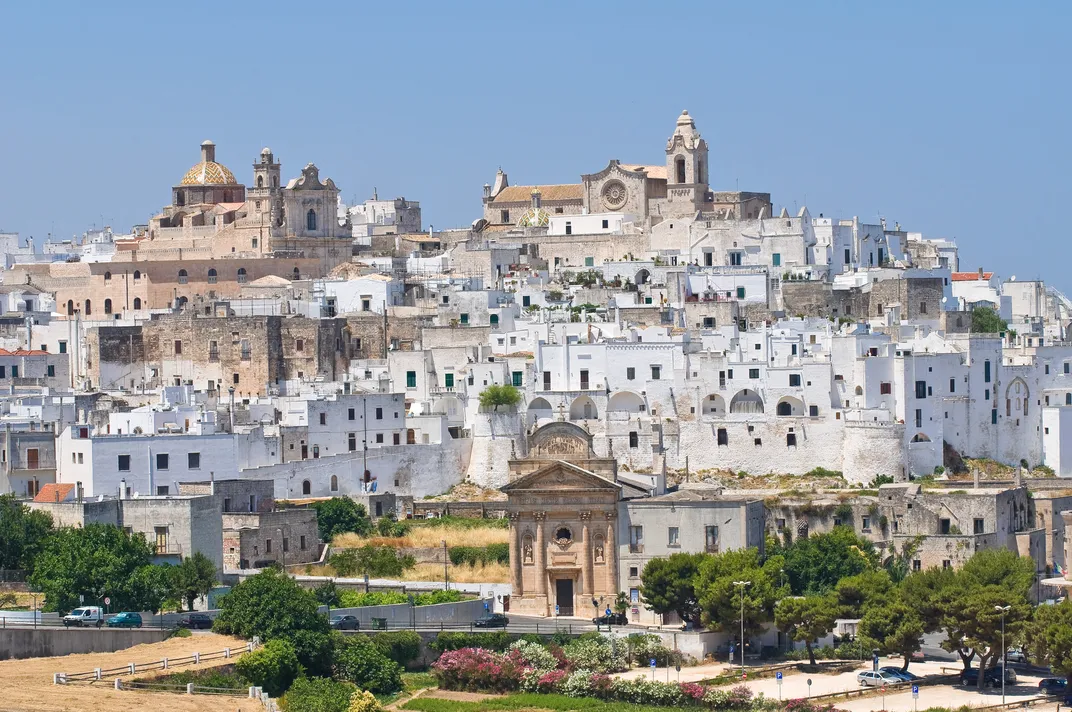
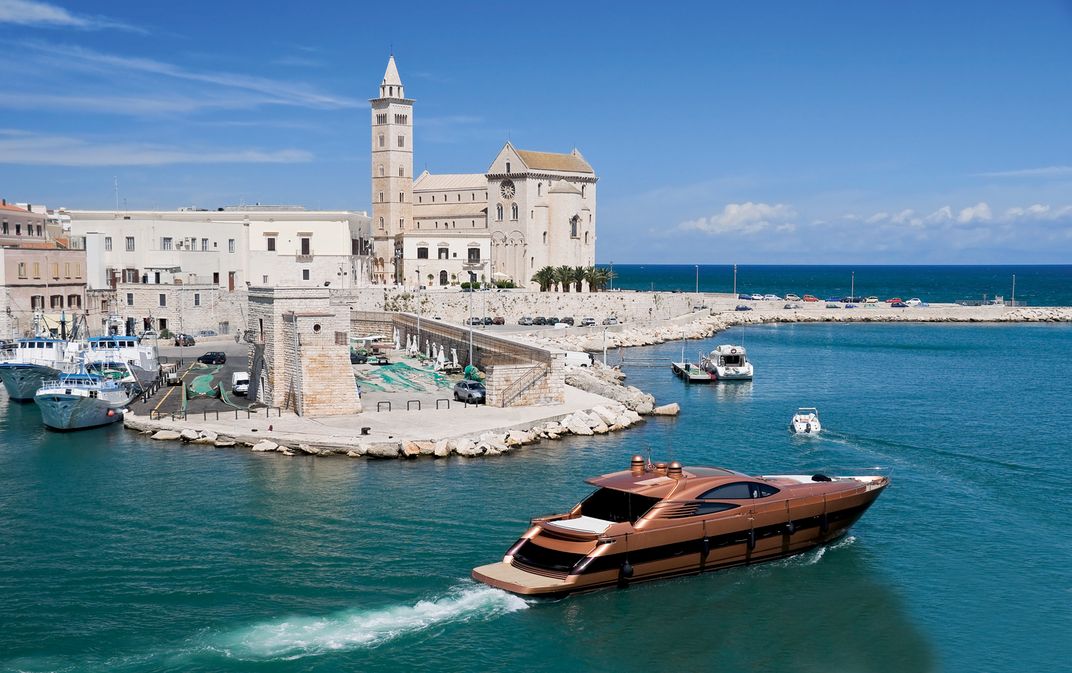
- Greek to Baroque Towns: Explore the presence of early Greeks and Romans at Egnazia, an archaeological site dating back to the 13th century B.C. Stop in the “white town” of Ostuni, with its tightly packed white homes perched on the coastline and take a tour of Trani, noted for its medieval fort, cathedral, and Jewish neighborhoods. And in Lecce, witness the town’s exuberant and minutely detailed Baroque architecture.
- Culture and Cuisine: Savor regional specialties and learn about culinary traditions at a family olive mill and a local vineyard. Plus, hear about the rich cultural heritage, slow-paced lifestyle, and architecture of Apulia from local speakers.
/https://tf-cmsv2-journeys-media.s3.amazonaws.com/filer/8a/7b/8a7be903-c594-4ed6-9604-ceccd2aebd91/ita_alberobello_trullihouses_is_000002782654.jpg)
Itinerary
To see itinerary, please click on an option below.
Days 1–2 — Depart the U.S. for Bari / Polignano a Mare
Depart the U.S. on your transatlantic flight to Bari, Italy.
Upon arrival at Bari’s Karol Wojtyla International Airport, you will be met and assisted with transfer to your hotel in Polignano a Mare. Transfer time from the airport to the hotel will be approximately 45 minutes to 1 hour. Upon arrival at the hotel, each traveler will receive a welcome package containing general information about the Apulia region, as well as a map of the town. Your Smithsonian Journeys Travel Director will be available this afternoon and throughout the program for suggestions regarding tours, restaurants and independent activities. This evening, meet your group and your Smithsonian Journeys Expert for a welcome dinner. (D)
Day 3 — Bari / Polignano a Mare
A full breakfast is available each morning during your stay. Today explore Bari, a bustling seaport since ancient times and one that supports a vibrant fishing industry today. Walk the maze of medieval streets and alleyways of the city’s Old Town and admire the Basilica of St. Nicholas built in the 11th century to honor Bari’s patron saint. Stroll through the renowned Murat Quarter. This modern heart of the city is laid out in a rectangular grid and was designed by Joachim Murat, Napoleon's brother-in-law. Afterward, a stop will be made for lunch at a local restaurant.
On your return to Polignano, a short walking tour is planned. See Lama Monachile Cala Porto, a unique pebbled beach that will lure you to swim in the clear azure sea. Walk through the Porta Vecchia to see the Matrix Church, and the monument to Domenico Modugno, a popular singer and songwriter born here in 1928. Gather this evening for a welcome reception followed by dinner at the hotel. (B,L,R,D)
Day 4 — Locorotondo / Alberobello
Depart by motorcoach for Locorotondo, one of the most picturesque medieval villages in Italy. This tranquil, well-preserved town sits in the picturesque countryside and is known for its white-washed cummerse, narrow rectangular townhouses with pointed gable roofs. Take an introductory walking tour that includes free time. Continue for a visit to I Pastini, a vineyard and winery for finger food and a sampling of the regional wines.
Travel to Alberobello, a World Heritage site renowned for its trulli, conical whitewashed houses found nowhere else in the world. These ancient and unique dwellings are pieced together without mortar and are decorated with enigmatic Christian and pagan symbols. Return to the hotel in the afternoon. Later a local speaker will offer a presentation on the history and architecture of Lecce, “the Florence of the South,” and the “White Town” of Ostuni. This evening, dine independently. (B)
Day 5 — Lecce / Ostuni
Depart on an excursion to Lecce, often called “Florence of the South,” where you will discover the 17th-century architectural style referred to as the “Barocco Leccese.” See the Piazza Sant’Oronzo, the Colonna Romana which marked the end of the Appian Way, the Roman Amphitheater, and the Basilica di Santa Croce. After the tour, there’s free time for lunch at leisure and to enjoy the town before departing for Ostuni. There, you’ll take a guided tour of the “white city” known for its whitewashed buildings set high atop a hill and spill into the Valle d’Itria below. Discover the Old Quarter to see the magnificent Cathedral and walk atop the ancient city walls. Dinner will be served at a popular local restaurant. (B,D)
Day 6 – Trani / Biscegli
Enjoy a scenic drive to the city of Trani, a bustling Adriatic seaport. Gather with a local guide for a tour of city highlights including the 13th-century Fort, Trani Cathedral, the historic Jewish Ghetto, and houses from the Norman period. Afterward, take a short drive to Biscegli and the Galantino family olive mill for a tour and lunch hosted by the owners. Learn about the unique composition of the terrain, the steps in the oil production process, suggestions for using olive oil in your cooking, and the strategy of the mill as it moves forward in today’s world. Return to Polignano after lunch. Join fellow travelers in the Smithsonian Journeys Travelers Corner to chat about the day’s highlights. Dinner is at leisure. (B,L)
Day 7 — Matera
This morning drive to the city of Matera, located in the region of Basilicata where you’ll discover the early cave dwellings known as sassi that were carved into the limestone by prehistoric people and thought to be the first human settlers in present-day Italy. Throughout the site are more than 100 underground churches decorated with delicate frescoes painted by monks who sought safety from Byzantine armies. The caves, some decorated by lavishly carved facades, provided homes to the local people until the 1950s. The location was designated as a World Heritage site in 1993. Visit a cave-house to see its various rooms, furnishings, and original household utensils. Continue to see a crypt located in an old cave-church from the 12th-13th century. Lunch will be served at a restaurant in Matera, then there’s free time to explore on your own. After returning to Polignano, join fellow travelers for a talk on Contemporary Italy. Dinner is at leisure on your own. (B,L)
Day 8 — Egnazia
Travel to the early Greek/Messapian town of Egnazia to visit what some say are the most significant ancient ruins in Apulia. Many of the earliest antiquities date from the Bronze Age. Highlights of the Roman period include the tracks of the Traiana Road, the Roman Amphitheater, the Forum, and two Christian Basilicas. The Archaeological Museum of Egnazia showcases many artifacts and historical documents related to the town through the centuries. Return to Polignano for an independent lunch and an afternoon free of planned activities. This evening, gather for a farewell reception and dinner at the hotel. (B,R,D)
Day 9 — Return Flights to U.S. Gateway Cities
Early this morning, transfer to the Bari International Airport for your return flights to the U.S. (B)
Please note: The progression of this itinerary and content may change due to operational considerations.
Included meals are denoted as follows: Breakfast (B), Lunch (L), Reception (R), Dinner (D)
/https://tf-cmsv2-journeys-media.s3.amazonaws.com/filer/8b/61/8b61cad9-fed2-4333-873c-1daa49844ac7/ita_polignanoamare_ist_1033101684.jpg)
/https://tf-cmsv2-journeys-media.s3.amazonaws.com/filer/8b/61/8b61cad9-fed2-4333-873c-1daa49844ac7/ita_polignanoamare_ist_1033101684.jpg)
/https://tf-cmsv2-journeys-media.s3.amazonaws.com/filer/8a/7b/8a7be903-c594-4ed6-9604-ceccd2aebd91/ita_alberobello_trullihouses_is_000002782654.jpg)
/https://tf-cmsv2-journeys-media.s3.amazonaws.com/filer_public/b6/b9/b6b96e35-c045-426d-bc68-be55e878927a/ita_matera_cave_with_woman_and_town_ist_1041644330.jpg)
/https://tf-cmsv2-journeys-media.s3.amazonaws.com/filer/8c/6e/8c6ed769-7b15-4455-b531-02e0874e44f9/ita_polignanoamare_dt_l_43767603.jpg)
/https://tf-cmsv2-journeys-media.s3.amazonaws.com/filer/f5/8e/f58e9554-58a2-40be-9095-1fa98d7fc5f8/ita_polignanoamare_earlyam_ist_1076229238.jpg)
/https://tf-cmsv2-journeys-media.s3.amazonaws.com/filer/47/65/47653b7f-68ad-4766-b45a-61aa92f4aab4/ita_alberobello_trullirooftops_ist_971736382.gif)
/https://tf-cmsv2-journeys-media.s3.amazonaws.com/filer/aa/d0/aad0e819-547e-44d9-8316-c3aac6125cdd/ita_alberobello_trulli_ist-493541147.jpg)
/https://tf-cmsv2-journeys-media.s3.amazonaws.com/filer_public/80/d4/80d487e2-ecaf-4420-a1f3-7457f7b15695/ita_matera_ist_971736354.jpg)
/https://tf-cmsv2-journeys-media.s3.amazonaws.com/filer_public/4f/c4/4fc48c03-52c4-4a22-abf1-563e6958ceaf/ita_lecce_apulia_roman_theater_ist_1141603516.jpg)
/https://tf-cmsv2-journeys-media.s3.amazonaws.com/filer_public/0e/ba/0ebaa713-a468-43cb-8c9e-e4342a153329/ita_lecce_cathedral_ist_184988187.jpg)
/https://tf-cmsv2-journeys-media.s3.amazonaws.com/filer_public/43/b2/43b227a2-4e91-41e5-9bf2-b3ca51fd4393/ita_lecce_santacroce_dt_m_25023402.jpg)
/https://tf-cmsv2-journeys-media.s3.amazonaws.com/filer_public/4d/96/4d960bee-c539-4f23-88d5-476a18a1597f/ita_lecce_santacroce_dt_m_25061588.jpg)
/https://tf-cmsv2-journeys-media.s3.amazonaws.com/filer/db/94/db94e174-bcb8-4c53-a47a-59887b4622b2/ita_bari_ahi.jpg)
/https://tf-cmsv2-journeys-media.s3.amazonaws.com/filer/d8/fe/d8feb76f-2445-4388-9840-96562d7be9ca/hotel_covo_dei_saraceni-image.jpg)
Dates & Prices
Click on the departure date to see pricing. Click the for more information.
Dates
Availability
Price
Sep 9 - 17, 2026
Available
from $5,290
Special Offer
No Single Supplement for solo travelers! (Limited availability, book early to ensure your space)
| Occupancy | Double | Single |
|---|---|---|
| Price | $5,290 | $5,290 |
Sep 30 - Oct 8, 2026
Available
from $5,290
Special Offer
No Single Supplement for solo travelers! (Limited availability, book early to ensure your space)
| Occupancy | Double | Single |
|---|---|---|
| Price | $5,290 | $5,290 |
Oct 14 - 22, 2026
Available
from $5,290
Special Offer
No Single Supplement for solo travelers! (Limited availability, book early to ensure your space)
| Occupancy | Double | Single |
|---|---|---|
| Price | $5,290 | $5,290 |
Nov 4 - 12, 2026
Available
from $5,290
Special Offer
No Single Supplement for solo travelers! (Limited availability, book early to ensure your space)
| Occupancy | Double | Single |
|---|---|---|
| Price | $5,290 | $5,290 |
Accommodations for our solo guests are limited on this tour, book early to ensure your place!
Special Air Rates & Services: As part of our special air program, FlexAir, available with this tour, you can choose from a wide variety of flight options. Visit the Tour Details tab and click on "Special Air Rates/Services" drop down.
Prices are based on rates of exchange, airfare & fuel (where applicable), tariffs, taxes, and other costs as of the tour publication date. We reserve the right to correct errors and to increase program prices to cover increased costs, tariffs, and taxes received after prices are published and to reflect currency fluctuations.
/https://tf-cmsv2-journeys-media.s3.amazonaws.com/filer_public/b6/b9/b6b96e35-c045-426d-bc68-be55e878927a/ita_matera_cave_with_woman_and_town_ist_1041644330.jpg)
Experts
/https://tf-cmsv2-journeys-media.s3.amazonaws.com/journeys/expert/Squatriti_Paolo_2.jpg)
Paolo Squatriti
Historian
Paolo Squatriti is professor of history and Italian at the University of Michigan, Ann Arbor, and also teaches in the university’s Program in the Environment. …
Paolo Squatriti is professor of history and Italian at the University of Michigan, Ann Arbor, and also teaches in the university’s Program in the Environment. Though he was born and grew up in Rome, Paolo studied history at Boston College and received a PhD in medieval European history from the University of Virginia. While he has lived and taught in a variety of places, he currently spends most of his time in Ann Arbor, teaching and researching medieval and environmental history. He has produced numerous articles, translations, and books; the paperback version of his most recent book, Weeds and the Carolingians: Empire, Nature and Culture in Carolingian Europe, AD 750-900, was released in 2024. Over the past half-century, Paolo has crisscrossed the Mediterranean region on foot, by plane, and by other forms of transport, and he looks forward to sharing his unique insights on the area’s history and natural heritage.
+ Show more
/https://tf-cmsv2-journeys-media.s3.amazonaws.com/journeys/expert/Thakur_Sanjaya.png)
Sanjaya Thakur
Classicist
Sanjaya Thakur is professor and chair of classics at Colorado College and has held a number of national leadership positions in the field of classical …
Sanjaya Thakur is professor and chair of classics at Colorado College and has held a number of national leadership positions in the field of classical studies. He served as the director of the Classical Summer School at the American Academy in Rome from 2021 to 2023 and was the Elizabeth A. Whitehead Scholar at the American School of Classical Studies in Athens from 2022 to 2023. Sanjaya has published numerous articles, primarily on the literature and history of the age of Augustus, Rome’s first emperor. He teaches a wide range of courses on Greek and Roman history, Latin literature, ancient athletics, and Greek and Roman art and archaeology. He also co-directed and organized an Associated Colleges of the Midwest faculty seminar entitled Mediterranean Trivium that was based in Italy.
Sanjaya earned two master's degrees in classical studies and classical art and archaeology as well as a PhD from the University of Michigan. An avid traveler, he has led many study tours through Greece, Italy, and Spain.
+ Show more
/https://tf-cmsv2-journeys-media.s3.amazonaws.com/journeys/expert/Hedquist_Valerie_2025.jpeg)
Valerie Hedquist
Art Historian
Valerie Hedquist is a professor of art history at the University of Montana. She earned her PhD with honors at the University of Kansas and …
Valerie Hedquist is a professor of art history at the University of Montana. She earned her PhD with honors at the University of Kansas and has been teaching and writing for nearly 30 years. Her research focuses on the arts of the 17th and 18th centuries and includes articles on the religious paintings of Rembrandt and Vermeer. Of special interest is the influence of Italian cultural attitudes on the visual output of these Dutch artists and others. Her book on the changing reception and meaning of Thomas Gainsborough’s Blue Boy was published in summer 2019.
+ Show more
/https://tf-cmsv2-journeys-media.s3.amazonaws.com/journeys/expert/Luca.jpg)
Luca Zavagno
Historian
Luca Zavagno is an associate professor in the Department of History and the Department of Archaeology at Bilkent University in Ankara, Turkey. He has authored …
Luca Zavagno is an associate professor in the Department of History and the Department of Archaeology at Bilkent University in Ankara, Turkey. He has authored many articles and essays on early medieval and Byzantine Mediterranean, covering topics such as urbanism, Cyprus from late antiquity to the early Middle Ages, and the history of cross-cultural encounters in the medieval and early modern eras.
A graduate of the University of Venice, Luca obtained his PhD at the University of Birmingham with a dissertation on the society, economics, and politics of Byzantine cities in the early Middle Ages. He was twice awarded the Dumbarton Oaks Summer Fellowship as well as the prestigious Stanley Seeger Fellowship of the Hellenic Studies Center at Princeton University. He was also recently appointed one of Notre Dame University’s Andrew Mellon Fellows.
+ Show more
/https://tf-cmsv2-journeys-media.s3.amazonaws.com/filer_public/27/86/27864948-cecf-49b2-8315-b9fab25eca4f/flora_holly_headshot.jpg)
Holly Flora
Art Historian
Holly Flora is a professor of art history at Tulane University and a specialist in Italian medieval and early Renaissance art. Her research focuses on …
Holly Flora is a professor of art history at Tulane University and a specialist in Italian medieval and early Renaissance art. Her research focuses on the intersection of art, devotion, and sensory experience, with particular expertise in Franciscan visual culture and artists such as Cimabue and Giotto. A former curator at the Museum of Biblical Art and Mellon Fellow at The Frick Collection in New York City, she has extensive experience bringing works of art to life for broad audiences.
Holly has lectured widely at museums and universities across the United States and Europe, including the Louvre, and spent over two decades leading tours and teaching in museum settings such as The Metropolitan Museum of Art and The Cloisters. She has taught in Siena, Italy, since 2009 and has directed Tulane’s Summer in Italy program since 2017, guiding participants through the art and history of cities such as Florence, Rome, and Siena. Her engaging approach connects historical works of art to their original cultural and spiritual contexts.
+ Show more
/https://tf-cmsv2-journeys-media.s3.amazonaws.com/journeys/expert/King_Ross_4.jpg)
Ross King
Art Historian & Author
Dr. Ross King is the bestselling author of books on Italian and French art and history, including Brunelleschi's Dome (2000), Michelangelo and the Pope's Ceiling (2002), and Leonardo and The Last Supper (2012). His study of the origins of French Impressionism, The Judgment of Paris, was published in 2006, and Mad Enchantment: Claude Monet and the Painting of the Water Lilies in 2016. He is the co-author with Anja Grebe of Florence: The Paintings & Frescoes, 1250-1743 (2015), the most comprehensive book ever undertaken on the art of Florence. His current project is a two-volume history of Italy, The Shortest History of Ancient Romeand The Shortest History of Italy, covering some 3,000 years of history from Romulus and Remus to the present.
Ross has also appeared in a number of television documentaries, such as The Medici: Godfathers of the Renaissance (PBS, 2003), Raphael: A Mortal God (BBC, 2004), The Great Cathedral Mystery (Nova, 2014), Florence's Invisible City (BBC, 2016), and, most recently, Ken Burns's Leonardo da Vinci (2024).
Ross serves on the Council of Academic Advisors for Friends of Florence, a fundraising charity ensuring the survival of Florence's art and architectural treasures. He has participated in numerous Friends of Florence tours throughout Italy and Sicily, and is a regular participant in Italian Renaissance seminars at the Aspen Institute, including programs on Giotto, St. Francis, and Dante. He has lectured in many American museums, including the Smithsonian, the Art Institute of Chicago, the Frick Collection, and the National Gallery of Art. When not traveling for work or pleasure, Ross lives near Oxford, England, with his wife Melanie.
+ Show more
/https://tf-cmsv2-journeys-media.s3.amazonaws.com/journeys/expert/James_Sara.jpg)
Sara James
Art Historian
Sara N. James combines her passion for art, architecture, archaeology, gardens, and photography with her sense of adventure, love of travel, and enjoyment of people. …
Sara N. James combines her passion for art, architecture, archaeology, gardens, and photography with her sense of adventure, love of travel, and enjoyment of people. She specializes in Italian Renaissance art with a particular passion for narrative fresco and stained-glass programs, but over her 30-year teaching career, Sara taught courses in Renaissance (Italian and Northern), Baroque, Greek, Roman, Medieval, and English art and architecture, as well as interdisciplinary honors courses. She is Professor Emerita of Art History at Mary Baldwin University, where she also served as director of the Renaissance Studies Abroad Program, teaching students on site in Italy and Northern Europe. In addition to teaching, she is a respected scholar and author of three books: The Cult of the Virgin Mary in Medieval Italy: Art, Devotion, and Liturgy in Orvieto (Cambridge University Press, 2025); Art in England from the Saxons to the Tudors: 600-1600 (Oxbow/Casemate, 2016) ; and Signorelli and Fra Angelico at Orvieto: Liturgy, Poetry and a Vision of the End-time (Ashgate, 2003), as well as numerous chapters, articles, and book reviews. Her speaking engagements include the Renaissance Society of America, the College Art Association, the Chief Executives Organization, the Virginia Museum of Fine Arts and the Chrysler Museum. Sara holds a Ph.D. in Art History from the University of Virginia and is a member of Phi Kappa Phi Honor Society. She has spent three sabbaticals at the American Academy in Rome and one at the Paul Mellon Centre in London. An avid gardener and garden lover, Sara is a certified Master Gardener as well as a member of the Garden Club of Virginia, which has awarded her for her daffodils, and the Garden Club of America, which has awarded her for her photography.
+ Show more
/https://tf-cmsv2-journeys-media.s3.amazonaws.com/filer/8c/6e/8c6ed769-7b15-4455-b531-02e0874e44f9/ita_polignanoamare_dt_l_43767603.jpg)
Tour Details
Accommodations
Hotel Covo dei Saraceni
Polignano a Mare (Bari), Italy
Located just a short distance from the Old Town quarter, the Hotel Corvo dei Saraceni is set atop dramatic cliffs high above the Adriatic Sea. Close to delightful shops, charming cafés and restaurants, the hotel offers a wonderful location for exploring the historic and cultural highlights of Apulia. It features a restaurant with breathtaking panoramic views of the sea. Dine al fresco on the terrace while enjoying fresh seafood and delicious regional specialties. Traditional wood, wrought iron, and ceramic tile amplify contemporary elegance and openness that are a distinctive feature of the hotel. Spacious rooms are appointed with air conditioning, minibar, safe, satellite TV, and hairdryer. Wi-Fi is complimentary. All rooms have a partial sea view.
Activity Description
Expectations: Travelers can expect a week-long Cultural Stay featuring one region—and one hotel. Full-day excursions outside the city with some longer, extensive walking tours of villages, museums, and outdoor historic sites such as gardens. Excursions can be over uneven and hilly terrain (e.g. gardens and outdoor sites, cobblestones, city hills, stairs without handrails, the absence of elevators); some longer walks to get to city centers where coaches are prohibited. Hotel centrally located for easy access to sites and restaurants during the time at leisure.
Appropriate for: Travelers who are physically fit and comfortable with long days of touring (both walking tours and coach time).
Reading List
*As an Amazon Associate, Smithsonian Journeys earns from qualifying purchases.
Highly Recommeded


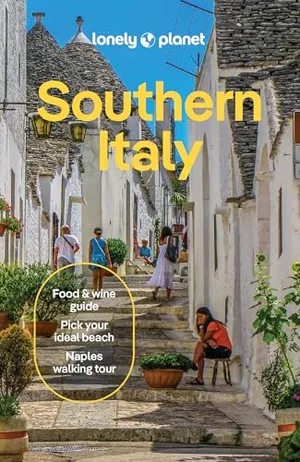
Also Recommended


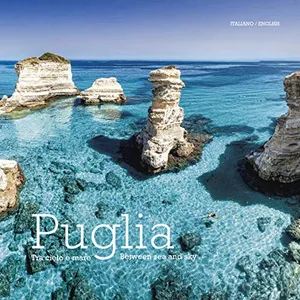

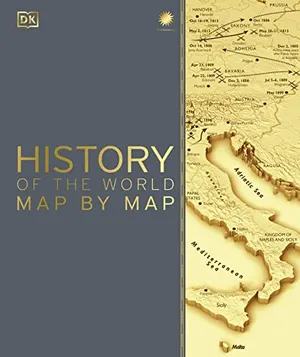
Special Air Rates/Services
FlexAir is designed to provide our guests with the flexibility and choice they need to personalize their air travel experience. They can explore a wide range of flight options* in consultation with our experienced air travel professionals to select the flights, routing, class of service, and dates of travel that most fit their needs. Our partner tour operator has negotiated contracts with a wide variety of carriers that allows them to search for the air itinerary that meets the requirements of our guests, and once satisfied with the flights, seating, and pricing, in most cases, can be confirmed and ticketed** immediately.
The FlexAir program includes:
- Confirmed airline seat assignments at the time of ticketing (in most cases additional purchase may be necessary)
- Assistance with schedule changes and delays, including after-hours support
- Guaranteed transfers between the airport and overseas accommodations upon arrival and departure (based on the group’s arrival and departure dates), and the details needed to guarantee the transfer
Important Notes:
*Most airline schedules become available for ticketing approximately 320 days from the date of return travel.
**Once ticketed, certain restrictions will apply. Our air travel professionals will provide the details.
Travel Insurance
For the convenience of our travelers, Smithsonian Journeys includes a basic medical expense and evacuation plan through Trip Mate, a Generali Global Assistance & Insurance Services brand, at no additional charge. This plan provides post-departure Medical and Dental coverage of $250,000 per person and Emergency Assistance and Transportation coverage of $1,000,000 per person (U.S. Residents Only). Note: For full details regarding these coverages please review the following Plan Documents here.
In addition, we recommend that travelers purchase a travel protection plan to help protect their travel investment from unforeseen events such as cancellation due to illness, flight delays due to adverse weather, baggage loss, and more. For your convenience, Smithsonian Journeys offers an optional Travel Protection Plan administered by Trip Mate, a Generali Global Assistance & Insurance Services brand. For those interested, optional "Cancel for Any Reason" coverage is available for an additional charge. Note: Certain eligibility requirements apply and Cancel for Any Reason coverage is not available to New York residents. For full details regarding this coverage please review the following Plan Documents here.
To learn more about the Travel Protection Plan, you may visit https://www.generalipartner.com/smithsonianjourneys or call the administrator, Trip Mate, a Generali Global Assistance & Insurance Services brand at (866) 501-3252.
Related Tours
Naples, Pompeii, and the Amalfi Coast: A Tailor-Made Journey to Southern Italy
8 days
|
from:
$8,970
Suggested Itinerary
/https://tf-cmsv2-journeys-media.s3.amazonaws.com/filer/db/66/db661750-3dd3-42c4-970d-e75e82dcccbd/ita_sicily_syracuse_ortygia_ist_1364745338.jpg)
Cruising Southern Italy and Sicily: Ancient Wonders and Culinary Delights
9 days
|
from:
$12,160
Sep 6 - 14, 2026
Oct 7 - 15, 2027
/https://tf-cmsv2-journeys-media.s3.amazonaws.com/filer/f0/a6/f0a6c5f7-85aa-4fbc-857d-ab9c961bce44/ita_florence_accademia_david_dt_l_40271587.jpg)
A Stay in Florence: An Art History Journey from Leonardo to Michelangelo
9 days
|
from:
$6,690
Multiple departures between 2026 & 2027
/https://tf-cmsv2-journeys-media.s3.amazonaws.com/filer_public/7e/a8/7ea88143-d7bd-4705-920e-817504674af1/ita_lakedistrict_stresa_isolabella_dt_l_152061090.jpg)
Italy's Lake District: A One-Week Stay in Stresa
9 days
|
from:
$5,790
Multiple departures between 2026 & 2027
/https://tf-cmsv2-journeys-media.s3.amazonaws.com/filer/57/96/57968405-af83-42f6-916c-c9dca7d9ed56/ita_positano_ist_947783706.jpg)
Italy's Amalfi Coast: A One-Week Stay in Vietri sul Mare
9 days
|
from:
$5,690
Multiple departures between 2026 & 2027