
/https://tf-cmsv2-journeys-media.s3.amazonaws.com/filer/03/99/03997e6c-0d52-41c2-8430-2693c2ad6244/jpn_kyoto_goldenpavilion_kinkaku-ji_dt_xl_21999278_forweb.jpg)
Eternal Japan
13 days from $9,584 | includes airfare, taxes and all fees
From the neon lights of Tokyo to the misty peak of Mount Fuji, and from Kanazawa to Kyoto, delve into the essence of Japan. Explore spectacular temples and classical gardens; step into the palaces of shoguns and thatched homes of farmers; and meet with artisans of gold leaf, calligraphy, and ceramics. Along the way, stay in a traditional ryokan inn and experience timeless rituals, from papermaking to the tea ceremony.

Highlights
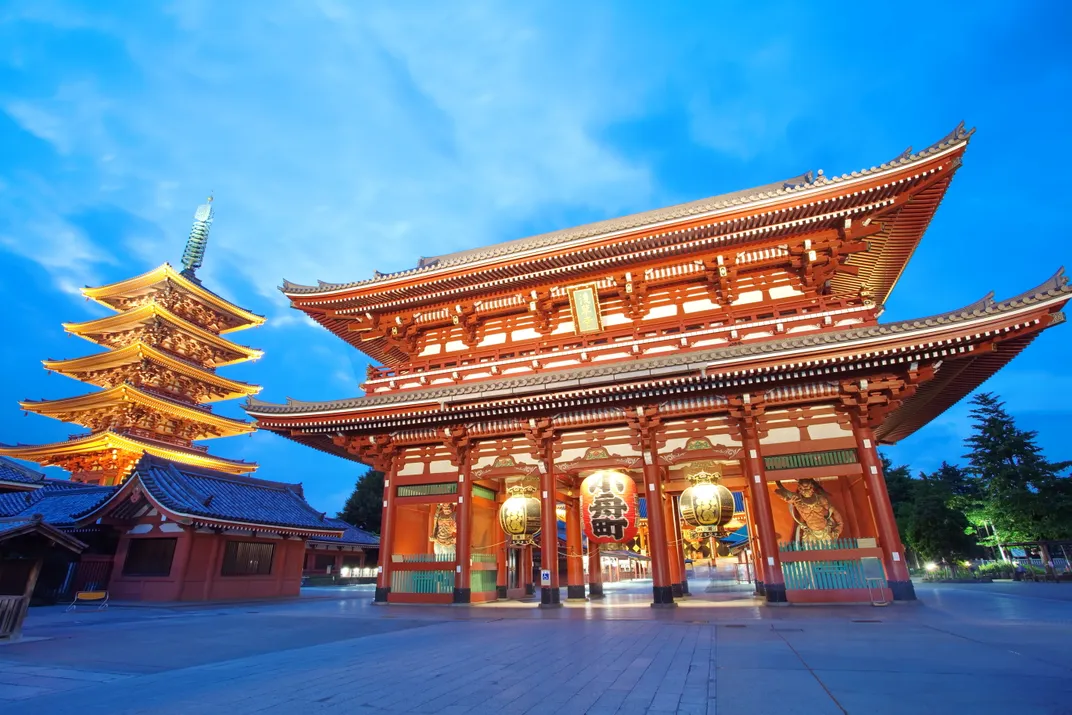
- Tokyo: Experience the confluence of old and new, venturing into Tokyo’s oldest temple, the Asakusa Kannon, or Senso-ji, as well as the buzzing streets of Ginza and Nakamise. Visit the Shinto Meiji Shrine, stroll the ground of the Imperial Palace, and see Japanese art and artifacts at the Tokyo National Museum.
- Mount Fuji and Hakone: Take in majestic views of Mount Fuji and gain insight into efforts to protect it. Then view traditional Japanese arts on visits to two lovely museums in Hakone.
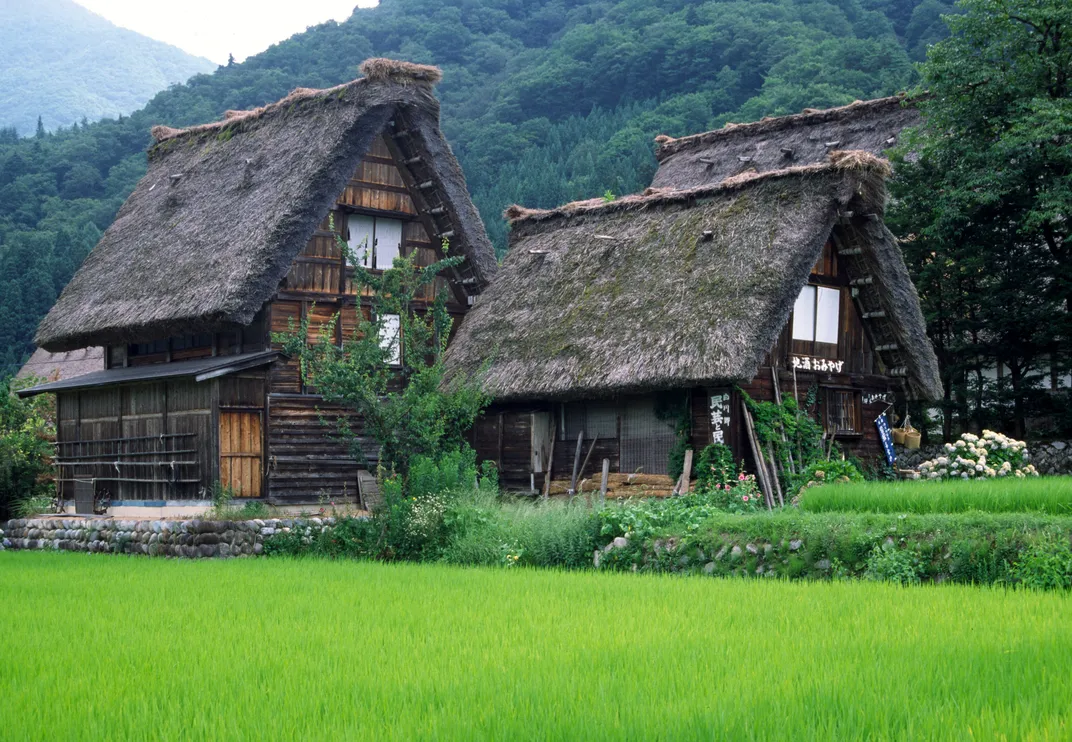
- Japanese Alps: Go off the beaten path in lovely Takayama, nestled among high mountain peaks. Discover the World Heritage site of Shirakawa-go and Gokayama, where farming families in thatched-roof villages maintain a unique lifestyle adapted to their remote setting.
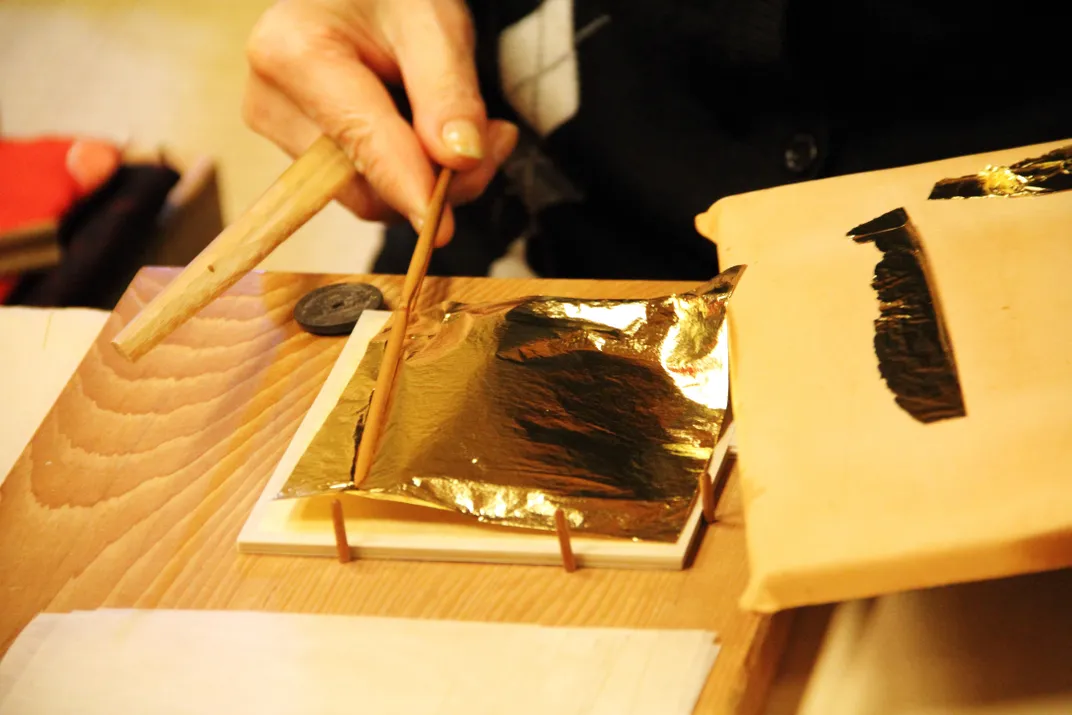
- Kanazawa: Tour the breathtaking Kenrokuen Garden, visit a museum celebrating the art and craft of gold leaf technology; and meander through the Edo-period Higashi Chayagai tea house and geisha area.
- Kyoto and Nara: Spend two days exploring the World Heritage site of imperial Kyoto. Visit the gold-covered Kinkaku-ji temple and Nijo-jo castle, the lavish seat of the shoguns. During a day trip to the ancient capital of Nara, take a walking tour that features Todai-ji and Kofuku-ji temples, the Kasuga Taisha shrine, and the Nara National Museum.
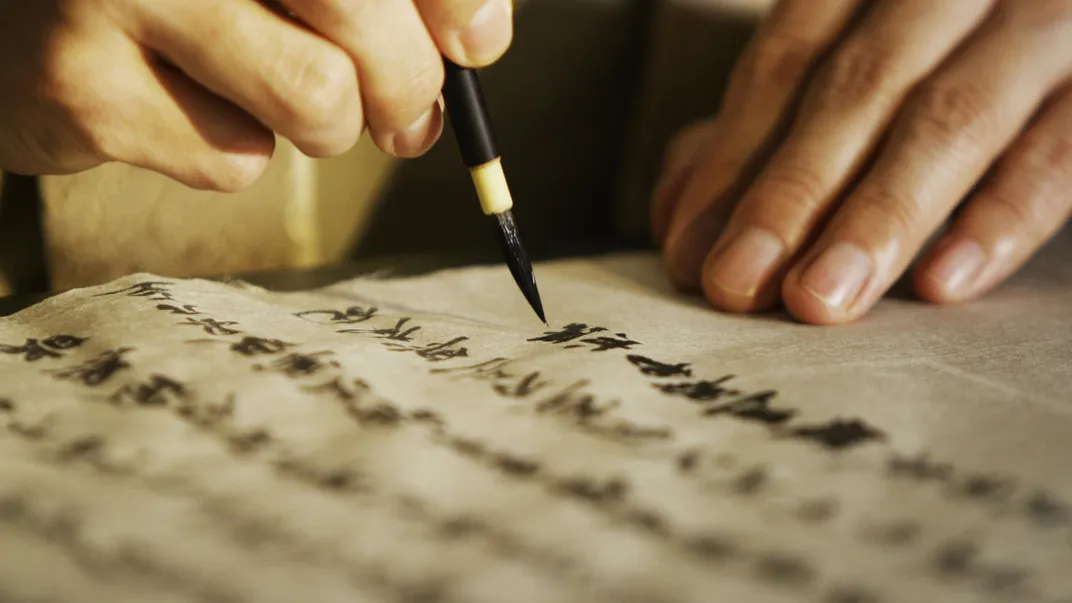
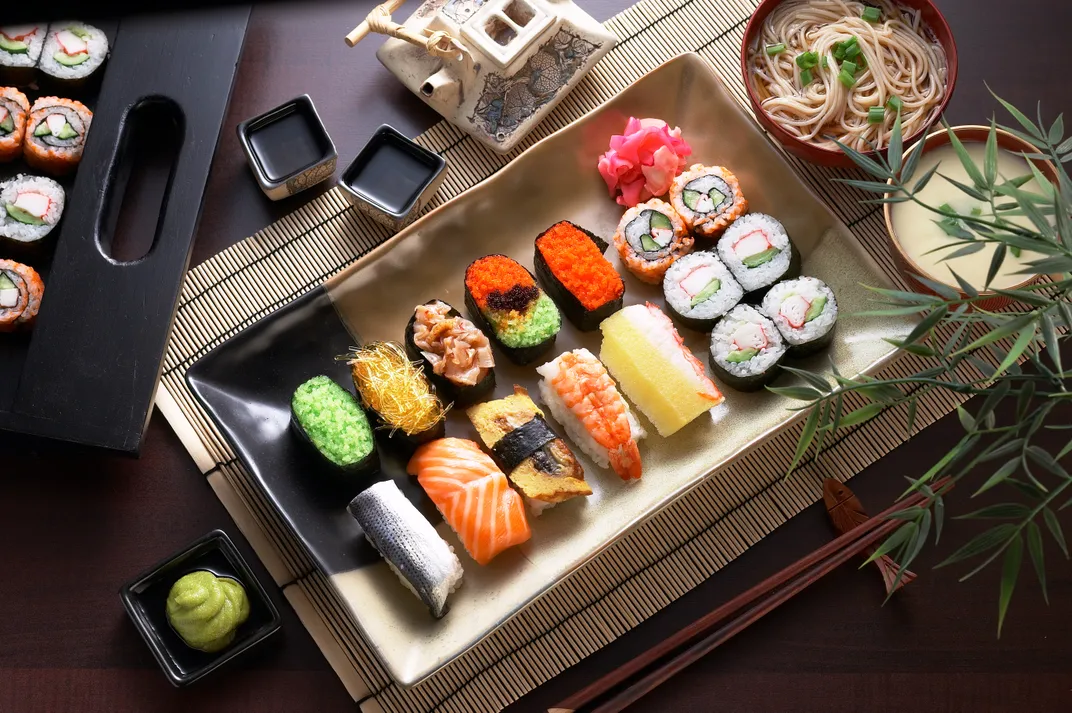
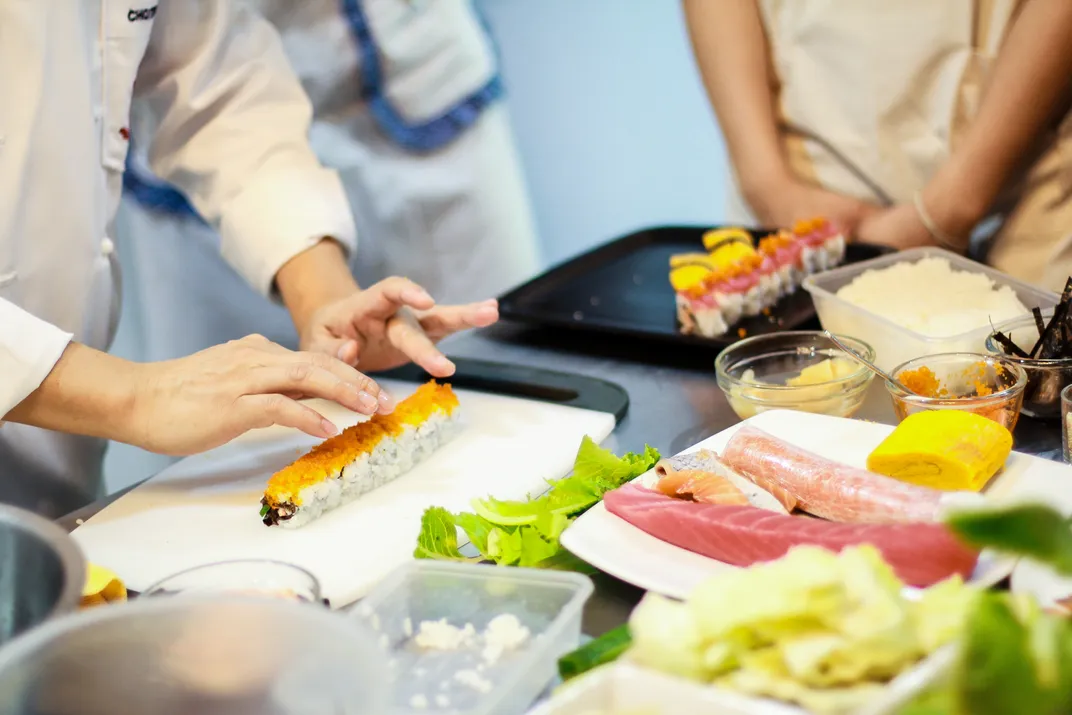
- Local Culture: Learn the rituals of a tea ceremony, and join a local chef for a visit to the market and a cooking lesson. Watch a classical calligrapher at work, and observe how washi paper is made.
Hard to top this trip! It was well planned and the opportunity to see smaller cities such as Takayama made this trip very special. There was no way could we have seen, experienced and learned so very much about this country on our own … especially over a limited number of days! Very good value. This was our second Smithsonian journey and, as we experienced with our first, excellent arrangements, enrichment program, and educational impact. This was simply an outstanding introduction to Japanese culture; it topped our expectations.
— Suzanne and Peter C.
/https://tf-cmsv2-journeys-media.s3.amazonaws.com/filer/42/9b/429baa34-0e27-43a2-8c86-c407963e9686/jpn_kyoto_higashiyamadistrict_ist_924114674.jpg)
Itinerary
To see itinerary, please click on an option below.
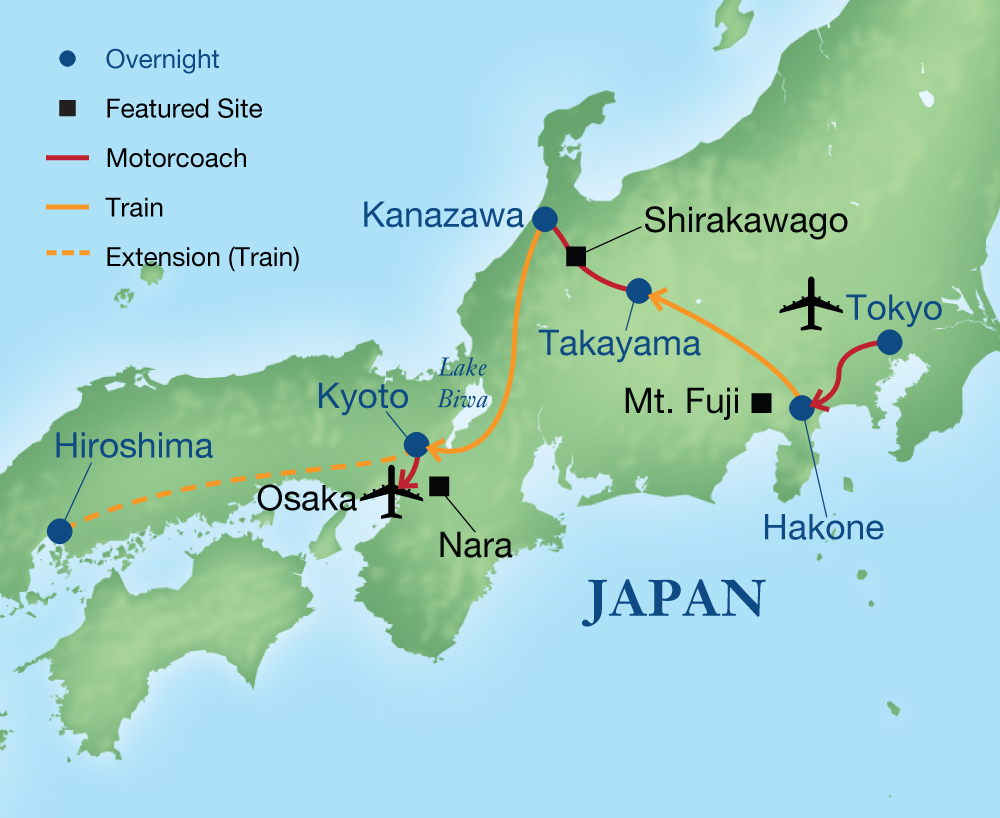
Days 1-2 — Depart the U.S. for Tokyo, Japan
Fly overnight to Tokyo, arriving on the evening of Day 2. Transfer to your hotel in the city center.
Day 3 — Tokyo
Set out to discover this sprawling city, where stunning, peaceful sites are hidden amid the high-energy bustle of modern life. Step into the Shinto Meiji Shrine, a serene enclave of temples and gardens, and visit the gallery of preeminent calligrapher Koshun Masunaga to learn about this ancient art and browse the collection. In Ginza, Tokyo’s dazzling shopping, dining, and entertainment district, enjoy free time to explore. Gather for a welcome dinner at a local restaurant tonight. (B,D)
Day 4 — Tokyo
Continue your tour of Tokyo at the Imperial Palace, the home of Japan’s emperors since 1888. Take in views of the moats and turrets surrounding the palace, and visit the East Gardens, part of the innermost circle of defense of the historic Edo Castle that once stood here. Then visit the Buddhist Senso-ji, Tokyo’s oldest temple, also known as the Asakusa Kannon. Stroll past colorful curiosities on the lively Nakamise shopping street. Finally, tour the Tokyo National Museum, which houses an extensive collection of art and antiquities from Japan and across Asia. This afternoon is at leisure. (B)
Day 5 — Hakone and Fuji-Hakone-Izu National Park
Depart Tokyo this morning for Fuji-Hakone-Izu National Park. The symmetrical volcanic cone of Mt. Fuji—which last erupted in 1707—rises majestically 12,388 feet above the surrounding landscape. At the Mount Fuji World Heritage Center, learn about efforts to conserve the mountain’s habitats and admire architecture inspired by its image. Next, stop in at the Itchiku Kubota Art Museum on Lake Kawaguchi, home to a stunning collection of hand-dyed textiles. In the town of Hakone, tour the Narukawa Museum, home to beautiful nihonga paintings that depict nature using natural materials. Spend tonight in a ryokan, or traditional Japanese inn. Take off your shoes upon entering and enjoy the tranquility of its minimalist Japanese design. (B,D)
Day 6 — Takayama
Journey to lovely Takayama in the Japanese Alps, a town surrounded by high peaks and filled with 16th-century architecture. Meander down the narrow streets of the San-machi-suji district where, in feudal times, merchants lived in wooden houses built by the town’s renowned carpenters. Today, the lanes are lined with charming inns, teahouses, and sake breweries. Attend a traditional tea ceremony this afternoon, and learn about the symbolism and spirituality that imbue this graceful ritual. (B,D)
Day 7 — Takayama
Begin the day at the Miyagawa Morning Market, where local merchants preside over stalls of handicrafts, flowers, and colorful produce. Meet a local chef to gather ingredients and then enjoy a cooking lesson, as you prepare your lunch together. After sampling the fruits of your labor, take a walking tour of town, visiting Takayama Jinya, a historic government house; the local sake brewery; and Takayama’s old town, whose well-preserved buildings and homes date to the Edo Period (1600–1868). (B,L)
Day 8 — Shirakawa-go and Kanazawa
Travel west from Takayama this morning to the World Heritage-listed region of Shirakawa-go and Gokayama, where residents of remote farming villages developed a unique way of life adapted to their isolated mountain setting. As you tour the villages of Shirakawa-go, learn about these timeless communities and their traditional thatched-roof architecture, known as gassho-zukuri. In Gokayama, see how handmade Japanese washi paper is made using local fibers. Continue west to the coast, arriving in the historic town of Kanazawa in the late afternoon. (B,L,D)
Day 9 — Kanazawa
A hub of culture with many centuries of historical relevance, Kanazawa was one of the few large Japanese cities to be spared the ravages of World War II. At the Hakukokan Gold Leaf Center, get a closer look at the art and craft of gold leaf, one of the specialties of Kanazawa. Then visit Kutani Kosen Kiln, where artists craft intricately decorated ceramics. See Omicho Market, Kanazawa’s largest fresh food market the world and take a walk through the serene landscapes of Kenrokuen Garden, a national landmark that dates back to 1676. (B)
Day 10 — Kyoto
Board the train for Kyoto, Japan’s imperial capital for well over 1,000 years and now a capital of culture and the arts. Visit the celebrated Kinkaku-ji, known as the Golden Pavilion, set picturesquely at the edge of a lake. Continue to Ryoan-ji, a Zen Buddhist temple known for its 15th-century Zen rock garden. Enjoy dinner together this evening. (B,D)
Day 11 — Kyoto and Nara
Take an excursion to Nara, Japan’s eighth-century capital, renowned for its shrines and temples. Venture into Todai-ji, a vast wooden temple originally built in the 700s that is home to a 50-foot bronze Buddha—Japan’s largest. Visit two ancient shrines: the Kasuga Taisha, a Shinto shrine and World Heritage site surrounded by parklands where deer roam free, and Kofuku-ji, a Buddhist temple with a five-story pagoda. (B)
Day 12 — Kyoto
At Sanjyusangendo Hall, an important Buddhist temple, see some of the 1,000 wooden statues of the thousand-armed Kannon deity. Step back in time at Nijo Castle, the extravagant 17th-century residence of the shoguns who ruled Japan for more than 250 years. Its “nightingale floors” were famously designed to squeak—an ancient alarm system to ward off intruders. Visit Gion Corner for a performance showcasing some of Japan’s storied traditional performing arts. Tonight enjoy a farewell dinner including a private Maiko (geisha) performance at a local restaurant. (B,D)
Day 13 — Depart Kyoto for home
After breakfast, travel by coach to Osaka to board your flight home. (B)
Included meals are denoted as follows: Breakfast (B), Lunch (L), Reception (R), Dinner (D)
/https://tf-cmsv2-journeys-media.s3.amazonaws.com/filer/03/99/03997e6c-0d52-41c2-8430-2693c2ad6244/jpn_kyoto_goldenpavilion_kinkaku-ji_dt_xl_21999278_forweb.jpg)
/https://tf-cmsv2-journeys-media.s3.amazonaws.com/filer/03/99/03997e6c-0d52-41c2-8430-2693c2ad6244/jpn_kyoto_goldenpavilion_kinkaku-ji_dt_xl_21999278_forweb.jpg)
/https://tf-cmsv2-journeys-media.s3.amazonaws.com/filer/42/9b/429baa34-0e27-43a2-8c86-c407963e9686/jpn_kyoto_higashiyamadistrict_ist_924114674.jpg)
/https://tf-cmsv2-journeys-media.s3.amazonaws.com/filer/c7/55/c7556565-88bc-40db-9a4d-ca19132cb82b/jpn_nara_kofukujitemple_dt_37534221.jpg)
/https://tf-cmsv2-journeys-media.s3.amazonaws.com/filer/e4/8d/e48dd9d9-7994-4adc-bc17-ede65d9d6be5/jpn_mtfuji_ashilake_ist_839688614.jpg)
/https://tf-cmsv2-journeys-media.s3.amazonaws.com/filer/fb/0c/fb0c85e3-de12-4cbf-8caa-5cf6a7131ae3/jpn_tokyo_evepanorama_ist_1135121963.jpg)
/https://tf-cmsv2-journeys-media.s3.amazonaws.com/filer/64/2f/642f4cd9-1b36-495c-9ed9-603a1c2082ca/jpn_tokyo_meijishintoshrine_dtm_73792748.jpg)
/https://tf-cmsv2-journeys-media.s3.amazonaws.com/filer/2a/d0/2ad06a24-3759-46b4-bbd2-3ea7ffdc6441/jpn_tokyo_tokyo-edomuseum_ist_157584041.jpg)
/https://tf-cmsv2-journeys-media.s3.amazonaws.com/filer/02/e5/02e52fea-28e8-4a6d-bf7e-02e67ecdf0e4/jpn_tokyo_ginza_ist_1162936650.jpg)
/https://tf-cmsv2-journeys-media.s3.amazonaws.com/filer/04/a4/04a47293-d534-4a6d-8296-96f31eb40c12/jpn_mtfuji_dt_l_55669942.jpg)
/https://tf-cmsv2-journeys-media.s3.amazonaws.com/filer/b7/5a/b75ae1c2-b7b9-452c-ae55-5abd418a5f93/jpn_kyoto_nijocastle_entrroof_dt_xl_49111725_forweb.jpg)
/https://tf-cmsv2-journeys-media.s3.amazonaws.com/filer_public/7b/d2/7bd26a94-d9a1-445f-a945-49db0bb0edfb/jpn_teaceremony_ist_544590230.jpg)
/https://tf-cmsv2-journeys-media.s3.amazonaws.com/filer/73/2f/732f7488-9b54-4ef9-8d8b-46a6aaab4d30/jpn_takayama_oldtown_ss_1163727046.jpg)
/https://tf-cmsv2-journeys-media.s3.amazonaws.com/filer_public/b2/a9/b2a928d7-f5c3-4932-9792-d4ae607d8a9d/jpn_kenrokuen_garden_1576519333.jpg)
/https://tf-cmsv2-journeys-media.s3.amazonaws.com/filer/92/7d/927d3e61-c78e-4ea2-8136-be7ae18c75a6/jpn_kyoto_monk_chijon-jibuddhistshrine_ist_638800102.jpg)
/https://tf-cmsv2-journeys-media.s3.amazonaws.com/filer/d3/15/d315dd49-5215-4970-adea-b842353c00b9/jpn_kyoto_nijocastlegarden_dtm_15992065.jpg)
/https://tf-cmsv2-journeys-media.s3.amazonaws.com/filer/01/89/0189d0b2-ff23-4bc4-80ed-6a61ae791a0c/jpn_kyoto_ryoan-ji_zengarden_dt_xl_43239062_forweb.jpg)
/https://tf-cmsv2-journeys-media.s3.amazonaws.com/filer/55/29/55299a47-5818-436a-8332-6b2fcb33e0db/jpn_nara_todaijitemple_buddha_dt_l_64969120.jpg)
Optional Extension
Post-Tour Ext.: Hiroshima
Hiroshima — 3 Days, 2 Nights
Discover the city reborn from the atomic destruction of World War II, a modern and cosmopolitan urban center whose residents warmly welcome American visitors.
Day 1 – Kyoto/Hiroshima
Board the bullet train for Hiroshima and transfer to your hotel upon arrival. After lunch together, set out to explore Hiroshima’s traumatic history. Long an important trading center in a strategic location, Hiroshima hosted a military logistics base during World War II. When the United States military dropped the first atomic bomb ever to be used during military action, the city was leveled, and the Japanese surrendered just six days later. On a half-day city tour, witness how the city was resurrected from the ashes of total devastation, visiting the memorials of Peace Memorial Park, dedicated to victims the bombing, and the Peace Memorial Museum. The remainder of the day is yours to discover the city as you wish. You might try okonomiyaki, a Hiroshima specialty of cabbage, noodles, and egg fried with meat, cheese, and seafood. (B,L)
Day 2 – Miyajima Island
Take a local train to Miyajimaguchi and board a ferry to Miyajima Island, a sacred location in the Shinto religion. Legend has it that the first Shinto shrine was built on this sacred ground during the sixth century. Tour the island and visit Daisho-in temple, a Buddhist complex consecrated in 806 AD and famous for its eternal flame, which is said to have been burning for more than 1,200 years. Next, visit Itsukushima Shrine, a World Heritage site dating to the 12th century, and enjoy time to meander along Miyajima’s main street. During a free afternoon in Hiroshima, consider visiting the 16th-century castle or the Hiroshima City Museum of Contemporary Art. Explore Hijiyama Park, overlooking the city of Hiroshima; and seek out dinner or a sake tasting in the bustling city center. (B)
Day 3 – Osaka/Depart for U.S.
After breakfast, walk to the nearby train station to catch the bullet train to Osaka. Transfer by express train to the airport for your flight home. (B)
Please note: Because of limited storage space and short boarding times on the bullet train, only carry-on luggage is permitted on the extension. The rest of your luggage will be safely transported to Osaka’s Kansai International Airport, where you will meet it prior to your return flight.
For Land Only Guests: Your return flight to the U.S. must depart from Osaka’s Kansai International Airport (KIX) after 12:00 p.m. to allow time to travel via train from Hiroshima. If your flight departs before our air-inclusive guests’ flights, you will need to take a train journey with a connection on your own. Train tickets and instructions will be provided by your tour director. If you’d like to coordinate your departure flights with those of air-inclusive guests, please contact us approximately 2½ months before your departure date.
Your hotel:
Newly opened in 2025, the Granvia Hiroshima South Gate stands adjacent to JR Hiroshima Train Station, offering direct access to several of Hiroshima’s most popular sites, including Peace Memorial Park and Miyajima Island. Amenities include an open-kitchen restaurant, bar, coffee shop, spa with massage services (for a fee), laundry and dry-cleaning services (for a fee), and complimentary Wi-Fi internet access. Air-conditioned guest rooms have a private bath, hair dryer, tea- and coffee-making facilities, in-room safe, TV, and phone.
Your program includes:
- Rail transportation on the bullet train Kyoto/Hiroshima; Hiroshima/Osaka
- 2 nights accommodations at Granvia Hiroshima South Gate
- 4 Meals: 2 breakfasts, 1 lunch
- Extensive included sightseeing: Miyajima Island and Daisho-in Temple; Hiroshima touring by local “Hiroden” train; visit to Peace Memorial Park and Museum; Atomic Bomb Dome
- Services of a professional Tour Director
- Gratuities to Tour Director, dining room servers, hotel porters, and drivers
Dates & Prices
Click on the departure date to see pricing. Click the for more information.
Dates
Availability
Price
Aug 31 - Sep 12, 2026
Call to Inquire
from $9,884
Special Value
Airfare Included! This tour is specially designed for a small group of 16 to 24 Smithsonian travelers and offers outstanding travel value. Along with airfare, prices also include airline taxes and departure fees, as well as transportation, accommodations, daily activities and excursions, and most meals.
Tour cost including airfare: Los Angeles
| Occupancy | Double | Single |
|---|---|---|
| Price | $9,884 | $11,679 |
| Post Ext. | $1,495 | $1,790 |
Tour cost including airfare: Portland (OR), Seattle, San Francisco
| Occupancy | Double | Single |
|---|---|---|
| Price | $10,184 | $11,979 |
| Post Ext. | $1,495 | $1,790 |
Tour cost including airfare: Boston, Chicago, Cleveland, Dallas, Denver, Detroit, Houston, Minneapolis, New York, Philadelphia, Phoenix
| Occupancy | Double | Single |
|---|---|---|
| Price | $10,384 | $12,179 |
| Post Ext. | $1,495 | $1,790 |
Tour cost including airfare: Atlanta, Baltimore, Charlotte, Cincinnati, Miami, Orlando, Tampa, Washington, DC
| Occupancy | Double | Single |
|---|---|---|
| Price | $10,484 | $12,279 |
| Post Ext. | $1,495 | $1,790 |
Land only (tour cost not including airfare)
| Occupancy | Double | Single |
|---|---|---|
| Price | $8,295 | $10,090 |
| Post Ext. | $1,495 | $1,790 |
Sep 14 - 26, 2026
Available
from $10,084
Special Value
Airfare Included! This tour is specially designed for a small group of 16 to 24 Smithsonian travelers and offers outstanding travel value. Along with airfare, prices also include airline taxes and departure fees, as well as transportation, accommodations, daily activities and excursions, and most meals.
Tour cost including airfare: Los Angeles
| Occupancy | Double | Single |
|---|---|---|
| Price | $10,084 | $11,879 |
| Post Ext. | $1,495 | $1,790 |
Tour cost including airfare: Portland (OR), Seattle, San Francisco
| Occupancy | Double | Single |
|---|---|---|
| Price | $10,384 | $12,179 |
| Post Ext. | $1,495 | $1,790 |
Tour cost including airfare: Boston, Chicago, Cleveland, Dallas, Denver, Detroit, Houston, Minneapolis, New York, Philadelphia, Phoenix
| Occupancy | Double | Single |
|---|---|---|
| Price | $10,584 | $12,379 |
| Post Ext. | $1,495 | $1,790 |
Tour cost including airfare: Atlanta, Baltimore, Charlotte, Cincinnati, Miami, Orlando, Tampa, Washington, DC
| Occupancy | Double | Single |
|---|---|---|
| Price | $10,684 | $12,479 |
| Post Ext. | $1,495 | $1,790 |
Land only (tour cost not including airfare)
| Occupancy | Double | Single |
|---|---|---|
| Price | $8,495 | $10,290 |
| Post Ext. | $1,495 | $1,790 |
Sep 24 - Oct 6, 2026
Call to Join Waitlist
from $10,084
Special Value
Airfare Included! This tour is specially designed for a small group of 16 to 24 Smithsonian travelers and offers outstanding travel value. Along with airfare, prices also include airline taxes and departure fees, as well as transportation, accommodations, daily activities and excursions, and most meals.
Tour cost including airfare: Los Angeles
| Occupancy | Double | Single |
|---|---|---|
| Price | $10,084 | $11,879 |
| Post Ext. | $1,495 | $1,790 |
Tour cost including airfare: Portland (OR), Seattle, San Francisco
| Occupancy | Double | Single |
|---|---|---|
| Price | $10,384 | $12,179 |
| Post Ext. | $1,495 | $1,790 |
Tour cost including airfare: Boston, Chicago, Cleveland, Dallas, Denver, Detroit, Houston, Minneapolis, New York, Philadelphia, Phoenix
| Occupancy | Double | Single |
|---|---|---|
| Price | $10,584 | $12,379 |
| Post Ext. | $1,495 | $1,790 |
Tour cost including airfare: Atlanta, Baltimore, Charlotte, Cincinnati, Miami, Orlando, Tampa, Washington, DC
| Occupancy | Double | Single |
|---|---|---|
| Price | $10,684 | $12,479 |
| Post Ext. | $1,495 | $1,790 |
Land only (tour cost not including airfare)
| Occupancy | Double | Single |
|---|---|---|
| Price | $8,495 | $10,290 |
| Post Ext. | $1,495 | $1,790 |
Oct 5 - 17, 2026
Call to Join Waitlist
from $10,084
Special Value
Airfare Included! This tour is specially designed for a small group of 16 to 24 Smithsonian travelers and offers outstanding travel value. Along with airfare, prices also include airline taxes and departure fees, as well as transportation, accommodations, daily activities and excursions, and most meals.
Tour cost including airfare: Los Angeles
| Occupancy | Double | Single |
|---|---|---|
| Price | $10,084 | $11,879 |
| Post Ext. | $1,495 | $1,790 |
Tour cost including airfare: Portland (OR), Seattle, San Francisco
| Occupancy | Double | Single |
|---|---|---|
| Price | $10,384 | $12,179 |
| Post Ext. | $1,495 | $1,790 |
Tour cost including airfare: Boston, Chicago, Cleveland, Dallas, Denver, Detroit, Houston, Minneapolis, New York, Philadelphia, Phoenix
| Occupancy | Double | Single |
|---|---|---|
| Price | $10,584 | $12,379 |
| Post Ext. | $1,495 | $1,790 |
Tour cost including airfare: Atlanta, Baltimore, Charlotte, Cincinnati, Miami, Orlando, Tampa, Washington, DC
| Occupancy | Double | Single |
|---|---|---|
| Price | $10,684 | $12,479 |
| Post Ext. | $1,495 | $1,790 |
Land only (tour cost not including airfare)
| Occupancy | Double | Single |
|---|---|---|
| Price | $8,495 | $10,290 |
| Post Ext. | $1,495 | $1,790 |
Oct 22 - Nov 3, 2026
Call to Join Waitlist
from $10,084
Special Value
Airfare Included! This tour is specially designed for a small group of 16 to 24 Smithsonian travelers and offers outstanding travel value. Along with airfare, prices also include airline taxes and departure fees, as well as transportation, accommodations, daily activities and excursions, and most meals.
Tour cost including airfare: Los Angeles
| Occupancy | Double | Single |
|---|---|---|
| Price | $10,084 | $11,879 |
| Post Ext. | $1,495 | $1,790 |
Tour cost including airfare: Portland (OR), Seattle, San Francisco
| Occupancy | Double | Single |
|---|---|---|
| Price | $10,384 | $12,179 |
| Post Ext. | $1,495 | $1,790 |
Tour cost including airfare: Boston, Chicago, Cleveland, Dallas, Denver, Detroit, Houston, Minneapolis, New York, Philadelphia, Phoenix
| Occupancy | Double | Single |
|---|---|---|
| Price | $10,584 | $12,379 |
| Post Ext. | $1,495 | $1,790 |
Tour cost including airfare: Atlanta, Baltimore, Charlotte, Cincinnati, Miami, Orlando, Tampa, Washington, DC
| Occupancy | Double | Single |
|---|---|---|
| Price | $10,684 | $12,479 |
| Post Ext. | $1,495 | $1,790 |
Land only (tour cost not including airfare)
| Occupancy | Double | Single |
|---|---|---|
| Price | $8,495 | $10,290 |
| Post Ext. | $1,495 | $1,790 |
Nov 9 - 21, 2026
Call to Join Waitlist
from $9,784
Special Value
Airfare Included! This tour is specially designed for a small group of 16 to 24 Smithsonian travelers and offers outstanding travel value. Along with airfare, prices also include airline taxes and departure fees, as well as transportation, accommodations, daily activities and excursions, and most meals.
Tour cost including airfare: Los Angeles
| Occupancy | Double | Single |
|---|---|---|
| Price | $9,784 | $11,579 |
| Post Ext. | $1,495 | $1,790 |
Tour cost including airfare: Portland (OR), Seattle, San Francisco
| Occupancy | Double | Single |
|---|---|---|
| Price | $10,084 | $11,879 |
| Post Ext. | $1,495 | $1,790 |
Tour cost including airfare: Boston, Chicago, Cleveland, Dallas, Denver, Detroit, Houston, Minneapolis, New York, Philadelphia, Phoenix
| Occupancy | Double | Single |
|---|---|---|
| Price | $10,284 | $12,079 |
| Post Ext. | $1,495 | $1,790 |
Tour cost including airfare: Atlanta, Baltimore, Charlotte, Cincinnati, Miami, Orlando, Tampa, Washington, DC
| Occupancy | Double | Single |
|---|---|---|
| Price | $10,384 | $12,179 |
| Post Ext. | $1,495 | $1,790 |
Land only (tour cost not including airfare)
| Occupancy | Double | Single |
|---|---|---|
| Price | $8,195 | $9,990 |
| Post Ext. | $1,495 | $1,790 |
Please call if your city is not listed in the price chart above or if you wish to customize your arrival and departure dates. Customization may come at an additional cost. Air-inclusive prices include airline taxes, fuel surcharges, and departure fees of $989 (2026) or $689 (2027), which are subject to change until final payment is made. Business Class upgrade on round-trip transpacific flight: $6,795 (from Los Angeles) or $8,995 (from all other cities) per person (subject to change). Premium Economy on round-trip transpacific flight: $3,995 per person (subject to change). Prices are per person based on double occupancy and all upgrades are subject to availability. Limited to 24 Smithsonian Journeys guests.
Prices are based on rates of exchange, airfare & fuel (where applicable), tariffs, taxes, and other costs as of the tour publication date. We reserve the right to correct errors and to increase program prices to cover increased costs, tariffs, and taxes received after prices are published and to reflect currency fluctuations.
/https://tf-cmsv2-journeys-media.s3.amazonaws.com/filer/c7/55/c7556565-88bc-40db-9a4d-ca19132cb82b/jpn_nara_kofukujitemple_dt_37534221.jpg)
Experts
/https://tf-cmsv2-journeys-media.s3.amazonaws.com/journeys/expert/Ugoretz_Kaitlyn.png)
Kaitlyn Ugoretz
Cultural Studies Scholar
Dr. Kaitlyn Ugoretz is the Postdoctoral Fellow in East Asian Media at the University of Idaho’s Habib Institute for Asian Studies. Her experience studying and …
Dr. Kaitlyn Ugoretz is the Postdoctoral Fellow in East Asian Media at the University of Idaho’s Habib Institute for Asian Studies. Her experience studying and working abroad in China inspired her to spend her life learning and teaching about East Asia. She received her BA and MA from the University of Pennsylvania and earned her PhD in East Asian cultural studies at the University of California, Santa Barbara. As an expert on Japanese religion and culture, Ugoretz has lived and worked in Japan for several years, conducting fieldwork at shrines, temples, and other historical sites across Japan. Her research focuses on the global spread of Shinto through social media and popular culture. She consults on games and television and writes for outlets including Religion News Service, The Washington Post, Critical Asian Studies, and The Conversation. She is a frequent podcast guest and the host of the award-winning educational YouTube channel "Eat Pray Anime," which explores Japanese religious history and culture through comics, anime, and video games.
+ Show more
/https://tf-cmsv2-journeys-media.s3.amazonaws.com/filer_public/9e/7f/9e7fc08a-ab1c-4560-8e25-ae67c89fd3b2/williams_marjorie.jpg)
Marjorie Williams
Art Historian
Marjorie Williams has had a lifelong passion for Asian art. A museum professional for over 45 years, Marjorie was on staff of the Cleveland Museum …
Marjorie Williams has had a lifelong passion for Asian art. A museum professional for over 45 years, Marjorie was on staff of the Cleveland Museum of Art until 2021, serving in different capacities, including as director of the Department of Education and Public Programs and senior director for endowment development. Her consistent focus, however, has been the museum’s extraordinary Asia collection. She has lectured, organized educational exhibitions, and written catalogues and articles about Asia’s artistic traditions and their importance in world art. From 1987 to 2021, she also served as an adjunct associate professor in the Department of Art History at Case Western Reserve University. Since 1990, Marjorie has been a lecturer on tours to Japan, China, Hong Kong, and South Korea. When not traveling, she enjoys researching 19th century travel diaries.
+ Show more
/https://tf-cmsv2-journeys-media.s3.amazonaws.com/journeys/expert/Morland-Carol.jpg)
Carol Morland
Art Historian
Carol Morland is a Japanese art historian, with special expertise in the painting of the Edo period. She has taught courses in East and Southeast …
Carol Morland is a Japanese art historian, with special expertise in the painting of the Edo period. She has taught courses in East and Southeast Asian art at the University of Michigan, the University of Washington, Nanzan University (Nagoya, Japan), Temple University Japan (Tokyo), and the University of Hawaii. In addition, Carol has been an editor for Orientations in Hong Kong and has translated Japanese articles for that magazine and other publications. Most recently, she was an assistant curator at the Honolulu Museum of Art, where she focused on the museum's collection of ukiyo-e. Carol holds an M.A. in Japanese Studies and a Ph.D. in Japanese art history from the University of Michigan. She has two decades of experience living, working, and studying in Japan and China. Current research topics include the changing concepts of Japanese portraiture in the early modern period and the rise of amateur painting circles in the Nagoya area during the 19th and 20th centuries.
+ Show more
/https://tf-cmsv2-journeys-media.s3.amazonaws.com/journeys/expert/McDonald-Louisa.jpg)
Louisa McDonald
Art Historian
Louisa McDonald is an associate professor of art history and chair of the Department of Art at the University of Nevada, Las Vegas (UNLV) who …
Louisa McDonald is an associate professor of art history and chair of the Department of Art at the University of Nevada, Las Vegas (UNLV) who specializes in Japanese art. She earned a PhD in East Asian art from Stanford University, focusing on medieval Japanese narrative scroll painting, and did post-graduate studies in Japanese art history at Tokyo University. After a postdoc at Harvard University, where she was an associate in research at the Edwin O. Reischauer Institute for Japanese Studies, Louisa taught in New England and then joined the faculty at UNLV. Her scholarly interests range widely from French Japonisme to modern and contemporary Japanese art. Currently, her research is focused on the relationship between art and war, particularly the World War II art of the Japanese artist Fujita Tsuguharu (1886-1968). She contributed to and co-edited Art and War in Japan and its Empire: 1931-1960, an anthology of art historical essays.
+ Show more
/https://tf-cmsv2-journeys-media.s3.amazonaws.com/journeys/expert/Hall-Jonathan.jpg)
Jonathan Hall
Cultural Historian
Jonathan M. Hall teaches courses in Japanese literature, media, film and aesthetics at California State University San Bernardino. His broad pedagogy includes Classical Japanese Literature, …
Jonathan M. Hall teaches courses in Japanese literature, media, film and aesthetics at California State University San Bernardino. His broad pedagogy includes Classical Japanese Literature, Cultures of the Floating World, women’s & minority literatures, and Japanese film, animation, & manga. Jonathan's published articles and book manuscript include writing on kabuki dance, Japanese postwar photography & performance, and twentieth-century Japanese film. Jonathan is also active as a film subtitler and as a contemporary performance dramaturge. Following graduate work that he pursued dually at the University of Tokyo and the University of California Santa Cruz, Jonathan has taught at the University of Chicago, the National University of Fine Arts and Music in Tokyo, the University of Leeds (UK), and several University of California campuses.
+ Show more
/https://tf-cmsv2-journeys-media.s3.amazonaws.com/journeys/expert/Foster-Rob.jpg)
Robert Foster
Cultural Historian
Robert W. Foster has been fascinated by Asian cultures since he first read a translation of Lao Tzu's Tao Te Ching in high school. Since …
Robert W. Foster has been fascinated by Asian cultures since he first read a translation of Lao Tzu's Tao Te Ching in high school. Since that early encounter with a strikingly unfamiliar worldview, he has spent his academic career developing a better understanding of the history of Asian civilizations. After receiving a BA in history from Kenyon College in Ohio, Foster pursued graduate work at Harvard University, where he studied both Chinese and Japanese language and history and earned his master's degree in East Asia Studies and his PhD in Chinese history. Since 1997, Robert has been a member of the faculty of the Department of History at Berea College in Kentucky, where he created the Asian Studies program. Robert has explored human interaction throughout East and Central Asia, and worked to make East Asian cultures more accessible to a Western audience through translations and public lectures that focus on cultural exchange of language, ideas, and material goods. Recognizing the value of directly engaging with Asian cultures, he has led student and faculty groups to Japan and China. He has served as Smithsonian Journeys Expert on a number of journeys in Japan and China since 2011.
+ Show more
/https://tf-cmsv2-journeys-media.s3.amazonaws.com/journeys/expert/Swart_Paula_2020.jpg)
Paula Swart
Art Historian
Paula Swart is an art historian with expertise in Asian art, culture, and history, and has spent most of her professional life as a curator …
Paula Swart is an art historian with expertise in Asian art, culture, and history, and has spent most of her professional life as a curator of Asian Studies. She is a lecturer in the Continuing Education Departments of the University of British Columbia where she has taught a series of courses related to UNESCO World Heritage. Paula holds degrees in Sinology, Asian art history, Chinese history, and archaeology, having spent two years studying in China. She speaks five languages, including Mandarin, and has published several books and numerous articles on the art and architecture of Asian cultures. A frequent contributor to the Arts of Asia magazine, which published “Visual Perspectives: A Mirror of Events in The Live of the Last Shogun” and her most recent article “Kabuki Idols: The Star Power of the Ichikawa Danjuro Lineage” published in the 2023 Spring issue of Arts of Asia, discusses the popular Kabuki theatre tradition of Japan.
Paula has enjoyed introducing visitors to Asian culture and history for more than 30 years, having participated in well over 70 expeditions by train, ship or private jet. Her most recent article “In Focus: The Enduring Cultural Exchanges between Holland and Japan”, published in the Autumn 2025 issue of Arts of Asia, explores encounters and mutual influences beyond the trade connections
+ Show more
/https://tf-cmsv2-journeys-media.s3.amazonaws.com/journeys/expert/Vaporis_Constantine.jpg)
Constantine Vaporis
Historian
Constantine N. Vaporis is a Professor of History and Founding Director of Asian Studies at the University of Maryland, Baltimore County. Though his research focuses …
Constantine N. Vaporis is a Professor of History and Founding Director of Asian Studies at the University of Maryland, Baltimore County. Though his research focuses on the Edo period, Professor Vaporis is deeply interested in the entire range of Japanese history and teaches his courses from an East Asian or comparative context. Author of Breaking Barriers: Travel and the State in Early Modern Japan; Tour of Duty: Samurai, Military Service in Edo and the Culture of Early Modern Japan; Voices of the Shogun's Age: Contemporary Accounts of Daily Life in Tokugawa, Japan, 1603-1868 (2nd edition); Samurai. An Encyclopedia of Japan’s Cultured Warriors; and (pre-press) The Samurai in Fifteen Lives, he also remains fascinated by contemporary Japan. He has received numerous fellowships for research in Japanese history including a Fulbright Scholar's Award, an NEH Fellowship for College Teachers, an appointment as the 2013-2016 UMBC Presidential Research Professor, and an appointment as a Member at the Institute for Advanced Study in Princeton, N.J. in 2020-21. Having received his Ph.D. from Princeton's East Asian Studies department, he began teaching at UMBC in 1989, has had visiting appointments at The Johns Hopkins University and University of Pennsylvania. He frequently conducts workshops in Japanese history for teachers and museum docents as well as three-day courses on contemporary Japanese and Asian history for various U.S. government agencies. Vaporis first traveled to Japan in 1978 and has continued to travel there almost yearly. He has lived in a number of different cities across the country--Tokyo, Kyoto, Kochi, Hiroshima--for a total of roughly seven years.
+ Show more
/https://tf-cmsv2-journeys-media.s3.amazonaws.com/journeys/expert/Shapiro-Hugh.jpg)
Hugh Shapiro
Cultural Historian
Hugh Shapiro is a professor of East Asian history at the University of Nevada. He has also enjoyed visiting appointments at Princeton University, Princeton’s Institute …
Hugh Shapiro is a professor of East Asian history at the University of Nevada. He has also enjoyed visiting appointments at Princeton University, Princeton’s Institute for Advanced Study, and at universities in China, Japan, and Taiwan. His extensive archival and fieldwork regards the history of medicine, disease, and the body in comparative context. His recent work appears in volumes published by Harvard University Press, Brill, and Oxford University Press.
Hugh’s other research and teaching interests include visual and performance art, Central and Southeast Asia, and the history of decolonization and authoritarianism. During his years of study and research overseas, he enjoyed diverse experiences, such as working on an innovative Sino-Japanese television series for NHK. He received the Li-Qing Prize for the History of Chinese Science and won his university’s highest teaching award. Hugh earned his B.A. from Stanford University and his PhD from Harvard University. Hugh has traveled extensively in Eurasia, from Japan to Russia, into the Himalaya, and along the Silk Road. As a Smithsonian Journeys Expert, he has lectured in 20 countries.
Hugh enjoys mountain sports and counts volcanic Kamchatka, Greenland, and Mount Kōya near Kyoto as among his favorite destinations. Hugh also loves the water and is especially drawn to Lake Baikal, Lake Superior, the Yangtze, and the Mekong. He aims for what he terms “adventure pedagogy”: mindful immersion in the host culture combined with serious study of its history, literature, and geopolitics.
+ Show more
/https://tf-cmsv2-journeys-media.s3.amazonaws.com/journeys/expert/Adam_Tanner_headshot.jpg)
Adam Tanner
Writer & Journalist
Writer and lecturer Adam Tanner spent many years as a foreign correspondent for Reuters news agency, including as Balkans bureau chief; San Francisco bureau chief; …
Writer and lecturer Adam Tanner spent many years as a foreign correspondent for Reuters news agency, including as Balkans bureau chief; San Francisco bureau chief; and correspondent in Germany, Moscow, and Washington D.C. He has long studied colonialism, economic engagement, and globalization, with a particular interest in the enduring impact of Europe on Asia, Latin America, and Africa. He has appeared on CNN, MSNBC, Bloomberg TV, NPR, and the BBC, and written for publications such as Scientific America, Forbes, Fortune, Time, and Frommer’s guidebooks.
Adam was a fellow and associate at Harvard University from 2011-26, initially at the Nieman Foundation, then the Institution of Quantitative Social Science, and most recently, the Shorenstein Center Shorenstein Center on Media, Politics and Public Policy at the Kennedy School of Government. He has written two books on privacy and commerce: Our Bodies, Our Data and What Stays in Vegas.
+ Show more
/https://tf-cmsv2-journeys-media.s3.amazonaws.com/filer/e4/8d/e48dd9d9-7994-4adc-bc17-ede65d9d6be5/jpn_mtfuji_ashilake_ist_839688614.jpg)
Tour Details
Accommodations
Dai-ichi Hotel Tokyo
Tokyo, Japan
This modern hotel is centrally located in Tokyo and sits close to the city’s popular Ginza area. Hotel facilities and amenities include several restaurants, a bar, fitness center, sauna, salon, complimentary Wi-Fi Internet access, and dry cleaning and laundry service. Each of the air-conditioned guest rooms have a private bath with hairdryer, mini-bar, TV, and phone.
The Prince Park Tower Tokyo (April 2, May 16, May 27, Sept. 24, and Nov. 9, 2026 departures)
Tokyo, Japan
Ideally located just steps from Tokyo's famed Tokyo Tower, whose striking silhouette was inspired by the Eiffel Tower in another of the world's great cities, the Prince Park Tower offers a perfect location from which to see Tokyo. Amenities of this contemporary, high-rise hotel include a variety of dining and drinking options, fitness center, indoor swimming pool, hot-spring spa with a range of treatments (some at additional cost), bowling alley, gift shop, laundry and dry-cleaning facilities (for a fee), and complimentary Wi-Fi internet access. Air-conditioned guest rooms have a private bath with hair dryer, in-room safe, minibar, tea- and coffee-making facilities, TV, and phone.
Hakone Setsugetsuka (ryokan)
Kanagawa, Japan
Setsugetsuka sits just a minute’s walk away from Gora Station in the small hot springs town of Hakone. This traditional ryokan offers a Japanese-style lodging experience where guests can enjoy a dip in the public outdoor onsen bath; dine upon fresh, local Japanese food at dinner; and experience sleeping in a Japanese-style room with private bathroom. Water is pulled from two private springs, and the ryokan offers traditional décor and a tranquil atmosphere for our one-night stay. Air-conditioned guest rooms offer private bath with hair dryer, tea-making facilities, and TV. Per Japanese tradition, shoes must be removed in bedrooms at this ryokan.
Hida Hotel Plaza Takayama
Takayama, Japan
Centrally located near the railway station and a five-minute walk from Miyagawa morning market, the 283-room Hida Hotel Plaza Takayama features several restaurants, lounges, and a sake bar; beauty salon; gift shop; indoor swimming pool, spa, and sauna; Internet access; and a roof-top pool with commanding views of the northern Japanese Alps. Guest rooms have private bath with hair dryer, refrigerator, TV, and phone.
Takayama Green Hotel (Sept. 24, 2026 departure)
Takayama, Gifu, Japan
Sitting in the heart of Takayama, this hotel is close to many famous landmarks and sites including the Hida Takayama Museum of Art, the Takayama Jinya, and the Miyagawa Morning Market. This simple but modern hotel features several restaurants, a bar, complimentary Wi-Fi internet access, and laundry and dry-cleaning services (for a fee), as well as a sauna, hot spring bath, and open-air onsen bath (all for a fee). Each of the air-conditioned guest rooms has a private bath with hair dryer, in-room safe, TV, minibar, and phone.
Tokyu Stay Hida-Takayama Musubi no Yu (April 2 and Oct. 22, 2026 departures)
Takayama, Gifu, Japan
Conveniently located adjacent to JR Takayama railway station, the modern Tokyu Stay Hida-Takayama Musubi no Yu integrates artistic touches with classic Japanese comforts. Each floor of the hotel displays traditional Takayama fine arts and crafts, such as carpentry, leatherwork, and shibukusayaki ceramics. Several onsen baths – including fragrant cypress baths, private outdoor baths, and footbaths – provide relaxing places to unwind. Other amenities include a restaurant, café, bar, gift shop, top-floor lounge, and complimentary Wi-Fi internet access. Each air-conditioned guest room has a private bath with hair dryer, laundry washer/dryer, minifridge, microwave, tea-making facilities, in-room safe, TV, and phone.
Hotel Nikko Kanazawa
Kanazawa, Japan
Conveniently located within walking distance of some of Kanazawa's most popular sights, the 260-room Nikko Kanazawa combines a refined European atmosphere with the beauty of the four seasons. Hotel amenities include several restaurants, lounges, and bars; and an indoor swimming pool, fitness center, sauna, and Jacuzzi. Guest rooms have private bath with hair dryer, mini-bar, tea- and coffee-making facilities, Internet access, TV, and phone.
Kanazawa New Grand Hotel Prestige (Aug. 31, 2026 departure)
Kanazawa, Japan
The Kanazawa New Grand Hotel Prestige, located in the heart of the historic town of Kanazawa, embraces the Japanese concept of wabi-sabi, which focuses on minimalism and the beauty of the natural world. This is reflected in its simple yet comfortable and functional public spaces and guest rooms. The hotel features three restaurants, a lounge, bar, café, gift shop, hot tub, massage services (for a fee), salon, laundry and dry-cleaning services (for a fee), and complimentary Wi-Fi internet access. Each air-conditioned guest room has a private bath with hair dryer, minifridge, tea-making facilities, in-room safe, TV, and phone.
The Thousand Kyoto
Kyoto, Japan
The Thousand Kyoto offers an elegant and contemporary stay in the heart of Kyoto. With soaring interior spaces, understated yet sophisticated décor, and a variety of amenities, The Thousand Kyoto ranks as a perfect place from which to explore this fascinating city. The hotel boasts a Japanese restaurant, an Italian restaurant, a tea room with tea-infused cocktails, fitness center, spa with a range of treatments (for a fee), complimentary Wi-Fi internet access, and laundry and dry cleaning services (for a fee). Air-conditioned guest rooms are designed according to a minimalist Japanese aesthetic and have private bath with hair dryer, tea-making facilities, TV, and phone.
Activity Description
Expectations: This Land Journey will feature long touring days, many full-day excursions, and more active options in some destinations. Excursions require standing and walking for extended periods of time on uneven terrain (cobblestones, city hills, stairs without handrails, ruins, steep trails with muddy and slippery conditions), navigating some steep ascents/descents, and walking in city centers where coaches are prohibited. The itinerary includes travel by local train as well as some early morning departures and late evening arrivals. Leisure time may be limited (sometimes only in the later evenings).
Appropriate for: Travelers who are physically fit, lead active lives, are comfortable participating in long days of activities, and expect some physical exertion.
Reading List
*As an Amazon Associate, Smithsonian Journeys earns from qualifying purchases.
Highly Recommended


Also Recommended









Special Air Rates/Services
The Flexible Travel Option program allows air-inclusive guests to customize their travel experience in several ways.
Please contact us if you want to customize your arrival and departure dates.*
Air-inclusive guests are free to take advantage of any or all these benefits:
- Arrive at your destination up to three days before the tour’s scheduled start date
- Extend your travel beyond the tour’s end date
- Reserve transfers from the arrival airport to the tour’s first hotel, or from the tour’s final hotel to the departure airport, to coincide with your alternate travel dates (at an additional cost)
- Reserve extra nights at the first and/or final hotel on your tour to coincide with your alternate travel dates (at an additional cost)
*A one-time fee of $50 per person will be added to your reservation if you opt to use the Flexible Travel Option program.
Testimonials
What our travelers are saying...
— Suzanne and Peter C.Hard to top this trip! It was well planned and the opportunity to see smaller cities such as Takayama made this trip very special. There was no way could we have seen, experienced and learned so very much about this country on our own … especially over a limited number of days! Very good value. This was our second Smithsonian journey and, as we experienced with our first, excellent arrangements, enrichment program, and educational impact. This was simply an outstanding introduction to Japanese culture; it topped our expectations.
— Carol M.This was a top quality tour! Fabulous rooms, and delicious meals. The best part though is the exceptional tour guides and experts that took us on this amazing journey through Japan. I learned so much and felt completely cared for from them as we traveled from one city to the next. I would recommend traveling with Smithsonian to all my friends and family without hesitation!
— Nicky S.This tour really gave us insights into the culture and language of Japan we couldn't have gotten any other way.
— Cheryl B.This Smithsonian Journeys trip exceeded my expectations. The quality of leadership and their narratives, the hotels, and local guides make my trip rich beyond words. Thank you Smithsonian for a special life experience.
Travel Insurance
For the convenience of our travelers, Smithsonian Journeys includes a basic medical expense and evacuation plan through Trip Mate, a Generali Global Assistance & Insurance Services brand, at no additional charge. This plan provides post-departure Medical and Dental coverage of $250,000 per person and Emergency Assistance and Transportation coverage of $1,000,000 per person (U.S. Residents Only). Note: For full details regarding these coverages please review the following Plan Documents here.
In addition, we recommend that travelers purchase a travel protection plan to help protect their travel investment from unforeseen events such as cancellation due to illness, flight delays due to adverse weather, baggage loss, and more. For your convenience, Smithsonian Journeys offers an optional Travel Protection Plan administered by Trip Mate, a Generali Global Assistance & Insurance Services brand. For those interested, optional "Cancel for Any Reason" coverage is available for an additional charge. Note: Certain eligibility requirements apply and Cancel for Any Reason coverage is not available to New York residents. For full details regarding this coverage please review the following Plan Documents here.
To learn more about the Travel Protection Plan, you may visit https://www.generalipartner.com/smithsonianjourneys or call the administrator, Trip Mate, a Generali Global Assistance & Insurance Services brand at (866) 501-3252.
Related Tours
/https://tf-cmsv2-journeys-media.s3.amazonaws.com/filer/bb/35/bb35f2da-d807-4e98-86c4-ca5a6be5f14e/jpn_kyoto_fushimiinarigate_dt15543174.jpg)
/https://tf-cmsv2-journeys-media.s3.amazonaws.com/filer/78/e2/78e234e7-ea1e-41d5-ab1f-073bbb133d96/jpn_tokyo_sensojitemple_asakusakannon_buddhisttemple_dt_l_33387330.jpg)
/https://tf-cmsv2-journeys-media.s3.amazonaws.com/filer_public/ff/4b/ff4b9a77-8076-46a4-8bbb-593655e3cc25/kor_seoul_gyeongbokgung_palace_ist-509661920.jpg)
/https://tf-cmsv2-journeys-media.s3.amazonaws.com/filer_public/65/03/6503bc48-52ad-4643-b1ad-20647f1f0f53/jpn_fukuoka_dazaifutenmangushrine_l_109174173.jpg)
/https://tf-cmsv2-journeys-media.s3.amazonaws.com/filer/c4/3a/c43aef58-c115-405e-8e07-a521737c2a01/jpn_kyoto_fushimiinarishrine_geishas_ss_550609591.gif)
Historic Cities of Japan and South Korea: A Journey From Seoul to Tokyo
14 days
|
from:
$8,990
Multiple departures in 2027