
/https://tf-cmsv2-journeys-media.s3.amazonaws.com/filer/58/6b/586bc79e-39e2-4e79-8b62-00b373495c04/uzb_samarkand_registan_panorama_dt_l_141082514.jpg)
The Silk Road: A Journey to Central Asia
17 days from $9,495
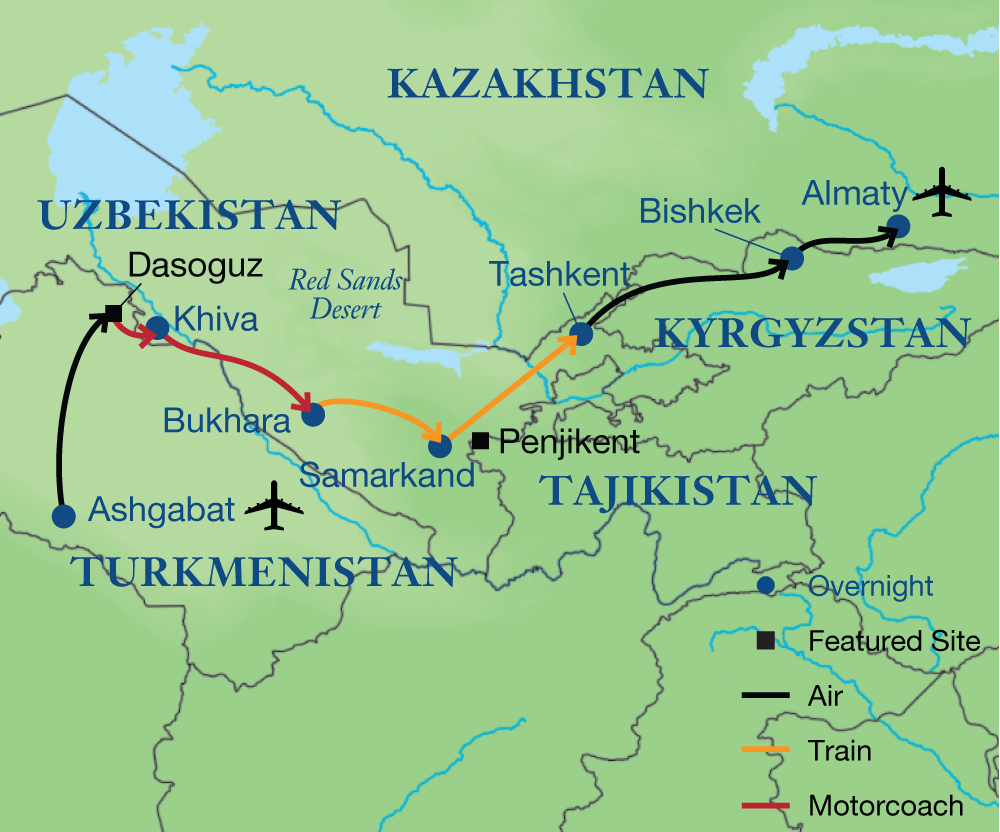
Featuring the Five “Stans” of Turkmenistan, Uzbekistan, Tajikistan, Kyrgyzstan, and Kazakhstan
Central Asia is the heart of the Silk Road, ancient caravan routes used for the silk and spice trade between East and West. Explore the fabled Silk Road on a journey through Five ’Stans: Turkmenistan, Uzbekistan, Tajikistan, Kyrgyzstan, and Kazakhstan. Experience the past and present of these countries as you explore legendary cities, visit religious sites and museums, attend cultural programs, and meet local experts.

Highlights
- Turkmenistan: Beginning in Ashgabat, visit the National Museum of History and Ethnography, plus tour the ancient site of nearby Nisa with an archaeologist.
- Uzbekistan: Explore the legendary cities of Khiva, Bukhara, Samarkand, and Tashkent, with their noble squares and breathtaking architecture. Highlights feature religious sites, including madrassahs and important mosques such as the 20th-century Tillya Sheikh Mosque, home to the oldest Koran in the world, and Bibi Khanum Mosque, built by Tamerlane to be the largest mosque in the world. You'll meet with the scientific advisor of the Ark Citadel, artists at a renowned ceramics observatories, drive across the Red Sands Desert, and enjoy performances of traditional music and dance.
- Tajikistan: Visit Penjikent, an isolated city of 130,000 that was built in the 5th century and most famous for its past as an important Sogdian trade center. Visit the site of an archaeological dig at Old Penjikent, where excavations began over 50 years ago. Tour the remains of Shakristan, two Zoroastrian temples, the citadel, and Rudaki Museum of History and Regional Studies, named after the founder of Tajik and Persian poetry.
- Kyrgyzstan: In the capital of Bishkek, tour the central square, the National History Museum, and the State Museum of Fine Arts, and meet with a Kyrgyz resident who participated in the 2010 revolution. In a nearby village, enjoy lunch with a family in their home and watch a demonstration of Kyrgyz horse games. Later delight in a Kyrgyz Manas folk performance.
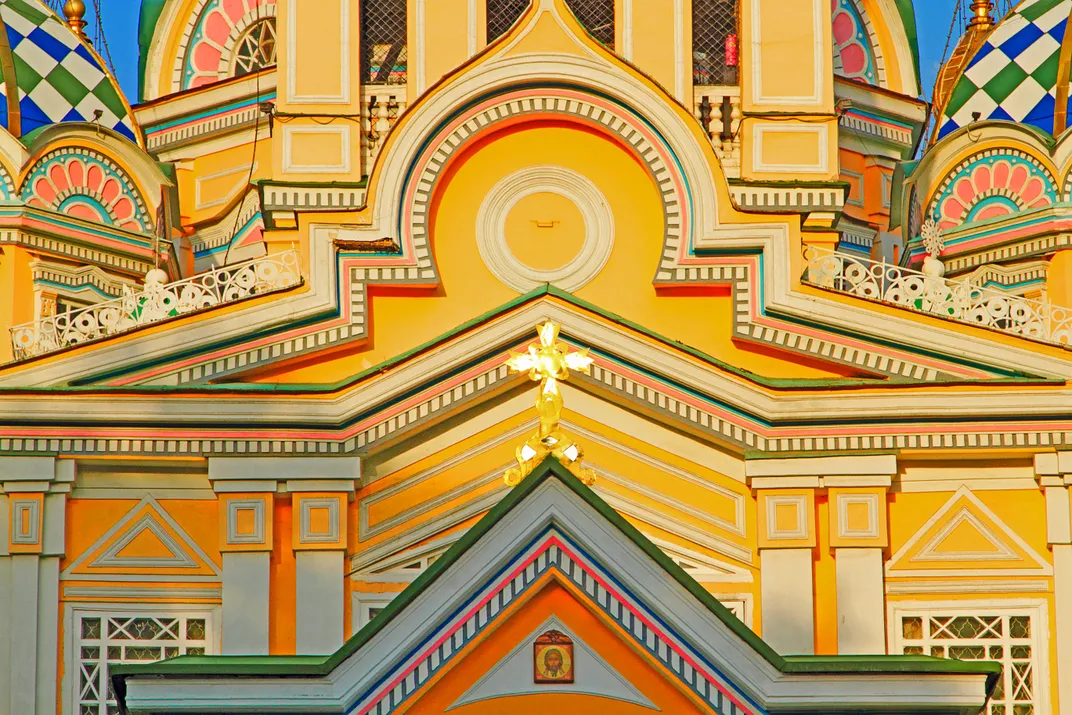
- Kazakhstan: Highlights in Almaty include the Zenkov Cathedral, the delightful Museum of Musical Instruments, and the State Central Museum. Outside the city, see the Small Almaty Gorge and visit a traditional Kazakh falcon farm.
A fascinating tour in a fascinating world. Don't miss it.
— Bechir R.
/https://tf-cmsv2-journeys-media.s3.amazonaws.com/filer_public/9e/0e/9e0ef6f9-7cfd-4858-b485-3259c7ec8ee2/kyr_valley_with_yurts_dt_58644828.jpg)
Itinerary
To see itinerary, please click on an option below.
Days 1-2 – Depart the U.S. / Ashgabat, Turkmenistan
Fly to Ashgabat, losing from 9 (East Coast) to 12 hours (West Coast). Arriving in Ashgabat in the early morning hours of day 3, transfer to the centrally located hotel for check in and rest.
Day 3 – Ashgabat
Following a free morning at leisure, spend the afternoon on an introductory tour of Ashgabat. Highlights of today’s tour include the Monument of Neutrality, the fountains-cooled Independence Park, and the magnificent President Palace Square. Gather this evening with fellow travelers for a welcome dinner to celebrate the beginning of the journey. (B,D)
Day 4 – Ashgabat
Continue to explore Ashgabat today with an archaeologist led visit to ancient Nisa, a visit to the National Museum of History and Ethnography, and a stop at the colorful Russian Bazaar. (B,L,D)
Day 5 – Ashgabat / Fly to Dasoguz / Drive to Khiva, Uzbekistan
This morning check out and transfer to the airport for a flight to Dasoguz in the northern part of the country. On arrival, enjoy a short tour before driving across the border to the World Heritage designated city of Khiva, Uzbekistan. Over dinner, enjoy a colorful performance of Khorezmian music and dance. (B,L,D)
Day 6 – Khiva
Spend the day exploring Khiva on foot. Highlights include the Tash Hauli Palace, once the home of the khan and his four legal wives, and an open courtyard for enthroning the khans. Also see the 9th-century Dzhuma Mosque with an unusual wood ceiling and 115 carved wood columns, creating a forest-like effect. The khans had several residences, including the Tash Hauli Palace, but the Kunya Ark (Old Fortress) dates back to the 5th-century as the original residence. The view from the watchtower of the Kunya Ark encompasses an ensemble of architectural masterpieces. (B,L)
Day 7 – Khiva to Bukhara
This morning, depart Khiva for Bukhara by train (or bus, schedule dependant). The ride lies across long stretches of the Kyzyl Kum, or Red Sands Desert. This is the same route ridden by loaded Silk Road camel caravans and once plagued by brigands on hand to plunder their riches. The landscape is made up of dunes, saxaul bushes, and the distant mountains. Arrive in Bukhara in the afternoon and enjoy some time for independent exploration before dinner. This evening, visit a local madrassa to dine and enjoy a performance by local artists. (B,L,D)
Day 8 – Bukhara
Spend the day exploring Central Asia’s most ancient living city. The Old Town in Bukhara has a unified feel, drawn together by a central reflecting pool and plaza, by commonality in the structure of the domed bazaars and by the major monuments ringing the old town: the Kalon Assembly, the Zindan Prison, and the Ark Citadel. Enjoy an exclusive meeting with the Scientific Advisor of the Ark Citadel. Finish the day with a walk through Bukhara’s old Jewish Quarter, where in the mid 19th-century 2,500 families of prosperous merchants were estimated to have been living (B,D)
Day 9 – Bukhara / Samarkand
This morning after breakfast visit the Emir’s Summer Palace and the Bakhaudin Nakshbandi mausoleum complex before setting out by rail for Samarkand in the afternoon. Check in to the hotel on arrival, followed by dinner this evening in a private home.(B,L,D)
Day 10 – Samarkand
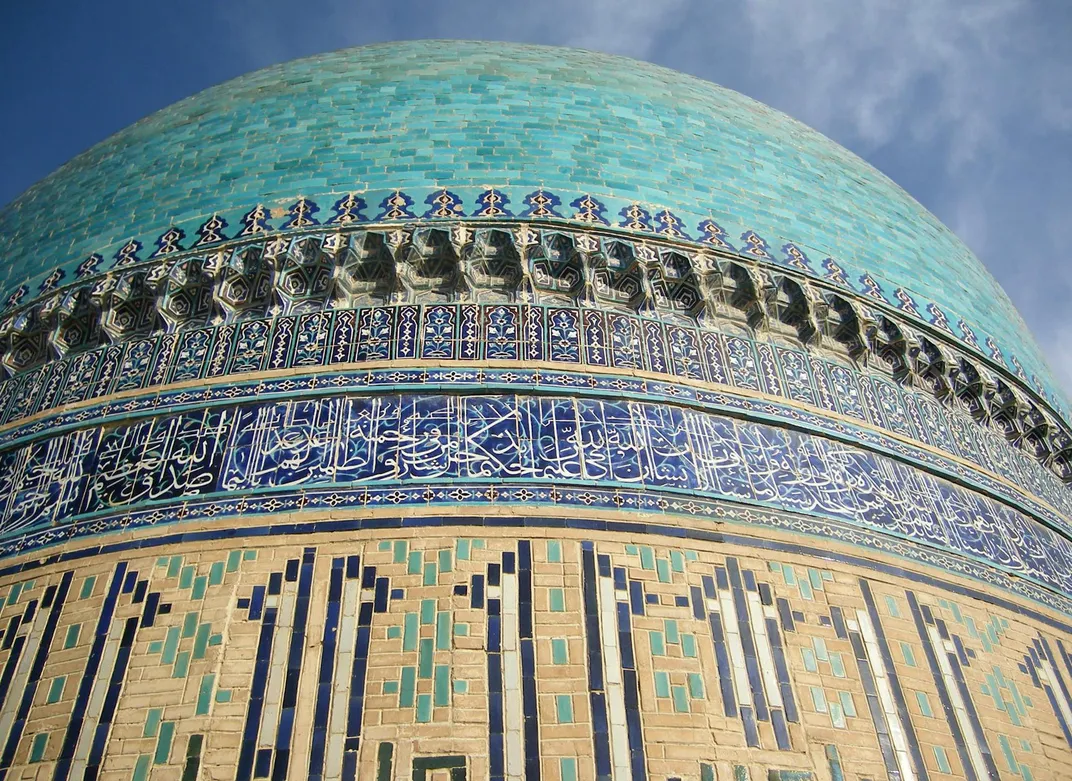
Today explore glorious Samarkand. Begin at the Registan, Central Asia’s most noble square, which maintains the majesty that it has radiated through the ages. Three emblematic madrassahs frame the square and loom over the empty space in the center. Visit Bibi Khanum Mosque, built by Tamerlane to be the largest mosque in the Islamic world. Wander the row of tombs and mausoleums collectively called Shah-i-Zinda, or “place of a living king,” stretching between the present and the past. Pay a visit to Ulugh Beg’s Observatory, one of the most advanced observatories of the ancient world. Other highlights include the colorful bazaar, as well as the Gur-Emir Mausoleum, the final resting place of Tamerlane. (B,D)
Day 11 – Samarkand / Day trip to Penjikent, Tajikistan
Today take a day trip to Penjikent in nearby Tajikistan. Penjikent, an isolated city of approximately 130,000, is most famous for its past. Here visit the site of an archaeological dig at Old Penjikent, where excavations began over 50 years ago, tour the remains of Shakristan, Zoroastrian temples, and the Citadel, and visit the Rudaki Museum of History and Regional Studies. (B,L)
Day 12 – Samarkand / Train to Tashkent
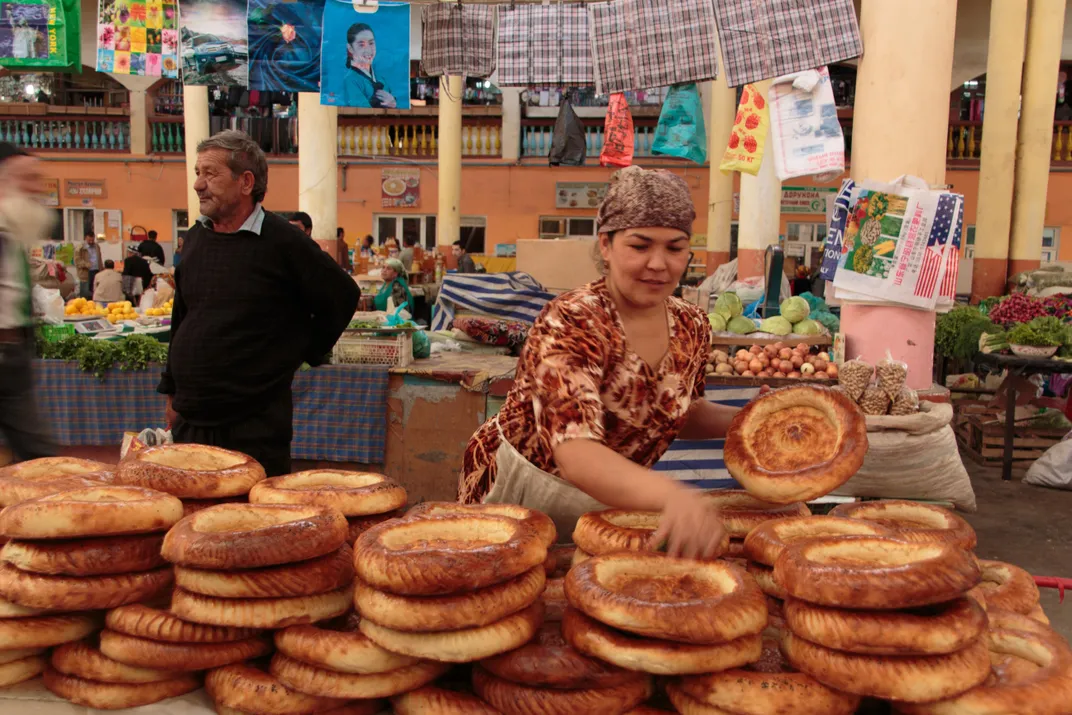
Continue to explore Samarkand with a visit to the workshop where handcrafted paper is made according to traditions handed down from the 8th-century, when paper-making began in Samarkand. Also stop at the Uzbek-Afghan Silk Carpet Factory, where you can observe the entire process of dying the thread and weaving the carpets, with an opportunity to shop afterwards. Over lunch, witness the demonstration of traditional Uzbek bread making. In the evening, take the express train to Tashkent. Dinner this evening is served late at our hotel. (B,L,D)
Day 13 – Tashkent / Fly to Bishkek, Kyrgyzstan
Spend the day exploring Tashkent. Take a drive past some of the city’s main landmarks, including Independence Square, Shahid Memorial Complex and Courage Monument. In Tashkent's Old Town with its winding streets, mudbrick buildings and Middle Eastern feel. A visit to Old Tashkent begins with a stroll through Khast Imam Square, where some of Tashkent’s oldest monuments remain. The 16th-century Kaffal Shashi Mausoleum, the tomb of one of the first imams of the Muslim world, and Barak-Khan Madrassah, also 16th-century, are flanked by the 19th-century al-Bukhari Madrassah and the early 20th-century Tillya Sheikh Mosque, which houses the oldest Koran in the world. After lunch, browse the Museum of Applied Arts, its interior decorated by artisans from Samarkand, Bukhara, and Fergana, featuring the painted carved plaster called ganche, carved wood, and tile work. Exhibits include the Uzbek embroidered wall coverings called suzani, ceramics, jewelry, rugs, and musical instruments. Transfer to the airport for the late afternoon flight to Bishkek, Kyrgyzstan. Upon arrival, transfer to the city center and check into the hotel. (B, D)
Day 14 – Bishkek
This morning, travel approximately 80 km outside the city to see the Burana Tower and the small nearby museum with its collection of ancient bal-bals, carved stone figures used as monuments. Lunch today is at the private home of a local family in Tokmak village. Enjoy the opportunity to meet the host and hostess and sample traditional Kyrgyz dishes. Following lunch, attend a demonstration of Kyrgyz horse games, such as Ulak Tartysh, a sort of polo played with a goat carcass, and Kurosh, which is wrestling on horseback. This evening, enjoy dinner accompanied by a Kyrgyz Manas folk performance at a local restaurant. (B,L,D)
Day 15 – Bishkek / Fly to Almaty, Kazakhstan
After breakfast at the hotel, explore Bishkek. Bishkek is graced with large boulevards, friendly people and more trees than any other Central Asian city. On clear days, the permanently snow-capped mountains looming over the city provide spectacular views. Visit the city’s central square, Ala-Too, and the National History Museum featuring four floors of art and artifacts. Meet with a resident Kyrgyz individual who participated in the April 7, 2010 revolution and together visit the “Ata-Beiit” Memorial complex on the outskirts of Bishkek to pay respects to the fallen Kyrgyz heroes and leaders from ancient times to the modern times who have been laid to rest.
At the end of the day, transfer to the airport for the short evening flight to the former capital of Kazakhstan, Almaty. Spread out at the foothills of the Zaili Alatau Mountains in the Tien Shan range, Almaty is the largest city in Central Asia’s richest country, Kazakhstan. Present-day Almaty sits on the site of an old Silk Road oasis town called Almatu; laid waste by the Mongols in 1211, the city left no ancient remains. Almaty’s name means “the place with apples,” and the many varieties of wild apple in the vicinity give scientists reason to believe that this is where apples were first domesticated. (B,L,D)
Day 16 – Almaty
A tour of Kazakhstan’s largest city begins with a visit to the traditional Kazakh falcon farm, where hunters on horseback wearing national costumes will give an exclusive demonstration of how the beautiful birds are used for hunting. Later, visit Panfilov Park with its Zenkov Cathedral, a wooden Orthodox church built at the turn of the century without the use of nails. At the delightful Museum of Musical Instruments, enjoy a short performance. Tour the State Central Museum, a history museum with exhibits that detail the development of Kazakhstan and its people from the Bronze Age through the Russian Empire, the Communist Period and the present day. Visit Kok-Tobe, a 3,800-foot hill on the outskirts of Almaty with an aerial tramway leading to a recreation area at the top. Raise a toast to the end of our journey at a festive farewell dinner. (B,L,D)
Day 17 – Depart Almaty
The tour concludes with an early morning transfer to the airport for international departures.
Included meals are denoted as follows: Breakfast (B), Lunch (L), Reception (R), Dinner (D)
/https://tf-cmsv2-journeys-media.s3.amazonaws.com/filer/58/6b/586bc79e-39e2-4e79-8b62-00b373495c04/uzb_samarkand_registan_panorama_dt_l_141082514.jpg)
/https://tf-cmsv2-journeys-media.s3.amazonaws.com/filer/58/6b/586bc79e-39e2-4e79-8b62-00b373495c04/uzb_samarkand_registan_panorama_dt_l_141082514.jpg)
/https://tf-cmsv2-journeys-media.s3.amazonaws.com/filer_public/9e/0e/9e0ef6f9-7cfd-4858-b485-3259c7ec8ee2/kyr_valley_with_yurts_dt_58644828.jpg)
/https://tf-cmsv2-journeys-media.s3.amazonaws.com/filer/5a/a4/5aa45cb1-be53-42d2-973a-b6a68ff89be9/uzb_samarkand_shahizinda_dt_l_45723845.jpg)
/https://tf-cmsv2-journeys-media.s3.amazonaws.com/filer/28/c7/28c74c7d-517e-4688-87ff-3ba09d6c7d0b/kzh_people_falconry_ss_236742334.jpg)
/https://tf-cmsv2-journeys-media.s3.amazonaws.com/filer/a8/51/a8518d38-8428-45eb-8982-36902c4ac1e3/uzb_samarkand_sherdormadrasah_dt_l_24108442.jpg)
/https://tf-cmsv2-journeys-media.s3.amazonaws.com/filer/9f/8f/9f8f8db2-f295-4a60-a072-becd5d5b4a08/uzb_samarkand_dt_l_20122487.jpg)
/https://tf-cmsv2-journeys-media.s3.amazonaws.com/filer/81/be/81be7deb-6756-4f68-892c-30bd14b974de/uzb_bukhara_palace_dt_m_54183367.jpg)
/https://tf-cmsv2-journeys-media.s3.amazonaws.com/filer/25/42/25427815-425b-472b-8480-1b4858d15f19/img_2163.jpg)
/https://tf-cmsv2-journeys-media.s3.amazonaws.com/filer_public/06/1e/061ed1d8-6063-4840-bf46-edee81e475d1/taj_penjikent_city_panorama_dt_xxl_72596220.jpg)
/https://tf-cmsv2-journeys-media.s3.amazonaws.com/filer_public/d7/55/d755aa2a-3527-4c7c-b00e-2fa16afe5e55/kyr_burana_tower_dt_42422458.jpg)
/https://tf-cmsv2-journeys-media.s3.amazonaws.com/filer_public/d3/e5/d3e5d9b6-f56c-4e95-8684-4311ad2ffff8/kyr_burana_statues_dt_36713594.jpg)
/https://tf-cmsv2-journeys-media.s3.amazonaws.com/filer/f6/7f/f67fe4d0-d290-4fde-9199-42684ca9d854/photo_01-05-13_05_53_53.jpg)
Dates & Prices
Click on the departure date to see pricing. Click the for more information.
Dates
Availability
Price
Sep 2 - 18, 2026
Available
from $9,495
Sep 9 - 25, 2026
Available
from $9,495
Sep 16 - Oct 2, 2026
Call to Join Waitlist
from $9,495
Oct 7 - 23, 2026
Call to Join Waitlist
from $9,495
Prices are based on rates of exchange, airfare & fuel (where applicable), tariffs, taxes, and other costs as of the tour publication date. We reserve the right to correct errors and to increase program prices to cover increased costs, tariffs, and taxes received after prices are published and to reflect currency fluctuations.
/https://tf-cmsv2-journeys-media.s3.amazonaws.com/filer/5a/a4/5aa45cb1-be53-42d2-973a-b6a68ff89be9/uzb_samarkand_shahizinda_dt_l_45723845.jpg)
Experts
/https://tf-cmsv2-journeys-media.s3.amazonaws.com/journeys/expert/Romey_Kristin.jpg)
Kristin Romey
Archaeologist & Journalist
Kristin Romey has been captivated by archaeology since she was a child visiting the Pyramids of Giza in Egypt. A trained underwater archaeologist and fellow …
Kristin Romey has been captivated by archaeology since she was a child visiting the Pyramids of Giza in Egypt. A trained underwater archaeologist and fellow of the Explorers Club, Kristin has worked on land and sea expeditions from Turkey to Yemen and Kyrgyzstan, and was one of the first westerners to survey for ancient shipwrecks in the Black Sea.
She is also a former senior editor at National Geographic and executive editor of Archaeology magazine, where her journalism brought the thrill of the dig to audiences around the world. She’s excited to share the stories and ancient cultures that archaeology has brought to light along the trade routes that linked the Mediterranean and Asia.
+ Show more
/https://tf-cmsv2-journeys-media.s3.amazonaws.com/journeys/expert/Parkison_Kathy.jpg)
Kathy Parkison
Economist & Political Scientist
Kathy Parkison is a professor emerita of economics who spent most of her teaching career at the School of Business at Indiana University, Kokomo. She …
Kathy Parkison is a professor emerita of economics who spent most of her teaching career at the School of Business at Indiana University, Kokomo. She was in her PhD program when the Soviet Union fell apart, and witnessing that historic moment as a student of economics and political science inspired a lifelong fascination with the region. She was enthralled with learning about all the new countries that came into being and has continued to follow their histories and economic development as they have integrated with the world. While at Indiana University, Kokomo, Kathy won numerous teaching awards and served in a number of administrative positions.
Kathy was a Fulbright scholar in the Republic of Georgia in the early 2000s and recently completed her second Fulbright fellowship in Turkmenistan. She has also led Fulbright trips throughout the Balkans, sharing her insights into the history and culture of the region. Along with leading economic education workshops in numerous countries within the Commonwealth of Independent States (CIS), Kathy has lived and worked in Kazahkstan and been involved with election monitoring in the Balkans and the CIS region.
+ Show more
/https://tf-cmsv2-journeys-media.s3.amazonaws.com/journeys/expert/Silverberg_David_Scott.jpg)
David Scott Silverberg
Geographer
David Scott Silverberg is an expert in earth sciences, geography, and conservation biology who has worked throughout Asia since the 1980s. Born in New York, …
David Scott Silverberg is an expert in earth sciences, geography, and conservation biology who has worked throughout Asia since the 1980s. Born in New York, David has lived most of his life abroad, working in more than 125 countries—including 16 years in Norway, seven years in Germany, 10 years in northern Italy, and four years in Morocco. He is an active mountaineer and has explored the Himalaya, Andes, Atlas, Alps, and beyond.
A fellow of the Explorers Club and the Royal Geographical Society, David is a passionate experiential educator who has designed and taught graduate and undergraduate field programs around the world for numerous universities. He served as executive director of Earthwatch Institute Center for Field Research, and helped launch Americorps as the associate director for environment programs at the White House. David received his PhD from MIT and his post-doc from Harvard University.
With support from the National Science Foundation, National Geographic Society, and the American Alpine Club, David has produced numerous peer-reviewed papers on the formation of mountain regions around the world. His current research investigates the geographic determinants of culture and history as well as the effects of biodiversity loss and changes in climate, land cover, and oceans. David has done extensive research into the network of trade routes that linked China and Europe and their role in dispersing ideas, religions, technology, science, art, architecture, and myths. His multi-layered narratives trace the rise and fall of nomadic confederacies, sedentary societies, kingdoms, and empires across the steppe, mountains, and deserts of Central Asia.
+ Show more
/https://tf-cmsv2-journeys-media.s3.amazonaws.com/journeys/expert/Shapiro-Hugh.jpg)
Hugh Shapiro
Cultural Historian
Hugh Shapiro is a professor of East Asian history at the University of Nevada. He has also enjoyed visiting appointments at Princeton University, Princeton’s Institute …
Hugh Shapiro is a professor of East Asian history at the University of Nevada. He has also enjoyed visiting appointments at Princeton University, Princeton’s Institute for Advanced Study, and at universities in China, Japan, and Taiwan. His extensive archival and fieldwork regards the history of medicine, disease, and the body in comparative context. His recent work appears in volumes published by Harvard University Press, Brill, and Oxford University Press.
Hugh’s other research and teaching interests include visual and performance art, Central and Southeast Asia, and the history of decolonization and authoritarianism. During his years of study and research overseas, he enjoyed diverse experiences, such as working on an innovative Sino-Japanese television series for NHK. He received the Li-Qing Prize for the History of Chinese Science and won his university’s highest teaching award. Hugh earned his B.A. from Stanford University and his PhD from Harvard University. Hugh has traveled extensively in Eurasia, from Japan to Russia, into the Himalaya, and along the Silk Road. As a Smithsonian Journeys Expert, he has lectured in 20 countries.
Hugh enjoys mountain sports and counts volcanic Kamchatka, Greenland, and Mount Kōya near Kyoto as among his favorite destinations. Hugh also loves the water and is especially drawn to Lake Baikal, Lake Superior, the Yangtze, and the Mekong. He aims for what he terms “adventure pedagogy”: mindful immersion in the host culture combined with serious study of its history, literature, and geopolitics.
+ Show more
/https://tf-cmsv2-journeys-media.s3.amazonaws.com/journeys/expert/Spratlen_Pamela.jpg)
Pamela Spratlen
Foreign Affairs Specialist
Pamela L. Spratlen is a diplomat, public speaker, and consultant following a 30-year career with the U.S. State Department. In the Senior Foreign Service, she …
Pamela L. Spratlen is a diplomat, public speaker, and consultant following a 30-year career with the U.S. State Department. In the Senior Foreign Service, she served twice as U.S. Ambassador in the Kyrgyz Republic (2011-14) and Uzbekistan (2015-18). In other tours she worked and traveled throughout Central Asia.
As Ambassador, Pamela worked tirelessly to highlight the importance of Central Asia in the USA and to improve relations with the five countries of the region. She helped countries save architectural treasures though the Ambassador’s Fund for Cultural Preservation. She brought U.S. musical groups to perform in parts of Central Asia that had not seen American talent for years and helped talented Central Asian artists travel to the USA. Pamela traveled to Karakalpak’stan to showcase the tragedy of the depletion of the Aral Sea. At the end of her tenure, the president of Uzbekistan presented her with the Order of Dostlik (Friendship) to express appreciation for her contributions to bilateral relations. Earlier tours included stints in Moscow, Vladivostok, Paris, Guatemala, Hawaii and Washington, DC.
Pamela now supports diplomacy and development through service on the boards of the American Academy of Diplomacy and the Eurasia Foundation. She is a member of the Una Chapman Cox Policy Committee.
Pamela graduated from Wellesley College and received master’s degrees from the University of California at Berkeley, Goldman School of Public Policy, and the Army War College. She looks forward to sharing her passion for Central Asia with the Smithsonian Journeys tours.
+ Show more
/https://tf-cmsv2-journeys-media.s3.amazonaws.com/journeys/expert/Pilaar_Birch_Suzanne.jpg)
Suzanne Pilaar Birch
Archaeologist
Dr. Suzanne Pilaar Birch is an archaeologist who works to advance our understanding of human resilience to climate and environmental change in prehistory. An associate …
Dr. Suzanne Pilaar Birch is an archaeologist who works to advance our understanding of human resilience to climate and environmental change in prehistory. An associate professor anthropology and geography at the University of Georgia, she combines the study of animal bones and biogeochemistry to investigate changes in diet, mobility, and settlement systems from the last ice age to the early agricultural era. Her research has taken her from Turkey to Croatia, Kazakhstan, China, Italy, Cyprus, and most recently, Jordan. She has visited 27 countries across six continents over the course of her career.
Suzanne wrote and recorded the 20-episode series Early Humans: Ice, Stone, and Survival for The Great Courses and has published more than 35 peer-reviewed journal articles and book chapters. She has been awarded research funding from sources including the National Science Foundation, National Geographic, and the Arts and Humanities Research Council of the United Kingdom. She edited the book Multispecies Archaeology and is currently writing two popular audience books, Animal Bone Detectives and Life Before Agriculture.
Suzanne co-founded the non-profit organization TrowelBlazers, which highlights the contributions of women past and present in archaeology, paleontology, and geology. She was a Gates Cambridge Scholar at the University of Cambridge, where she earned a PhD in archaeology, and a postdoctoral fellow at Brown University’s Joukowsky Institute for Archaeology and the Ancient World.
+ Show more
:focal(189x229:190x230)/https://tf-cmsv2-journeys-media.s3.amazonaws.com/filer_public/d8/a9/d8a9376d-99a8-4688-baae-752853ccf652/jacobs_sandy.jpg)
Sandy Jacobs
Foreign Affairs Specialist
Sandy Jacobs is a former U.S. diplomat and post-Soviet specialist who has focused primarily on Central Asia and its broader region for the past two …
Sandy Jacobs is a former U.S. diplomat and post-Soviet specialist who has focused primarily on Central Asia and its broader region for the past two decades. She offers on-the-ground expertise drawn from Foreign Service roles in Uzbekistan, Tajikistan, and Estonia, where she led cultural preservation and educational initiatives; advised U.S. and local leaders on history, society, and regional dynamics; and hosted a wide range of artists, academics, business leaders, and senior U.S. government officials. Sandy also served as a Peace Corps Volunteer in Ukraine immediately following the Orange Revolution.
Sandy’s work has taken her from the bazaars of Tashkent to the hiking trails of the Pamir mountains, from ancient Fergana Valley settlements to the mosques and minarets of Samarkand, Bukhara, and Khiva. She developed a deep understanding of Central Asia’s religious traditions, architectural heritage, and cross-cultural interactions. She immersed herself in artisan traditions and culinary history, knowledge she later brought into her work, co-authoring a cookbook that highlighted cultural storytelling and the migration of Central Asian dishes to Ukraine.
A Russian speaker and Central Asian art collector, Sandy understands that history is not confined to monuments. Instead, it lives in food, faith, hospitality, and daily negotiation with a past shaped by centuries of Silk Road exchange. She is passionate about helping travelers see beyond headlines to understand how Persian, Turkic, Islamic, and Soviet influences coexist in real communities today.
+ Show more
/https://tf-cmsv2-journeys-media.s3.amazonaws.com/filer_public/64/60/646046c9-9c21-4147-86e6-9c2fb948a5cc/lawler_andrew.jpg)
Andrew Lawler
Journalist and Author
Andrew Lawler covers history, archaeology, and cultural heritage in the Middle East and Central Asia for a host of publications. He is a contributing writer …
Andrew Lawler covers history, archaeology, and cultural heritage in the Middle East and Central Asia for a host of publications. He is a contributing writer for Science, a contributing editor for Archaeology, and has written often for Smithsonian magazine and National Geographic. His byline has appeared in The Atlantic, The New York Times, Scientific American, and many other newspapers and magazines. Author of four books, including the prize-winning Under Jerusalem, he has won numerous writing awards and fellowships.
Photo credit: Scott Smith
+ Show more
/https://tf-cmsv2-journeys-media.s3.amazonaws.com/filer/28/c7/28c74c7d-517e-4688-87ff-3ba09d6c7d0b/kzh_people_falconry_ss_236742334.jpg)
Tour Details
Accommodations
Hotel Oguzkent
Ashgabat, Turkmenistan
Elegant yet traditional, the Oguzkent Hotel is situated in Ashkabad's city center, across from Neutrality Park. Designed for comfort and convenience, rooms come with a minibar, safe, air conditioning and WiFi. Three restaurants, a spa and mall are also located within the hotel.
Asia Hotel Khiva
Khiva, Uzbekistan
Located just outside of Ichon Qala and a two-minute walk from the city wall, Hotel Asia Khiva offers a beautiful lobby, a restaurant with its own bakery, bar, conference hall, Internet, pool and sauna. All rooms have air-conditioning, satellite TV, phone and minibar.
Latifa Begim Hotel
Bukhara, Uzbekistan
The beautiful Latifa Begim Hotel is one of Bukhara's best and newest properties. It is conveniently located just off the central Lyabi Hauz Square and within easy walking distance of most of the Old Town area. The hotel features traditional Bukharan design elements including plaster carvings, woodwork, and tiles. All rooms include air conditioning, Wi-Fi, and other modern amenities.
Zarafshon Parkside Hotel
Samarkand, Uzbekistan
Zarafshon Parkside Hotel in Samarkand offers comfortable accommodations with modern amenities. Originally established in 1959 and renovated since, the hotel features well-appointed rooms, an outdoor pool, a restaurant serving Uzbek cuisine, and garden-like spaces for relaxing strolls.
Crowne Plaza Tashkent
Tashkent, Uzbekistan
Crowne Plaza Tashkent is a modern hotel with comfortable rooms designed to help you rest well. The hotel offers a gym, an indoor pool, a sauna, and a full spa for travelers who want to relax or stay active. It also has two on-site restaurants, including one with Italian dishes, and a lounge that’s open 24/7.
Novotel Bishkek City Center
Bishkek, Kyrgyzstan
Opened in March of 2021, the Novotel Bishkek offers modern and contemporary 4-star comforts in the center of Kyrgyzstan's capital city. Onsite amenities include a fitness and spa facilities with a Turkish bath and sauna, massage rooms, an indoor swimming pool, and a restaurant serving local and Mediterranean fare. Multilingual front desk and concierge services are available 24 hours a day and high-speed Wifi is available throughout the property.
InterContinental Almaty Hotel
Almaty, Kazakhstan
Located in downtown Almaty, the five-star Intercontinental is beautifully appointed with a grand atrium entryway. Rooms have a minibar, air conditioning and satellite TV. Multiple restaurants on the property serve everything from Chinese to Turkish cuisine and the French-inspired Belvedere Grill with its rooftop-dining terrace is known as one of the best restaurants in the city. A Turkish bath is available at the onsite spa along with an indoor pool, tennis courts and golf courses.
Reading List
*As an Amazon Associate, Smithsonian Journeys earns from qualifying purchases.
Explore the life, art, and influence of the greatest traders of the Silk Road at Smithsonian's National Museum of Asian Art.
Highly Recommended
![(The Great Game: The Struggle for Empire in Central Asia (Kodansha Globe)) [By: Hopkirk, Peter] [May, 1994]](https://th-thumbnailer.cdn-si-edu.com/Mui2_XoIUuO55lauhTpXEq5eVpg=/fit-in/300x0/https://tf-cmsv2-journeys-media.s3.amazonaws.com/amazon/amazon_image_21794ea32b744eb2c07394530d0fd91cbb957251.jpg)
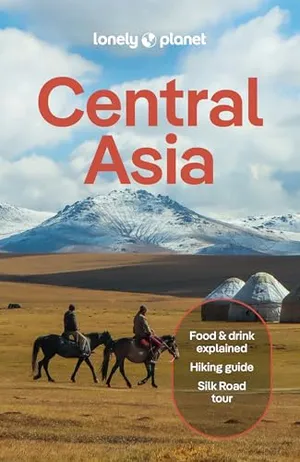
Also Recommended
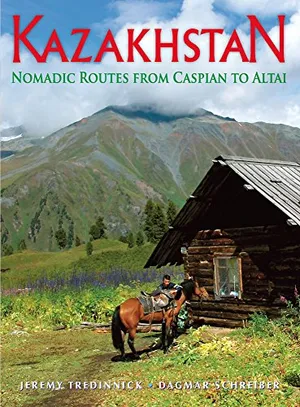
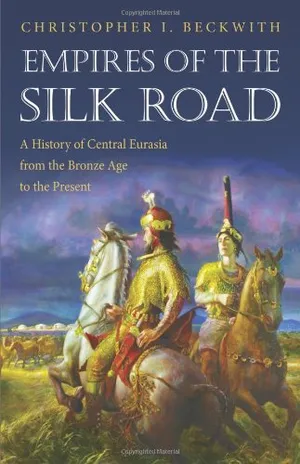
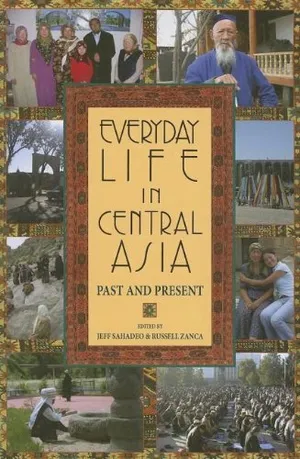
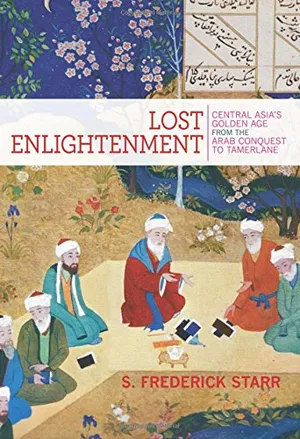
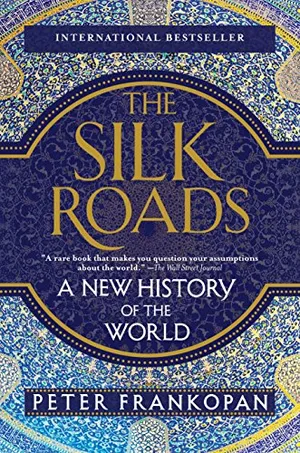
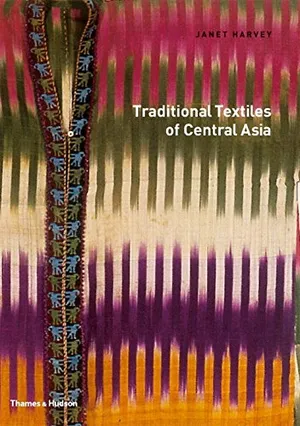
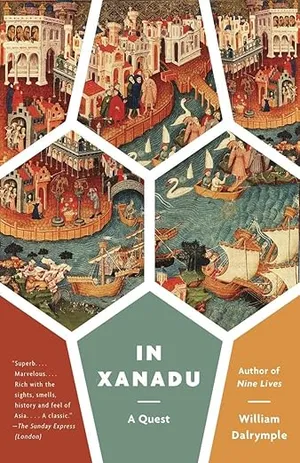
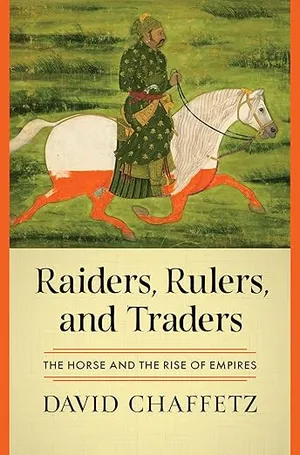
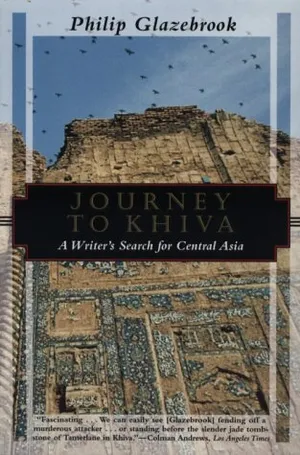
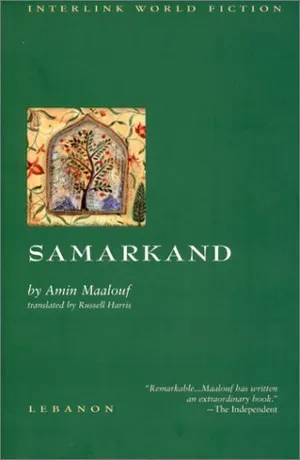
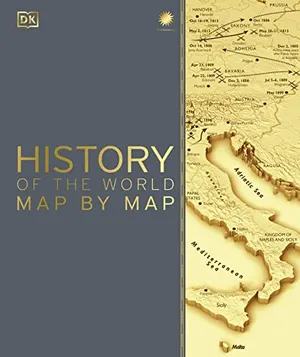
Testimonials
What our travelers are saying...
— Bechir R.A fascinating tour in a fascinating world. Don't miss it.
— Roger and Beth, S.This tour has helped fill in gaps in my historical understanding of Central Asia. Our expert and the local guides were brilliant, attentive, engaging, and helpful. We had meals at the homes of several local families which allowed us to sample their food and speak to the hosts. The ancient sites were certainly as awesome, some even as old, as those in Egypt. This was a thoroughly enriching experience.
— Janice S.Central Asia with Smithsonian Journeys was an eye-opening experience to a little-known part of the world. One of the most memorable trips I have ever taken.
— Laura G.Our trip to the Five Stans with Smithsonian Journeys was extraordinary. Exploring the Silk Road fulfilled a lifelong dream—particularly Samarkand with some of the most magnificent Islamic architecture on the planet.
Travel Insurance
For the convenience of our travelers, Smithsonian Journeys includes a basic medical expense and evacuation plan through Trip Mate, a Generali Global Assistance & Insurance Services brand, at no additional charge. This plan provides post-departure Medical and Dental coverage of $250,000 per person and Emergency Assistance and Transportation coverage of $1,000,000 per person (U.S. Residents Only). Note: For full details regarding these coverages please review the following Plan Documents here.
In addition, we recommend that travelers purchase a travel protection plan to help protect their travel investment from unforeseen events such as cancellation due to illness, flight delays due to adverse weather, baggage loss, and more. For your convenience, Smithsonian Journeys offers an optional Travel Protection Plan administered by Trip Mate, a Generali Global Assistance & Insurance Services brand. For those interested, optional "Cancel for Any Reason" coverage is available for an additional charge. Note: Certain eligibility requirements apply and Cancel for Any Reason coverage is not available to New York residents. For full details regarding this coverage please review the following Plan Documents here.
To learn more about the Travel Protection Plan, you may visit https://www.generalipartner.com/smithsonianjourneys or call the administrator, Trip Mate, a Generali Global Assistance & Insurance Services brand at (866) 501-3252.
Related Tours
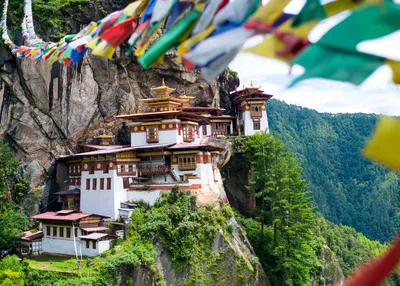
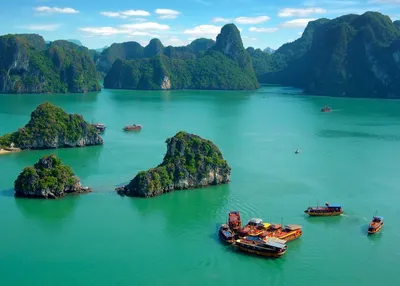
Vietnam, Laos, and Cambodia: A Tailor-Made Journey to Southeast Asia
14 days
|
from:
$6,425
Suggested Itinerary
/https://tf-cmsv2-journeys-media.s3.amazonaws.com/filer/32/72/3272130b-3b81-4521-9b73-5f90e63edf85/vtn_ricepaddies_dt_m_16608623.jpg)
/https://tf-cmsv2-journeys-media.s3.amazonaws.com/filer/bb/2f/bb2fb871-d89d-46e6-99e9-83d4317899ee/tha_bangkok_grandpalace_templeemeraldbuddha_dt_l_59116246.jpg)
Thailand's Enchanting Temples and Culinary Delights: A Tailor-Made Journey
12 days
|
from:
$5,255
Suggested Itinerary
/https://tf-cmsv2-journeys-media.s3.amazonaws.com/filer_public/8f/8f/8f8ffd10-9714-47d6-b13d-a9ee7cb5910f/nep_boudhanath_pano_ist-2265154940.jpg)
/https://tf-cmsv2-journeys-media.s3.amazonaws.com/filer_public/65/03/6503bc48-52ad-4643-b1ad-20647f1f0f53/jpn_fukuoka_dazaifutenmangushrine_l_109174173.jpg)