
/https://tf-cmsv2-journeys-media.s3.amazonaws.com/filer/3e/4e/3e4e0626-d2cb-4a61-9280-75cbf14d1c7b/spa_antequera_ist_174757715.jpg)
Spain's Andalusia: A One-Week Stay in Antequera
9 days from $4,690
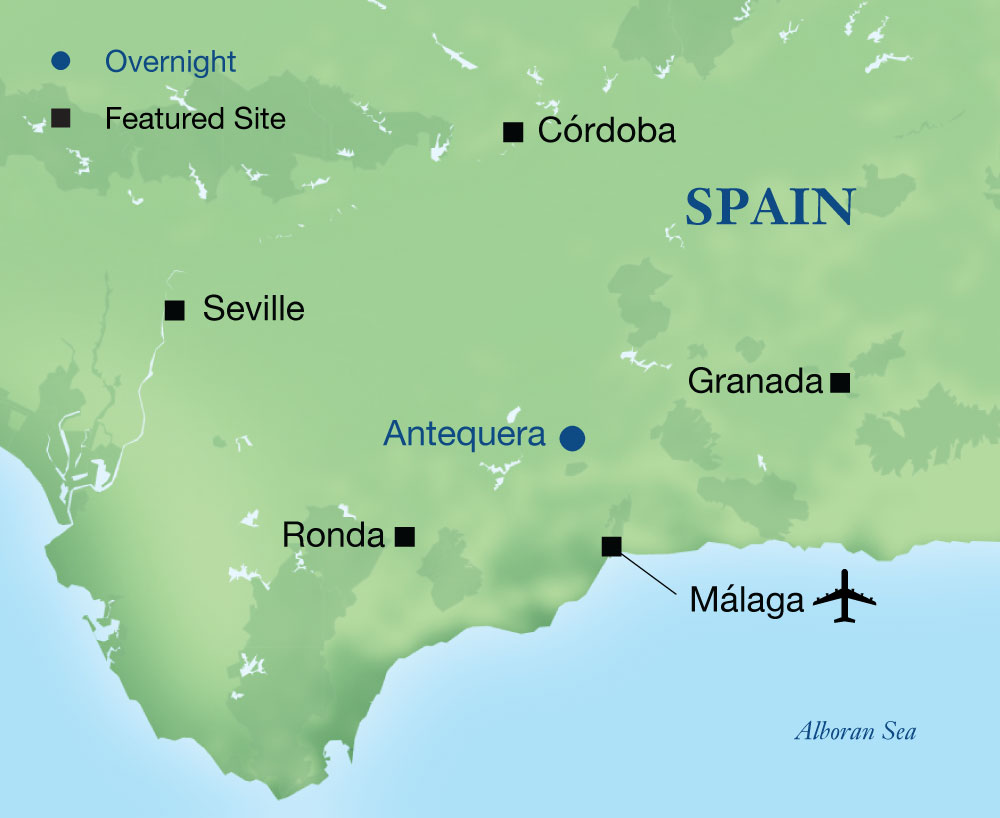
Settle into a modern parador in the medieval town of Antequera and explore the cultural treasures of Andalusia on day trips to Seville, Córdoba, Ronda, and Granada. Visit iconic World Heritage sites like the Alhambra and the Alcazar of Seville, and trace the region’s layered history through its Moorish, Christian, and Jewish influences. From flamenco to fine art, immerse yourself in the vibrant spirit of southern Spain.

Highlights
- Antequera: Settle into this classic medieval town, home to one of Europe’s most important megalithic tombs, a 14th-century fortress that watches over the city, and more than 30 churches and cathedrals.
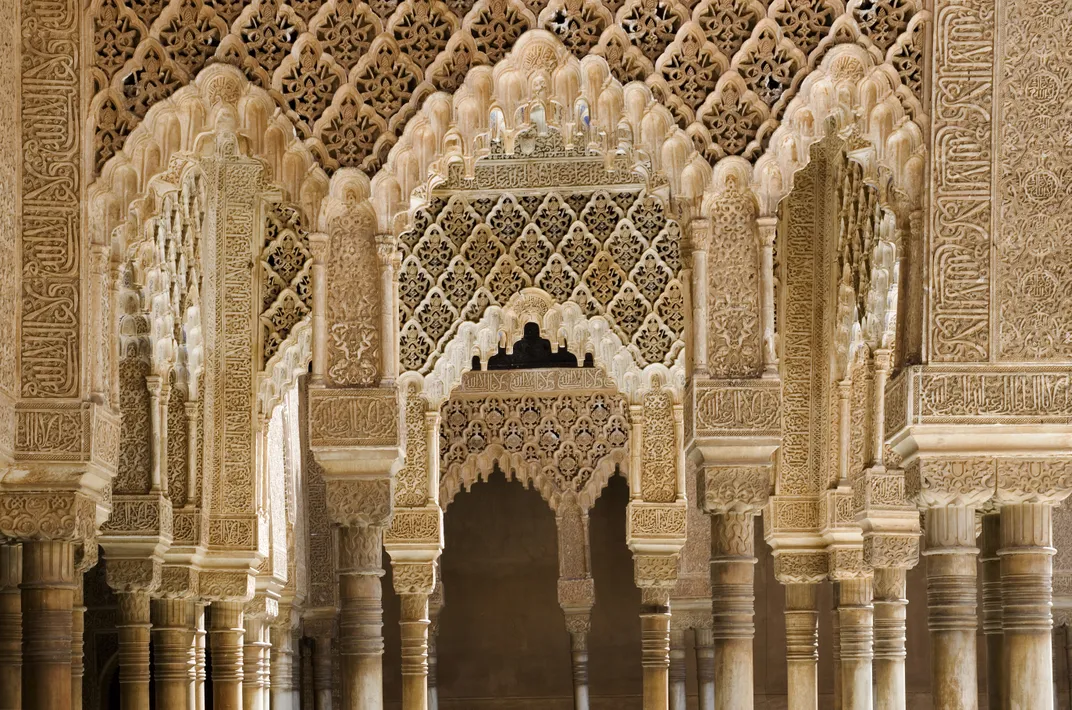
- Granada: Surround yourself with the exquisite Moorish artistry of Granada’s Alhambra on a guided tour, then enjoy lunch at the parador on site.
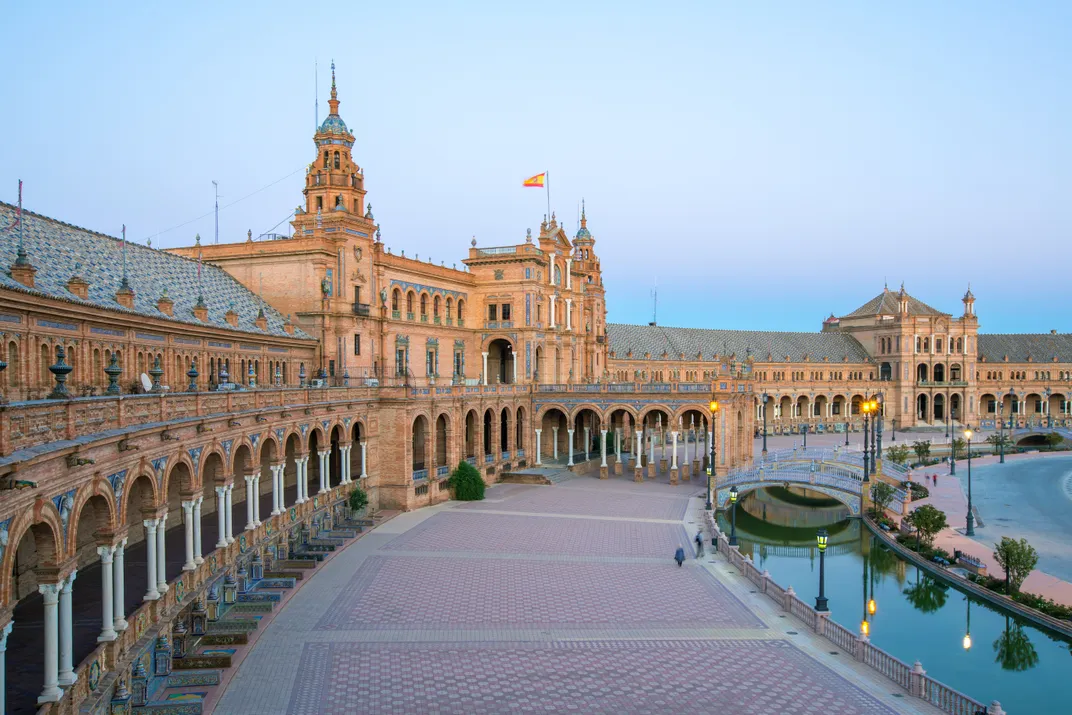
- Seville: Admire the remarkable tile work at the Plaza de España and visit the immense Gothic cathedral and Alcázar, part of a World Heritage site. Amble through the Barrio de Santa Cruz, the charming former Jewish quarter replete with flowering balconies, splashing fountains, and shady medieval lanes.
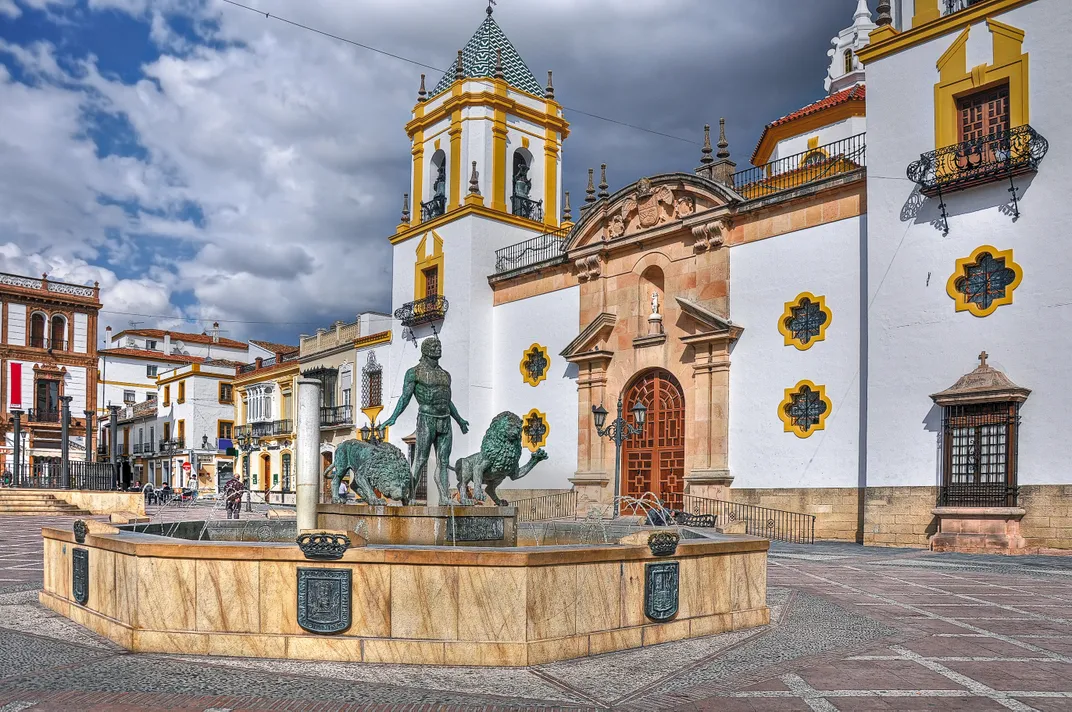
- Ronda: Venture to the clifftop town of Ronda, dramatically perched on the El Tajo gorge. Visit the Iglesia de Santa María la Mayor, a church commissioned by Ferdinand and Isabella in 1485, and enjoy lunch at a tasting at a nearby winery.
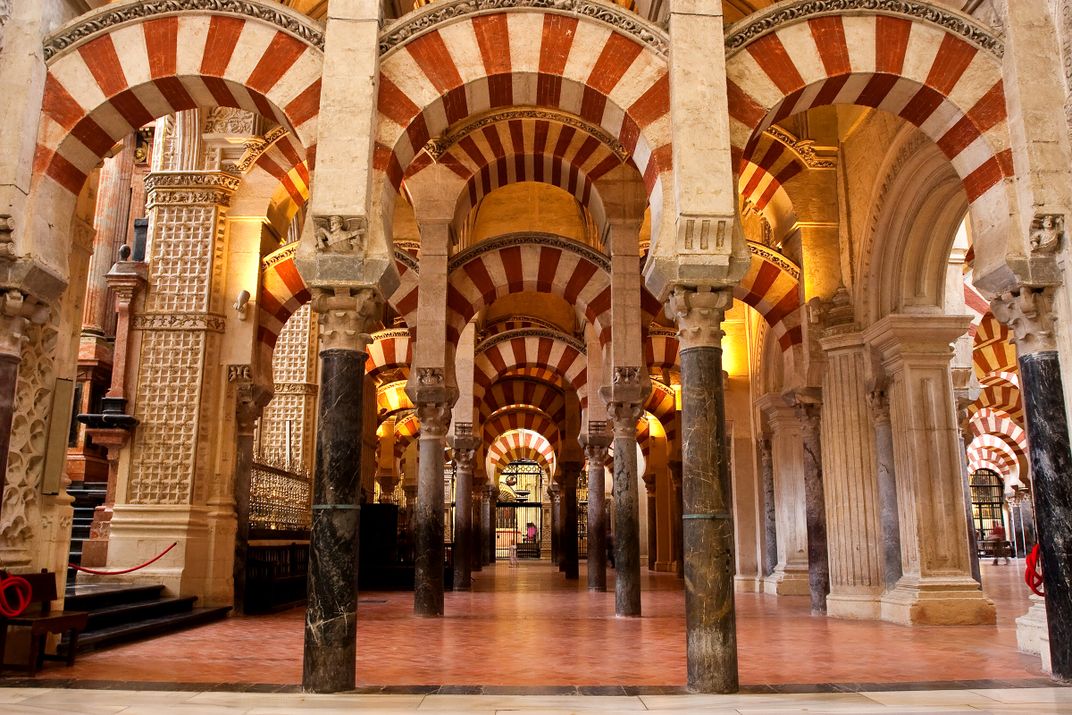
- Córdoba: Meander among the mesmerizing striped arches of Le Mezquita—Cordoba's famous mosque-cathedral—and explore the picturesque Old Quarter, a World Heritage site.
- Málaga: Take a guided tour of the Museo Picasso Málaga and enjoy free time to discover the galleries and culinary hotspots of this resurgent cultural hotspot.
- Cultural Traditions: Admire the passionate music and dance of flamenco and savor the region’s culinary specialties and wines.

Itinerary
To see itinerary, please click on an option below.
Days 1-2 — Depart the U.S. / Arrive Málaga
Depart the U.S. for Málaga on an overnight flight and meet your Smithsonian Journeys Travel Director upon arrival. Travel north to Antequera, a medieval hill town set at the crossroads of Andalusia. Transfer time from the airport to the parador will be approximately 1 hour 30 minutes. You'll receive a welcome package containing general information about Antequera, as well as a map of the town. Your travel director will be available this afternoon and throughout the program for suggestions regarding sightseeing, restaurants, and independent activities. After time to settle in, gather with fellow travelers for a welcome reception and dinner at the parador. (R,D)
Day 3 — Antequera
A breakfast buffet at the parador is included each morning during your stay. Spend the morning discovering the many historic gems of Antequera. Tour the Antequera Dolmens, a World Heritage site comprised of three buried megalithic tombs dating back some 5,000 years that are integrated with remarkable natural stone monuments. Visit the Moorish fortress known as the Alcazaba, perched on the hilltop overlooking the town. Then uncover layers of history on a guided walk through the Old Quarter, encountering Roman ruins as well as Spanish baroque churches and palaces set around beautiful town squares. End your tour at the Mirador Almenillas, a lookout offering panoramic views of the city and the unusual geological formations around it. Sit down to a lunch of regional favorites before returning to the hotel. The remainder of the day is yours to get to know Antequera on your own. (B,L)
Day 4 — Granada
A scenic morning drive brings you to Granada, home to the magnificent Alhambra, a Moorish fortress and palace complex built during the 13th and 14th centuries as the seat of Nasrid dynasty—the last Moorish monarchs in Spain. On a tour of this World Heritage site, admire its sparkling fountains and pools, palace courtyards, and shady colonnades, and take in remarkable views of the city and the Sierra Nevada. Enjoy a lunch of Spanish specialties at the Parador de Granada, a 15th-century former monastery set on the grounds of the Alhambra. Return to Antequera in the afternoon. (B,L)
Day 5 — Seville
Get an early start for the drive west to Seville, the cultural heart of Andalusia. Ruled by the Moors for five centuries, the city saw an influx of wealth from the New World and a flourishing of the arts in the 16th and 17th centuries. Drive along the Guadalquivir River and see the Bullring and the Toro de Oro. Visit the remarkable Plaza de España, built in 1928 for the Ibero-American Exposition of 1929. Continue to the Murillo Gardens, inspired and named for one of Spain’s most renowned baroque painters, Bartolomé Murillo. On a walking tour, discover the remains of a Roman aqueduct that was renovated by the Moors and functioned until 1912. View a monument to the legendary Don Juan in the Plaza de Refinadores.
Marvel at the spectacular 14th-century Alcazar Palace, a favorite royal residence of monarchs Ferdinand and Isabella, and visit the awe-inspiring Seville Cathedral, the largest Gothic building in the world. Stroll past bougainvillea-draped balconies and sparkling fountains in the colorful Barrio de Santa Cruz, once the city's Jewish quarter. Break for an independent lunch and free time before returning to Antequera. Gather with fellow travelers in the Smithosnian Journeys Travelers Corner for an informal discussion about the day's experiences. Then head into town for dinner at a popular restaurant. (B,D)
Day 6 — Ronda
Perched on a towering cliff and straddling a deep ravine, Ronda is one of Spain’s oldest and most remarkable towns. The twisting lanes of the old town reveal architecture influenced by centuries of Moorish rule. Step into one of Spain’s finest bullrings, the Plaza de Toros, and visit La Real Maestranza de Caballería de Ronda, a cavalry school dating back to 1573. Then see the Casa Don Bosco, a modernist palace built at the beginning of the 20th century at the edge of Tajo Gorge. Step into the Iglesia de Santa María la Mayor, commissioned by Ferdinand and Isabella in 1485 but not completed until the 17th century. Built atop a mosque, the church blends Gothic, Renaissance, and baroque elements as well as vestiges of its Moorish beginnings. After a guided tour, visit the Bodega Garcia Hidalgo for a wine tasting and lunch. In the late afternoon, gather in the Smithsonian Journeys Travelers Corner for lively conservation with your expert and traveling companions. (B,L)
Day 7 — Cordoba
After breakfast, set out for the fascinating city of Cordoba, established as a Roman settlement and conquered by the Moors in the eighth century. On a walking tour of the Old Town, a World Heritage site, meander beneath the striking archways of La Mezquita, once a grand mosque before a cathedral was built in the middle of it in the 16th century. See the Roman Bridge spanning the Guadalquivir River, and stroll through the Jewish Quarter. You’ll have free time to have lunch and discover the city at your own pace. Later, return to Antequera for dinner at a local restaurant and a captivating live performance of flamenco music and dance. (B,D)
Day 8 — Antequera / Málaga
Begin the day with a presentation by a local speaker on contemporary Spain. Then venture to Málaga, a coastal city currently undergoing a renaissance of the arts. On a guided tour of the Museo Picasso Málaga, view a remarkable collection of work that follows the arc of Picasso’s various periods, showcasing the world-famous artist’s evolution. Enjoy lunch independently and time to explore Málaga on your own. This evening, gather in Antequera for a farewell reception and dinner at the parador. (B,R,D)
Day 9 — Return to your gateway city
After an early breakfast, transfer to Málaga’s Costa del Sol Airport for your return flight to the U.S. (B)
Please Note: Progression of the itinerary may be adjusted due to local operational considerations.
Included meals are denoted as follows: Breakfast (B), Lunch (L), Reception (R), Dinner (D)
/https://tf-cmsv2-journeys-media.s3.amazonaws.com/filer/3e/4e/3e4e0626-d2cb-4a61-9280-75cbf14d1c7b/spa_antequera_ist_174757715.jpg)
/https://tf-cmsv2-journeys-media.s3.amazonaws.com/filer/3e/4e/3e4e0626-d2cb-4a61-9280-75cbf14d1c7b/spa_antequera_ist_174757715.jpg)
/https://tf-cmsv2-journeys-media.s3.amazonaws.com/filer/39/52/395202d4-4466-462c-a382-51429840e626/spa_ronda_hotel_ist_927844184.jpg)
/https://tf-cmsv2-journeys-media.s3.amazonaws.com/filer_public/a2/44/a2443af4-441c-4ae0-88b7-4af83b8737e8/spa_tapas_plate_ist-863142434.jpg)
/https://tf-cmsv2-journeys-media.s3.amazonaws.com/filer/18/0a/180aeded-2bb0-4320-a78f-e0b12acf2277/spa_antequera_ist_660308100.jpg)
/https://tf-cmsv2-journeys-media.s3.amazonaws.com/filer/8d/21/8d215682-a592-43e1-a725-d5b7b35af5d7/spa_seville_cathedral_dt_l_39295382.jpg)
/https://tf-cmsv2-journeys-media.s3.amazonaws.com/filer/a4/7c/a47c01ea-4b18-4bda-94e7-078c019286e4/spa_seville_acazar_dt_l_40501701.jpg)
/https://tf-cmsv2-journeys-media.s3.amazonaws.com/filer_public/3d/a8/3da8af3d-3316-4e6e-9467-89ddf48a4bbf/spa_granada_alhambra_dtm_144817705.jpg)
/https://tf-cmsv2-journeys-media.s3.amazonaws.com/filer_public/8c/e3/8ce3ef16-55d7-465c-b358-ca3bcff605ff/spa_granada_alhambra_lionscourt_ist_585774452.jpg)
/https://tf-cmsv2-journeys-media.s3.amazonaws.com/filer/62/3a/623a3ea4-e53b-44a8-b5de-e22d3d98e93e/spa_granada_alhambra_generalife_dt_l_15345889.jpg)
/https://tf-cmsv2-journeys-media.s3.amazonaws.com/filer_public/a8/aa/a8aa3484-8ce2-4dc9-be8b-292550019692/spa_granada_alhambra_generalife_ss_419980120.jpg)
/https://tf-cmsv2-journeys-media.s3.amazonaws.com/filer/dd/e6/dde6e847-f705-4deb-82e4-1e8a2971ef48/spa_granada_alhambra_ist_000042044468_large_for-web.jpg)
/https://tf-cmsv2-journeys-media.s3.amazonaws.com/filer/1f/93/1f93e883-5f30-4cb0-a7b7-f1120aabe227/spain_cordoba_ahi15_shs_102431974.jpg)
/https://tf-cmsv2-journeys-media.s3.amazonaws.com/filer/15/24/152491a5-8842-46a6-97e1-296ed5652064/spa_cordoba_mosque_dt_l_19383013.jpg)
/https://tf-cmsv2-journeys-media.s3.amazonaws.com/filer/a4/dd/a4dd9ee6-3d9a-463c-8d6c-e76d75f5f43b/spa_tapas_dtl15985060.jpg)
/https://tf-cmsv2-journeys-media.s3.amazonaws.com/filer_public/2e/32/2e324375-f5ee-4e51-ad58-50cb6490be8c/spa_churros_traddessert_ist_626171860.jpg)
Dates & Prices
Click on the departure date to see pricing. Click the for more information.
Dates
Availability
Price
Sep 17 - 25, 2026
Available
from $4,690
Special Offer
No Single Supplement for solo travelers! (Limited availability, book early to ensure your space)
| Occupancy | Double | Single |
|---|---|---|
| Price | $4,690 | $4,690 |
Oct 1 - 9, 2026
Available
from $4,690
Special Offer
No Single Supplement for solo travelers! (Limited availability, book early to ensure your space)
| Occupancy | Double | Single |
|---|---|---|
| Price | $4,690 | $4,690 |
Accommodations for our solo guests are limited on this tour, book early to ensure your space!
Special Air Rates & Services: As part of our special air program, FlexAir, available with this tour, you can choose from a wide variety of flight options. Visit the Tour Details tab and click on "Special Air Rates/Services" drop down.
Prices are based on rates of exchange, airfare & fuel (where applicable), tariffs, taxes, and other costs as of the tour publication date. We reserve the right to correct errors and to increase program prices to cover increased costs, tariffs, and taxes received after prices are published and to reflect currency fluctuations.
/https://tf-cmsv2-journeys-media.s3.amazonaws.com/filer/39/52/395202d4-4466-462c-a382-51429840e626/spa_ronda_hotel_ist_927844184.jpg)
Experts
/https://tf-cmsv2-journeys-media.s3.amazonaws.com/journeys/expert/Green_Fryd_Vivien.jpg)
Vivien Green Fryd
Art & Architectural Historian
Vivien Green Fryd is professor emerita in the History of Art and Architecture Department at Vanderbilt University and the author of numerous books. Along with …
Vivien Green Fryd is professor emerita in the History of Art and Architecture Department at Vanderbilt University and the author of numerous books. Along with Art and Empire: The Politics of Ethnicity in the U.S. Capitol, 1815-1860, she published Art and the Crisis of Marriage: Georgia O’Keeffe and Edward Hopper and Against Our Will: Sexual Trauma in American Art Since 1970. In 2012, she was the Terra Visiting Professor at the John F. Kennedy Institute for North American Studies at Berlin’s Freie Universität. There, she began research for another book about her uncle who left Germany because of the Holocaust and became a photojournalist: Henry Ries’ Photographs of Iconic Berlin Monuments and Sites 1946-2000. Vivien has taught courses on western art history from the Renaissance to the present, impressionism, 19th- and 20th-century European art, and American art from the colonial period to the present.
+ Show more
/https://tf-cmsv2-journeys-media.s3.amazonaws.com/journeys/expert/Kendrick_Anna_Kathryn.jpg)
Anna Kathryn Kendrick
Literary Scholar
Anna Kathryn Kendrick is a Clinical Associate Professor of Literature and Director of Global Awards at NYU Shanghai. Her first book, Humanizing Childhood in Early Twentieth-Century Spain (Cambridge …
Anna Kathryn Kendrick is a Clinical Associate Professor of Literature and Director of Global Awards at NYU Shanghai. Her first book, Humanizing Childhood in Early Twentieth-Century Spain (Cambridge 2020) was awarded the Katherine Singer Kovacs prize for an outstanding work in Spanish and Latin American studies by the Modern Language Association. Her second book project, Rock, Fossil, Bone: Human Time and Deep History in Twentieth-Century Spain, centers on prehistoric and environmental echoes in modern Spanish literature and visual art, most recently supported by a fellowship at Germany's Hanse Institute of Advanced Studies. Her writings, including on the works of poets Federico García Lorca, Jorge Guillén, Rafael Alberti, Carmen Conde and Clara Janés, have been published in the Bulletin of Hispanic Studies, the Bulletin of Spanish Studies, the Modern Language Review and Global Studies of Childhood. She holds an A.B. in Modern European History and Literature from Harvard University and an MPhil and a Ph.D. in Spanish Literature and Culture from Cambridge University, where she was a Gates Cambridge Scholar.
+ Show more
/https://tf-cmsv2-journeys-media.s3.amazonaws.com/journeys/expert/Davila-Martinez_Roger.png)
Roger Martínez-Dávila
Cultural Historian
Dr. Roger Martínez-Dávila is a specialist in medieval and Renaissance Europe who has dedicated his life to better understanding intercultural and interreligious relations. In particular, …
Dr. Roger Martínez-Dávila is a specialist in medieval and Renaissance Europe who has dedicated his life to better understanding intercultural and interreligious relations. In particular, he tracks the lives of religious and cultural minorities in Iberia – such as Sephardic Jews and Muslims or resilient communities like the Basque.
Roger has visited every province of Spain over his 20-year career, and his travel and life abroad reflect his global perspective of the Middle Ages, drawing together the mixed Mediterranean and Gothic cultures of Spain, Portugal, Italy, and North Africa, as well as the Frankish and Germanic peoples of France and the Low Countries. He is also researching how Scandinavia, the Islamic Levant, and Arabia contributed to Europe’s medieval civilization.
Presently a professor of history at the University of Colorado and previously a Marie Curie Fellow at the Universidad de Carlos III de Madrid, Roger is an authority on medieval manuscripts and material culture. He relishes the opportunity to share his stories of investigating special Papal collections at the Vatican’s Secret Archive and Inquisition cases in the archives of Madrid and Lisbon.
Roger holds a doctorate in history from the University of Texas at Austin and a master’s in public policy from the University of California - Berkeley. He is the author of Creating Conversos: The Carvajal-Santa María Family in Early Modern Spain as well as Fractured Faiths: Spanish Judaism, The Inquisition, and New World Identities, based on an exhibition he helped curate for the New Mexico History Museum in Santa Fe.
+ Show more
/https://tf-cmsv2-journeys-media.s3.amazonaws.com/journeys/expert/Sanchez-Acevedo_ana.jpg)
Ana Sánchez Acevedo
Literary Scholar
Ana Sánchez Acevedo holds a PhD from the University of Seville, where she teaches contemporary literature, creative writing, and theatre history, as part of the …
Ana Sánchez Acevedo holds a PhD from the University of Seville, where she teaches contemporary literature, creative writing, and theatre history, as part of the Department of Spanish and Latin American Literature. The main focus of her current research concerns the links between theatricality, corporeality, ethics, and politics in contemporary Iberian and Latin American theater. After earning her bachelor’s in Hispanic philology, she conducted doctoral research abroad, first at the University of Buenos Aires in Argentina, and later at the University of Paris-IV Sorbonne in France. Simultaneously, she strengthened her interdisciplinary background with master’s degrees in performing arts as well as library science and documentary heritage from universities in Spain. In 2015, she was awarded a five-year fellowship at the City University of New York, where she also obtained a master of philosophy in Latin American, Iberian, and Latino cultures.
She has published book chapters as well as articles that have appeared in the Bulletin of Spanish Studies, the Arizona Journal of Hispanic Cultural Studies, Primer acto, among others. Her most recent book project, Anatomical Theaters: Contemporary Vanitas and Dramaturgies of Crisis, explores sensibilities, temporalities, and corporeality of crisis in Peninsular and Latin American theatrical works. Since 2020, in addition to her research and teaching, she has been developing her own theatrical projects with the company Teatro Anatómico, based in Seville.
+ Show more
/https://tf-cmsv2-journeys-media.s3.amazonaws.com/journeys/expert/Amador_Fabio_Esteban.jpg)
Fabio Esteban Amador
Archaeologist & Anthropologist
Dr. Fabio Esteban Amador is a multifaceted expert: an archaeologist, visual artist, explorer, and anthropology professor at New Jersey City University. His journey began in …
Dr. Fabio Esteban Amador is a multifaceted expert: an archaeologist, visual artist, explorer, and anthropology professor at New Jersey City University. His journey began in fine arts, where he discovered how early explorers used art and technology to document ancient cultures. This sparked a shift in focus towards archaeology, leading him to earn a master’s and Ph.D. from the State University of New York in Buffalo. As an explorer, Fabio pushes the boundaries of knowledge on cultural complexity, art, and mythology in the Americas, the Caribbean, the Iberian peninsula, and Southeast Asia. He leverages photography and creative imaging technologies to assess archaeological site conditions and craft visual narratives, merging art and science. Through his work, Fabio provides new insights into the emergence of cultural complexity and the role of art in shaping origin stories and mythology.
+ Show more
/https://tf-cmsv2-journeys-media.s3.amazonaws.com/journeys/expert/Gies_David.jpeg)
David Gies
Spanish Studies Scholar
David T. Gies is Commonwealth Professor of Spanish Emeritus at the University of Virginia and former Chair of his Department. He has published seventeen books, …
David T. Gies is Commonwealth Professor of Spanish Emeritus at the University of Virginia and former Chair of his Department. He has published seventeen books, including The Cambridge Companion to Modern Spanish Culture (1999), Theatre and Politics in Nineteenth-Century Spain: Juan de Grimaldi as Impresario and Government Agent (Cambridge, 1988), The Theatre in Nineteenth-Century Spain (Cambridge, 1994), The Cambridge History of Spanish Literature (2004), The Cambridge History of Theatre in Spain (co-edited, 2012), Eros y amistad (2016), and The Eighteenth Centuries: Global Networks of Enlightenment (co-edited, 2017). Author of more than 120 scholarly and 140 book reviews, he edits DIECIOCHO, a journal dedicated to the study of the Spanish Enlightenment, now in its 42nd year.
He has received the University of Virginia Outstanding Teaching Award, the Thomas Jefferson Award, and, in 2007, was named Encomienda de Número de la Orden de Isabel la Católica, a knighthood granted by His Majesty Juan Carlos, King of Spain.
In July 2013, he was elected for a three-year term as President of the International Association of Hispanists, the world's largest professional organization of Spanish scholars, and in September 2015, he was elected Honorary President of Sigma Delta Pi, the Spanish National Honorary Society.
In 2016, he won the prestigious annual Anderson Imbert Prize from the North American Academy of the Spanish Language and was named Corresponding Member of the Spanish Royal Academy in Madrid. In 2019 he joined the Board of the Fundación Duques de Soria.
+ Show more
/https://tf-cmsv2-journeys-media.s3.amazonaws.com/filer_public/a2/44/a2443af4-441c-4ae0-88b7-4af83b8737e8/spa_tapas_plate_ist-863142434.jpg)
Tour Details
Accommodations
Parador de Antequera
Antequera, Spain
If there is one Spanish parador that breaks the mold of historic buildings and symbolizes modernity, it is the Parador de Antequera. Located in a park-like setting on a hill above the city, the hotel is perfect for rest, relaxation, and exploring the city of Antequera and the region of Andalusia. Enormous windows allow the light to flood every corner of the building and offer views of the magnificent landscapes with sunsets over the Antequera plain and the Peña de Los Enamorados. The parador features modern, well-appointed rooms, a restaurant serving regional and Mediterranean dishes and lovely grounds for exploring. WiFi service is complimentary. The outdoor pool is open from June to early September only.
Activity Description
Expectations: A week-long Cultural Stay featuring one town and region—and one hotel. Half and full-day excursions outside the town with some longer, extensive walking tours of villages, museums, and outdoor historic sites. Excursions can be over uneven terrain (e.g. outdoor sites, cobblestones, city hills, stairs without handrails, the absence of elevators). Parador is centrally located for easy access to sites and restaurants during the time at leisure.
Appropriate for: Travelers who are physically fit and comfortable with long days of touring (both walking tours and coach time).
Reading List
*As an Amazon Associate, Smithsonian Journeys earns from qualifying purchases.
Highly Recommended

Also Recommended








Special Air Rates/Services
FlexAir is designed to provide our guests with the flexibility and choice they need to personalize their air travel experience. They can explore a wide range of flight options* in consultation with our experienced air travel professionals to select the flights, routing, class of service, and dates of travel that most fit their needs. Our partner tour operator has negotiated contracts with a wide variety of carriers that allows them to search for the air itinerary that meets the requirements of our guests, and once satisfied with the flights, seating, and pricing, in most cases, can be confirmed and ticketed** immediately.
The FlexAir program includes:
- Confirmed airline seat assignments at the time of ticketing (in most cases additional purchase may be necessary)
- Assistance with schedule changes and delays, including after-hours support
- Guaranteed transfers between the airport and overseas accommodations upon arrival and departure (based on the group’s arrival and departure dates), and the details needed to guarantee the transfer
Important Notes:
*Most airline schedules become available for ticketing approximately 320 days from the date of return travel.
**Once ticketed, certain restrictions will apply. Our air travel professionals will provide the details.
Travel Insurance
For the convenience of our travelers, Smithsonian Journeys includes a basic medical expense and evacuation plan through Trip Mate, a Generali Global Assistance & Insurance Services brand, at no additional charge. This plan provides post-departure Medical and Dental coverage of $250,000 per person and Emergency Assistance and Transportation coverage of $1,000,000 per person (U.S. Residents Only). Note: For full details regarding these coverages please review the following Plan Documents here.
In addition, we recommend that travelers purchase a travel protection plan to help protect their travel investment from unforeseen events such as cancellation due to illness, flight delays due to adverse weather, baggage loss, and more. For your convenience, Smithsonian Journeys offers an optional Travel Protection Plan administered by Trip Mate, a Generali Global Assistance & Insurance Services brand. For those interested, optional "Cancel for Any Reason" coverage is available for an additional charge. Note: Certain eligibility requirements apply and Cancel for Any Reason coverage is not available to New York residents. For full details regarding this coverage please review the following Plan Documents here.
To learn more about the Travel Protection Plan, you may visit https://www.generalipartner.com/smithsonianjourneys or call the administrator, Trip Mate, a Generali Global Assistance & Insurance Services brand at (866) 501-3252.
Related Tours
/https://tf-cmsv2-journeys-media.s3.amazonaws.com/filer/27/6c/276cf53e-8d69-4dd0-9f0e-6475a158351e/spa_barcelona_casabattlo_dt_xl_22709136.jpg)
Spain: A Tailor-Made Journey to Madrid, Valencia, & Barcelona
10 days
|
from:
$7,440
Suggested Itinerary

France and Spain's Basque Region: A One-Week Stay at the Parador de Hondarribia
9 days
|
from:
$4,990
Multiple departures between 2026 & 2027

/https://tf-cmsv2-journeys-media.s3.amazonaws.com/filer/db/de/dbded166-d65f-4daf-b567-6950701229b2/spain_granada_alhambrapalace_ahi15_shs_165421061.jpg)
/https://tf-cmsv2-journeys-media.s3.amazonaws.com/filer/e2/e2/e2e27c6c-e360-49ed-a553-46687525299b/prt_lisbon_belem_dt_l_89793467.jpg)
Across Northern Spain and Portugal: Lisbon to Barcelona
17 days
|
from:
$8,274
* Price includes airfare
Multiple departures between 2026 & 2027
Treasures of Southern Spain and Portugal
15 days
|
from:
$7,274
* Price includes airfare
Multiple departures between 2026 & 2027