Smithsonian Journeys - Vistas Newsletter
September 2010
Exploring Australia and New Zealand

Dear Smithsonian Traveler,
Ed Kanze is not your typical Australian guide. For starters, he makes his home in New York State’s Adirondack Mountains where he has devoted himself to learning about every species in his own backyard! But Ed is also possessed of unbounded curiosity about the natural world, and that’s what compelled him to explore the wild places and wildlife of Australia on an epic 25,000-mile journey. The resulting book, Kangaroo Dreaming: An Australian Wildlife Odyssey, was called by famed naturalist Bill McKibben, "a superb chronicle of the nature of Australia in all the meanings of that word."

Ed is equally passionate about New Zealand. His Notes From New Zealand: A Naturalist Explores The Other Land Down Under, describe highlights from his five journeys to the diverse, highly civilized and simultaneously wild country lying 1,000 miles across the Tasman Sea from Australia.

We’re delighted that Ed will share his passion for Australia and New Zealand on our Smithsonian Journey, "Exploring Australia and New Zealand." You are cordially invited meet Ed in the interview below, and to join him on our 22-day adventure which includes the spectacular Great Barrier Reef, the storied Outback, towering Mt. Cook, breathtaking Milford Sound, and many other highlights of these fascinating lands. If you book by Sept 2, there’s an additional $100 savings. I do hope you will join us!

Very truly yours,

Amy Kotkin
Director

MEET OUR EXPERTS
Ed Kanze

Smithsonian Journeys Education Manager Sadie McVicker speaks with Ed Kanze, Smithsonian Study Leader for our "Exploring Australia and New Zealand" tour.

Q: As a lifetime observer of wildlife in both the northern and southern hemispheres, what is the lesson you would most like Smithsonian travelers to take away from their great adventure in Australia?

A: To be open to all experiences. When the birds or kangaroos aren't cooperating, enjoy the trees and the wildflowers. Biologically, the Australian region is like no other.

Q: In your 25,000 mile odyssey, what landscape or ecosystem made the deepest impression on you? Did you encounter anything resembling the northern Adirondacks, perhaps in the fabled Fiordlands National Park in New Zealand?

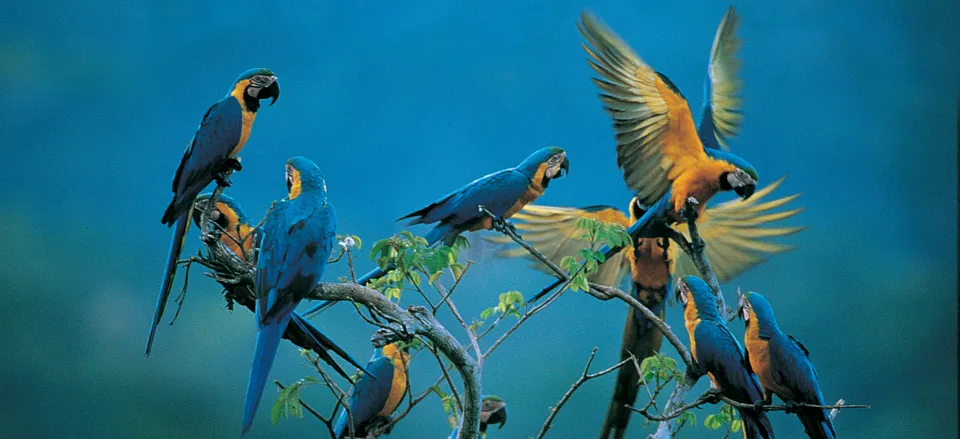
A: I loved it all. Tasmania (an island state of Australia) and parts of New Zealand's South Island remind me of the Adirondacks, although the winter weather is much less severe. The mountains and cool, dense forests and friendly small towns make me feel at home. But one would never mistake one for the other. In the wilds of "Tassie" and the South Island, tree ferns are rarely out of view. To our Northern Hemisphere eyes they're marvelously exotic. So are wild parrots.

Q: Did you encounter the legendary cane toad during your travels in the region? Please share with us what makes them an exceptional and significant toad in Australia.

A: The cane toad, introduced to Australia, is a menace to native wildlife. All the same, it's a beautiful animal, in an ugly sort of way, and many locals love it. See the film "Cane Toads: An Unnatural History." For laughs and information, it's a must!

Q: The 1899 children's book, Dot and the Kangaroo, made into an animated movie in the late 1970s, the Crocodile Dundee films, and, of course, The Crocodile Hunter TV series, seem to capture in popular imagination the intersection of life and wildlife, and introduced species, in the outback. Can you comment?

A: Australia is a country the size of the United States, minus Alaska, with a population similar to that of the New York City metropolitan area. The great majority of Australians live in or near a few major cities. That leaves the rest of the country with a marvelous mix of the civilized and the untamed. People are nearly everywhere, but thin on the ground. It's a heady mix.

Q: In your native Adirondacks, there are numerous plants, berries, and animals, that might be considered an Adirondack version of Australian "bush tucker." Is this a fair comparison?

A: Yes. When Australians talk about "the bush," they mean any wild place. We have plenty of wildness here. Tucker means food, and we've got that, too—blueberries, huckleberries, all sorts of wild game and freshwater fish. In fact, "Adirondack" is said to mean "bark eater." According to local lore, Indians that dared venture into these icebound mountains in winter were forced to live off the edible but not very appealing inner bark of trees.

Q: Of all the unique animals you encountered in the Australian outback (wilderness) what is your favorite? Is it endangered?

A: Tough question. I enjoyed so many. Favorites include duck-billed platypus, short-beaked echidna, common wombat, red kangaroo, honey-possum, and Tasmanian devil. That doesn't even count birds such as the superb fairy-wren and the rainbow lorikeet and reptiles such as the frilled lizard and the perentie. The list could go on and on. The most endangered of all these creatures is the Tasmanian devil, which is not devilish at all and something like a marsupial badger. In the last fifteen years, devils have been pushed to the brink of extinction by a recently discovered facial tumor disease.

Q: What Aussie or Kiwi (New Zealand) bird is at the top of the bird food chain, like eagles in the Adirondacks?

A: During the Ice Age, New Zealand had a giant bird of prey, known as Haast's eagle, which preyed on flightless birds called moa. Some of the moa stood as tall as horses. Haast's eagle was the world's largest, and the birds it fed on may have been the world's largest, too. All are extinct. Today in New Zealand, swamp harriers and New Zealand falcons are the chief predators among day-active birds. Australia, a far bigger landmass with diversity to match, supports a wide array of birds of prey—24 diurnal raptors and 9 owls. The largest is the majestic wedge-tailed eagle. The most fierce is probably the peregrine falcon, which also hunts in the Adirondacks.

Featured Journeys
The Galápagos Islands
Aboard the National Geographic Islander
Feb 5 - 14, 2011
Explore the remarkable Galápagos Islands and witness animals found nowhere else on earth
Book by October 15 and save $500 per person!
...............................................................................................................................................
The Panama Canal & the Wonders of Costa Rica
An Expedition Aboard the National Geographic Sea Lion
Jan 8 - 15, 2011
An exploration by sea from the Panama Canal to the beaches and rain forests of Costa Rica
.Book by September 20 and save $750 per person!
...............................................................................................................................................
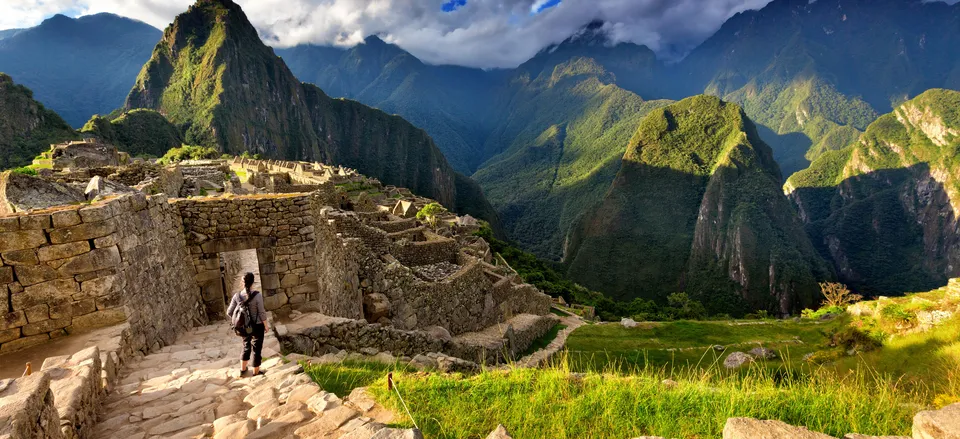
Legendary Peru
Multiple Departures
Discover the breathtaking natural wonders and intriguing legacies of the Andes and Machu Picchu
Airfare Included!
...............................................................................................................................................
Central & South America by Private Jet
Mar 26 - Apr 10, 2011
Discovering Lost Civilizations, Natural Splendors, and Vibrant Cultures
Book by September 22 and receive a FREE pre-tour overnight!
Columbia & Snake Rivers Voyage in the Wake of Lewis and Clark
Aboard the National Geographic Sea Bird
Oct 24 – 30, 2010
Book by September 1 and Save 15% off your cabin!

Empires of the Sea
Aboard the Corinthian II
Oct 5 -18, 2010
Special Reduced Rates! Save thousands on select cabins!

A Voyage to Madagascar and Mozambique
Aboard the Corinthian II
Jan 30 – Feb 16, 2011

Book now and SAVE $1000 per person

The Galápagos for Families
Aboard the National Geographic Islander
Jul 16 – 25, 2011

Book by Oct 15 and SAVE $500 per person!


Click here to sign up to receive our updates and monthly VISTAS newsletter.

To learn more about our world-wide travel experiences, Request a Catalog online or call toll-free
1.877.338.8687.

All Smithsonian Journeys travelers are Smithsonian members. Click here to become a member online or call us toll-free at 1.877.338.8687.