

Treasures of Southern Spain and Portugal
15 days from $7,274 | includes airfare, taxes and all fees
Featuring Historic Paradores and Pousadas
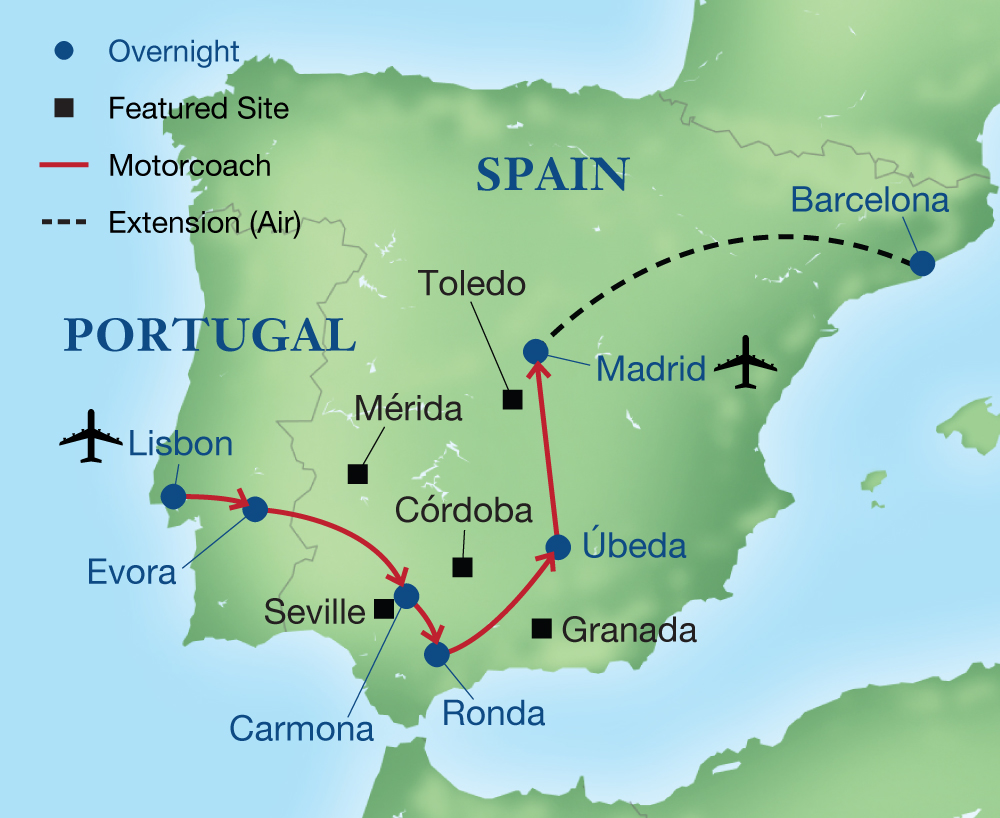
Riveting stories of Romans and Moors, artists and explorers infuse the gentle landscapes of Iberia. Stay in historic paradores and pousadas as you make your way from Lisbon across Andalusia to Madrid, exploring ancient Roman temples, Moorish palaces, and cities where the past and present intersect. Venture to whitewashed hill towns and World Heritage sites from Évora to Seville to Toledo, discovering a vibrant cultural heritage.

Highlights
- Paradores and Pousadas: Experience Iberia’s history up close as you spend eight nights in distinctive inns, including a medieval convent, 14th-century Moorish castle, a stately Renaissance palace, and a historic town hall overlooking a dramatic gorge.
- Lisbon and Évora: Admire the architecture of the World Heritage sites of Belém Tower and Jerónimos Monastery, and visit the Monument to the Discoveries. Cross the Alentejo to the university town of Évora, another World Heritage site, and explore Roman and Moorish sites from your base at one of Portugal’s finest pousadas.
- Mérida, Seville, and Córdoba: Discover some of Spain’s most well-preserved Roman ruins in Mérida. From your parador in the charming town of Carmona, venture to Seville to tour the magnificent Gothic cathedral and the Alcazar. Then explore the Mezquita of Córdoba, a city where Moorish, Christian, and Jewish cultures flourished.
- Ronda and Granada: Stay at the edge of a plunging gorge in cliff-top Ronda, and discover the town’s impressive Moorish architecture on a walking tour. In Granada, take a guided tour of the World Heritage-listed Alhambra, the legendary palace-fortress that epitomizes Moorish architecture.
- Toledo and Madrid: Experience medieval Toledo, the city of El Greco, visiting the Gothic cathedral, the exquisite synagogue, and other sites. Then take a city tour of Madrid, including the Plaza Mayor, the Moorish medieval district, and one of the royal palaces; and enjoy plenty of time at leisure to discover the city as you wish.
Portugal and southern Spain are not to be missed by Smithsonian Journey's travelers. This is a bucket list trip that will encourage you to visit these lovely countries. The tour director is fabulous and goes above and beyond to make the trip so special.
— Joyce M.
/https://tf-cmsv2-journeys-media.s3.amazonaws.com/filer_public/25/9e/259ee69f-1587-4c15-a03e-7591aa4bc997/prt_evora_maingiraldosq_antaochurch_ss_ahi_1476685019.jpg)
Itinerary
To see itinerary, please click on an option below.
Day 1-2 — Depart the U.S. for Lisbon, Portugal
Depart the U.S. and arrive in Lisbon the next day. After free time in the afternoon, gather with your fellow travelers for a welcome dinner. (D)
Day 3 — Lisbon and Queluz
On a tour of Portugal’s lively capital city, explore the waterfront area of Belém, home to the Belém Tower, a 16th-century monument that captures the spirit of Portugal’s Age of Discovery. See the adjacent Monument to the Discoveries, which commemorates Portugal’s storied explorers. Enjoy a guided walk around Figueira Square, the center of the Baixa district. (B)
Day 4 — Évora
Travel through the olive orchards and vineyards of the Alentejo region, stopping for lunch in the fortified hilltop town of Monsaraz. Arrive in Évora, the regional capital of the Alentejo, and settle into your pousada, a former convent arranged around several lovely cloisters. (B,L,D)
Day 5 — Évora
Spend the day exploring this picturesque university town, where vestiges of the Romans and the Moors are evident in the walled medieval center. See the Temple of Diana, a well-preserved Roman temple dramatically set in the heart of town, and visit other highlights on a morning walking tour. After lunch together, the remainder of the day is yours to discover delights of this World Heritage site as you wish. (B,L)
Day 6 — Mérida, Spain, and Carmona
Continue east toward Spain, passing whitewashed villages and hilltop fortresses. In the Spanish border town of Mérida, a regional capital during the Roman era, visit some of the best classical ruins in Spain, which include an amphitheater that is still used for performances, as well as an arched bridge dating back more than 2,000 years. Enjoy lunch at leisure and time to visit the city on your own. Then drive to Carmona, where your home for three nights is a parador set within a 14th-century Moorish fortress. (B,D)
Day 7 — Seville and Carmona
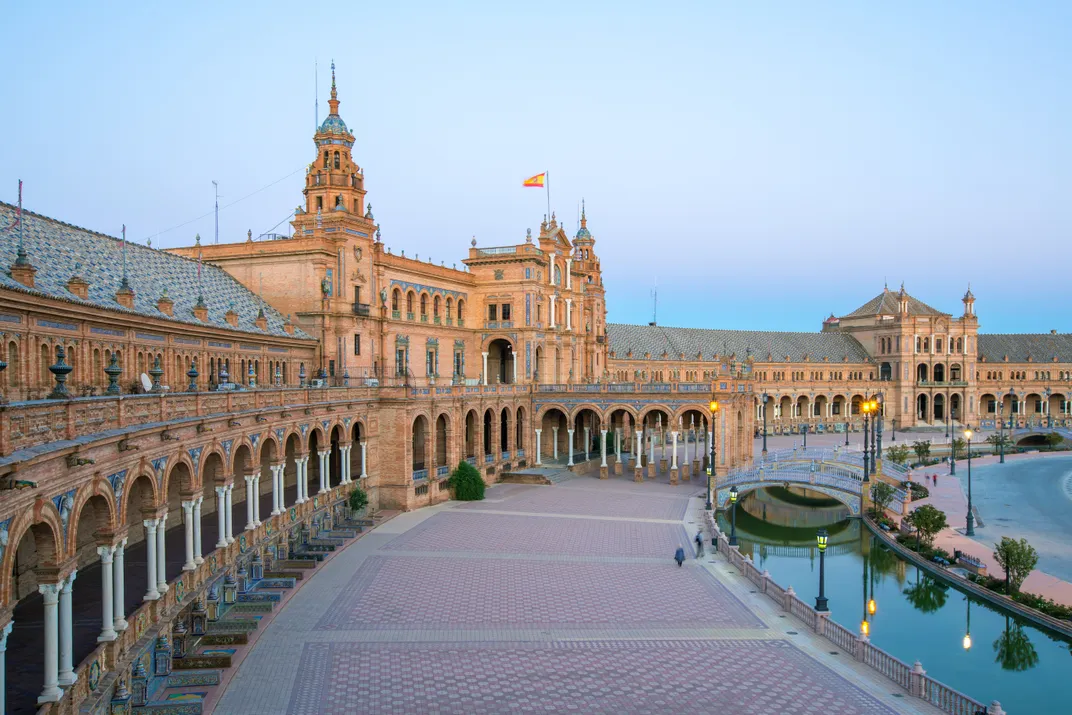
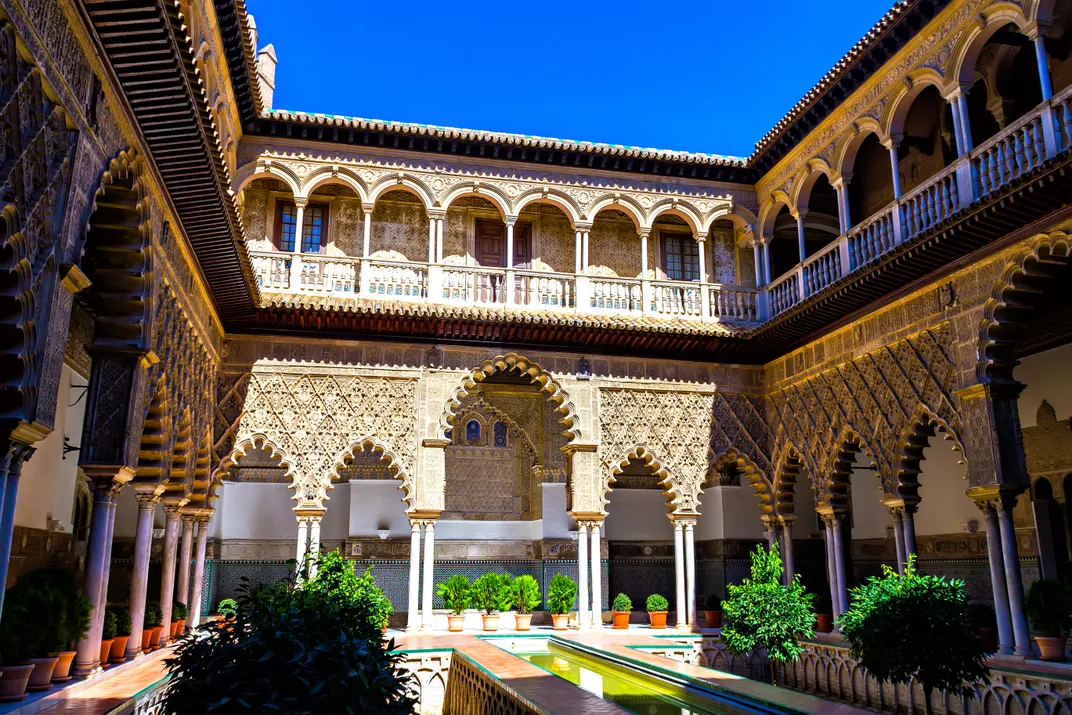
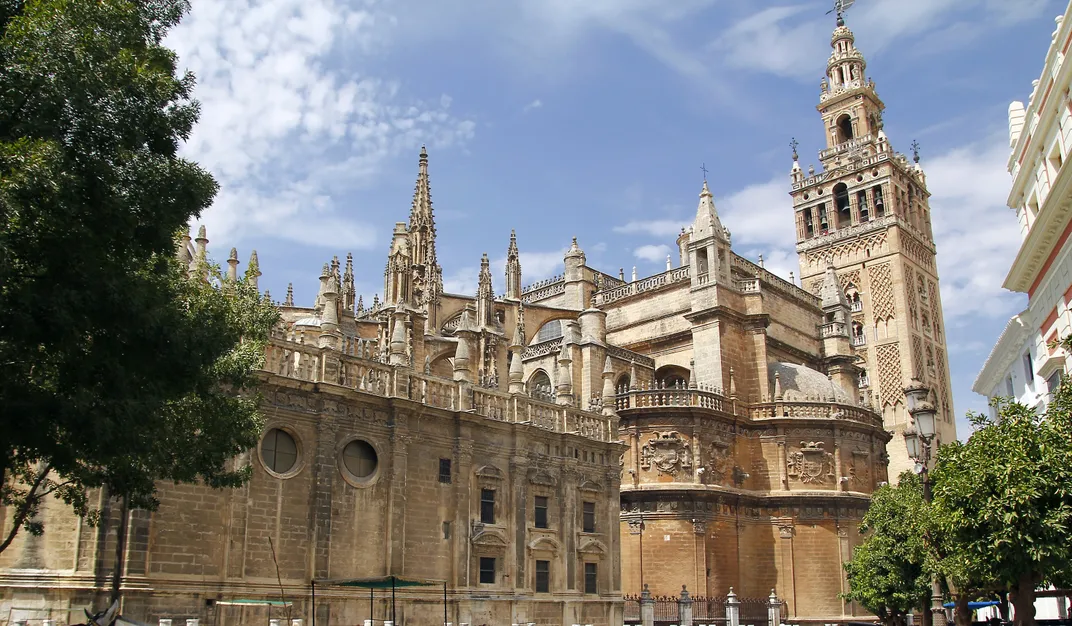
Today visit nearby Seville, the splendid capital of Andalusia, where flamenco culture runs deep and historic squares buzz with life. Admire the city’s exquisite blend of Mudejar, baroque, and medieval architecture on a walking tour that includes two World Heritage-listed sites: the city’s cathedral, the world’s largest Gothic building, and its La Giralda bell tower; as well as the Real Alcázar, the spectacular royal palace originally built in the 13th century and enhanced by generations of Spanish monarchs. Return to Carmona late this afternoon. (B)
Day 8 — Córdoba and Carmona
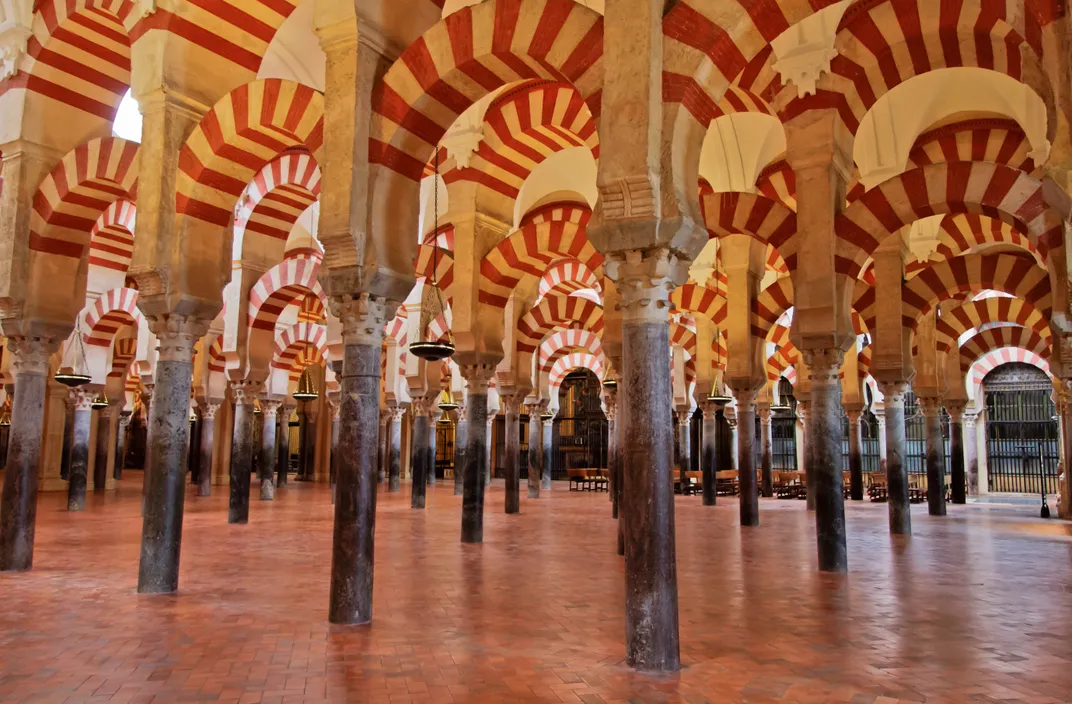
While much of Europe was in the Dark Ages from the eighth to the 11th centuries, Córdoba was the capital of Moorish Spain—a thriving center of intellectual, scientific, and artistic pursuits where Muslim, Christian, and Jewish cultures coexisted harmoniously. On a city tour, meander among the striped arches and leafy courtyards of the magnificent Mezquita, an eighth-century mosque with a cathedral built into its interior. Then enjoy free time to explore on your own before returning to Carmona. (B,D)
Day 9 — Ronda
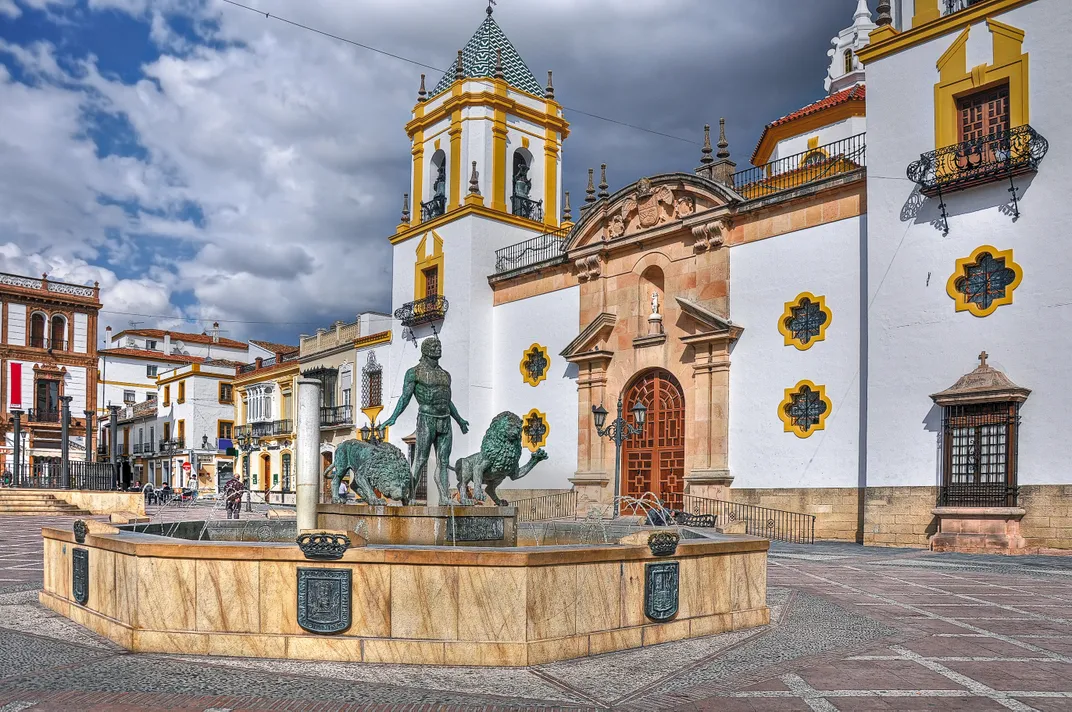
Travel south to Ronda, where whitewashed houses perch dramatically above a deep gorge. The city was the site of the last great rising of the Moors against Spanish monarchs Ferdinand and Isabella. Head into the countryside to visit a local olive farm for a delightful tapas lunch. Check into your parador, set at the edge of the precipice near Ronda’s iconic 18th-century arched bridge. Enjoy dinner together at the parador. (B,L,D)
Day 10 — Ronda
On a walking tour this morning, take in spectacular views of Ronda’s gorge and bridges and venture into the centuries-old Arab medina to marvel at the architecture. Sit down to a tapas lunch of regional specialties at our parador, Ronda’s original town hall. This afternoon and evening are yours to relax and enjoy this delightful town as you wish. (B,L)
Day 11 — Granada and Úbeda
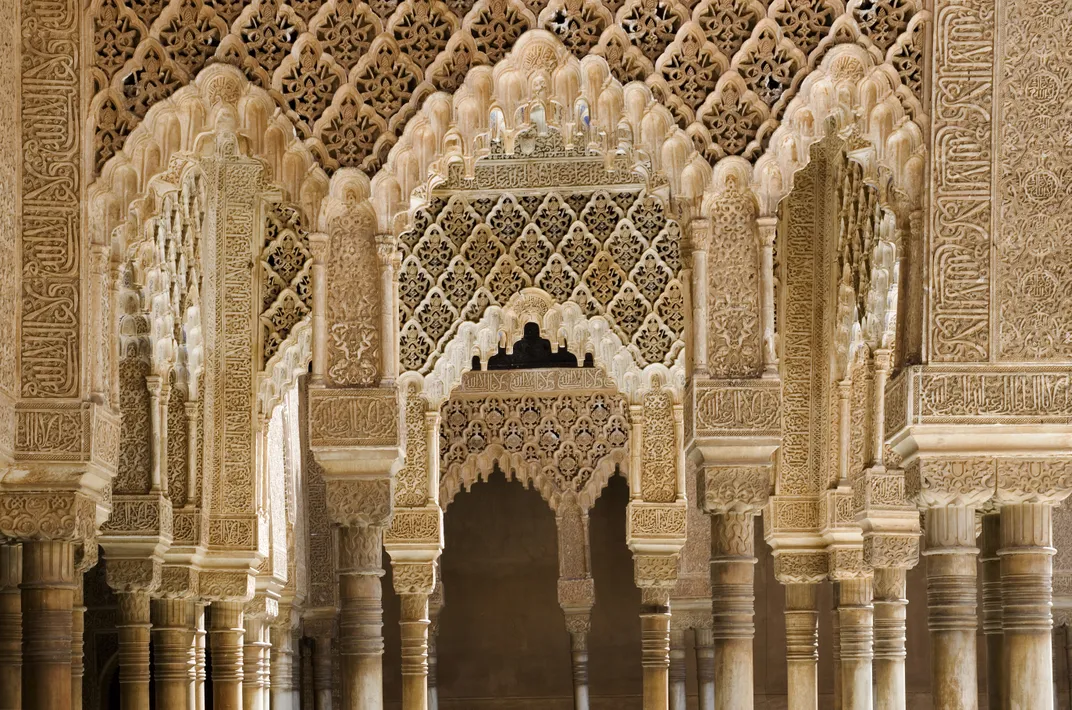
Continue east to Granada, a former stronghold of Moorish Spain set in the foothills of the snowcapped Sierra Nevada. Poised on a hilltop above the city, commanding spectacular views, is the Alhambra, the fortified palace of Spain’s last Moorish rulers. Set out on an afternoon tour of this extraordinary citadel and the Generalife, a summer palace surrounded by acclaimed gardens. Journey north to the historic town of Úbeda and your next parador, a former palace dating to the 16th century. (B,D)
Day 12 — Toledo and Madrid
Your destination today is the World Heritage site of Toledo, a capital of the Romans, the Visigoths, and the kings of Castilla. Take a guided tour of the narrow, medieval lanes of the city center—little changed since El Greco painted here in the 16th century. Venture into the Gothic cathedral, considered one of Spain’s finest, and admire works by Velázquez, Goya, Titian, and El Greco displayed in the sacristy. Travel on to Madrid, arriving late in the afternoon. (B)
Day 13 — Madrid
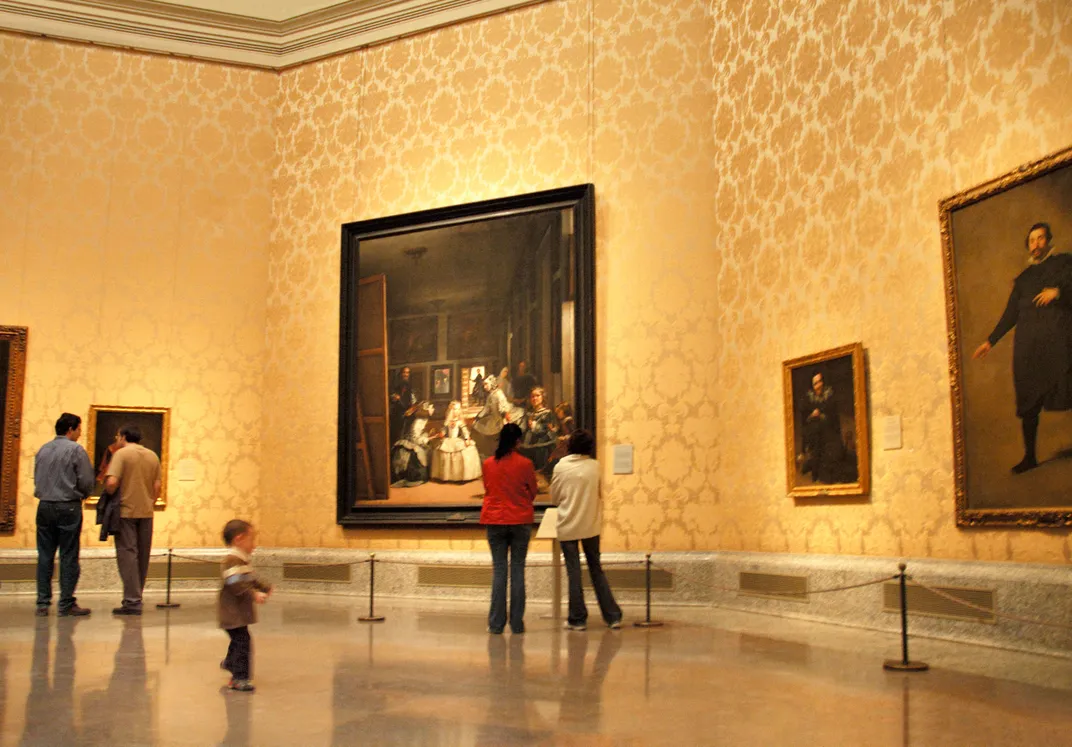
Enjoy a morning tour of this capital city including the vast Plaza Mayor in the heart of Old Madrid; the Moorish medieval district; and the opulent 18th-century Palacio Real or the Palacio Real El Pardo. Savor a tapas lunch together at a local restaurant before a visit to the Prado, one of the world’s great museums, which you can explore at your leisure. The remainder of the day is free. (B,L)
Day 14 — Madrid
Spend your final day discovering the Spanish capital as you wish. You might contemplate Picasso’s famed painting Guernica at the Reina Sofia Museum, wander through the weekly El Rastro Market, or venture into the art nouveau Mercado San Miguel for a gastronomic adventure. Tonight bid adios to Spain at a farewell dinner. (B,D)
Day 15 — Depart for the U.S
Depart Madrid for the U.S. on individual flights. (B)
Included meals are denoted as follows: Breakfast (B), Lunch (L), Reception (R), Dinner (D)

/https://tf-cmsv2-journeys-media.s3.amazonaws.com/filer_public/25/9e/259ee69f-1587-4c15-a03e-7591aa4bc997/prt_evora_maingiraldosq_antaochurch_ss_ahi_1476685019.jpg)
/https://tf-cmsv2-journeys-media.s3.amazonaws.com/filer/08/af/08afde6e-fb7a-488b-86f7-1df2768f6c48/spa_granada_alhambra_generalife_dt_m_160548296.jpg)
/https://tf-cmsv2-journeys-media.s3.amazonaws.com/filer/e7/25/e7252838-1657-4b65-8820-f80e9eb40fde/prt_lisbon_monumentdiscoveries_ist_616114994.jpg)
/https://tf-cmsv2-journeys-media.s3.amazonaws.com/filer/e2/e2/e2e27c6c-e360-49ed-a553-46687525299b/prt_lisbon_belem_dt_l_89793467.jpg)
/https://tf-cmsv2-journeys-media.s3.amazonaws.com/filer/b9/b2/b9b24fc7-0538-4c13-8e61-7e15ce30532d/prt_jeronimos_interior_ss_08.jpg)
/https://tf-cmsv2-journeys-media.s3.amazonaws.com/filer_public/c4/96/c496e16d-cc92-4b2f-88ce-def88c1100f2/prt_evora_romantemple_ist_482180856.jpg)
/https://tf-cmsv2-journeys-media.s3.amazonaws.com/filer/a0/6e/a06ed64e-55cb-4046-81e2-3f25ff51ece5/spa_merida_romanruins_dt_711402.jpg)
/https://tf-cmsv2-journeys-media.s3.amazonaws.com/filer/dd/e6/dde6e847-f705-4deb-82e4-1e8a2971ef48/spa_granada_alhambra_ist_000042044468_large_for-web.jpg)
/https://tf-cmsv2-journeys-media.s3.amazonaws.com/filer/62/3a/623a3ea4-e53b-44a8-b5de-e22d3d98e93e/spa_granada_alhambra_generalife_dt_l_15345889.jpg)
/https://tf-cmsv2-journeys-media.s3.amazonaws.com/filer/00/10/001075e7-86fd-43cb-bb95-3445f6f50b4c/spa_toledo_landscape_dt_l_28356333.jpg)
/https://tf-cmsv2-journeys-media.s3.amazonaws.com/filer/6b/32/6b32d436-77de-4af4-8cdc-edc4ff467424/spa_madrid_plazamayor_dtl_22261936.jpg)
/https://tf-cmsv2-journeys-media.s3.amazonaws.com/filer/35/17/35173bdf-d19c-4411-b2a8-b59ed79ea0c6/spa_madrid_tapasbar_alrm_exp9-19-19_peterhorree_bk6bt8.jpg)
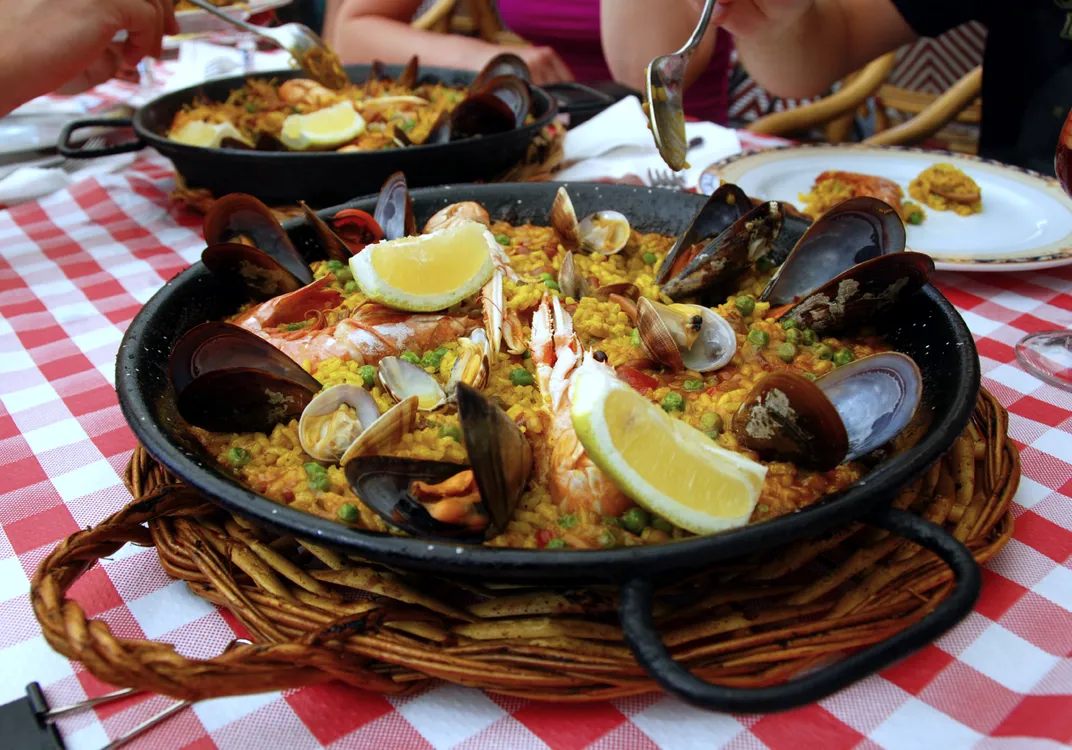
/https://tf-cmsv2-journeys-media.s3.amazonaws.com/filer/a4/dd/a4dd9ee6-3d9a-463c-8d6c-e76d75f5f43b/spa_tapas_dtl15985060.jpg)
Optional Extension
Post-Tour Ext.: Barcelona
Barcelona — 4 Days, 3 Nights
Continue your adventure in Spain by discovering another culturally rich city: the bustling seaport of Barcelona. During two full days to explore as you wish, delve into the medieval Gothic Quarter, stroll the popular Ramblas promenade, and encounter the famous works of Antoni Gaudí.
Day 1 — Madrid/Barcelona
Fly to Barcelona, where you’ll be met for the transfer to your centrally located hotel. After checking in, you are free to explore as you wish, at your own pace, for the remainder of your stay. (B)
Days 2-3 — Barcelona
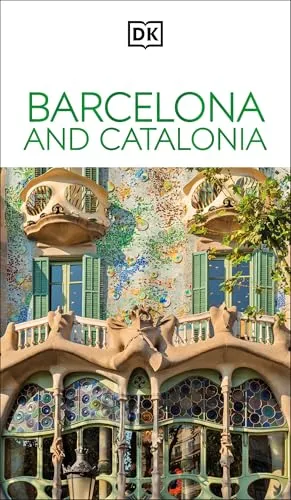
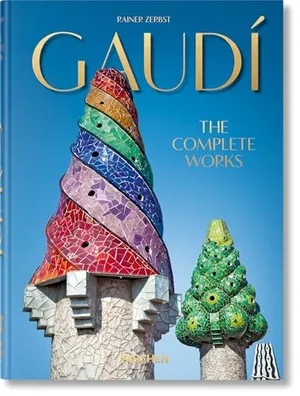
Enjoy two days experiencing the energy of this trendy, vibrant city on your own. Seemingly everywhere, you will find unusual buildings with the distinctive stamp of the architect Antoni Gaudí, Barcelona's favorite son. His life’s work was La Sagrada Familia, a church with awe-inspiring spires that was left unfinished when he died in 1926. Another Gaudí masterpiece is La Pedrera, whose stone façade seemingly ripples, wave-like, around a street corner.
The city’s focal point is Las Ramblas, a pedestrian boulevard packed with entertainers and merchants. Spend some time meandering there and through Bari Gòtic, the nucleus of old Barcelona. Within its cluster of Gothic buildings, mazelike streets, and public squares you will find the cathedral, one of Spain’s greatest Gothic buildings. You won’t want to miss the Museu Picasso, housed in three beautiful medieval mansions. If time remains, visit Montjuïc, overlooking Barcelona. Here you can visit the Palau Nacional, with the largest collection of Catalan art in the world, along with the Olympic site of 1992. (B)
Please note: If you plan to visit any of Antoni Gaudí’s sites while in Barcelona, we highly recommend reserving your tickets at least one month prior to your tour’s departure. Gaudí’s architectural works are some of Barcelona’s most popular tourist attractions, so it is often not possible to obtain tickets onsite. To reserve tickets to Sagrada Família or Casa Milà (two of Gaudí’s most famous works), visit the official Sagrada Família website and the Casa Milà website.
Day 4 — Return to the U.S.
Today, we depart Barcelona for our connecting flight to the United States. (B)
Your hotel:
Built in 1952, Hotel Avenida Palace stands in the heart of Barcelona and offers a good location from which to explore. The 151-room hotel is just minutes from La Ramblas, the Picasso Museum, and the museum housing the works of modern architect Antoni Gaudi. The hotel features a restaurant and bar and laundry and dry cleaning services. Air-conditioned guest rooms offer private bath with hair dryer, complimentary Wi-Fi Internet access, in-room safe, mini-bar, TV, and phone. A Note about Air Conditioning: Hotels in Spain generally adhere to guidelines issued by the government regarding the availability of air conditioning. Many lodgings provide air conditioning in guest rooms only from late April or May until late September/early October.
Your program includes:
- Air transportation Madrid/Barcelona inclusive of airline taxes and departure fees
- 3 nights accommodations at Hotel Avenida Palace (Superior First Class)
- 3 meals: 3 breakfasts
- Transfers to/from airport
Dates & Prices
Click on the departure date to see pricing. Click the for more information.
Dates
Availability
Price
Sep 28 - Oct 12, 2026
Available
from $7,674
Special Value
Airfare Included! This tour is specially designed for a small group of 16 to 24 Smithsonian travelers and offers outstanding travel value. Along with airfare, prices also include airline taxes and departure fees, as well as transportation, accommodations, daily activities and excursions, and most meals.
Tour cost including airfare: Boston, New York
| Occupancy | Double | Single |
|---|---|---|
| Price | $7,674 | $9,269 |
| Post Ext. | $1,095 | $1,520 |
Tour cost including airfare: Chicago, Washington DC
| Occupancy | Double | Single |
|---|---|---|
| Price | $7,974 | $9,569 |
| Post Ext. | $1,095 | $1,520 |
Tour cost including airfare: Atlanta, Baltimore, Charlotte, Cincinnati, Cleveland, Dallas, Denver, Detroit, Houston, Philadelphia
| Occupancy | Double | Single |
|---|---|---|
| Price | $8,074 | $9,669 |
| Post Ext. | $1,095 | $1,520 |
Tour cost including airfare: Los Angeles, Miami, Minneapolis, Orlando, Phoenix, Portland (OR), San Francisco, Seattle, Tampa
| Occupancy | Double | Single |
|---|---|---|
| Price | $8,174 | $9,769 |
| Post Ext. | $1,095 | $1,520 |
Land only (tour cost not including airfare)
| Occupancy | Double | Single |
|---|---|---|
| Price | $6,495 | $8,090 |
| Post Ext. | $1,095 | $1,520 |
Oct 12 - 26, 2026
Available
from $7,674
Special Value
Airfare Included! This tour is specially designed for a small group of 16 to 24 Smithsonian travelers and offers outstanding travel value. Along with airfare, prices also include airline taxes and departure fees, as well as transportation, accommodations, daily activities and excursions, and most meals.
Tour cost including airfare: Boston, New York
| Occupancy | Double | Single |
|---|---|---|
| Price | $7,674 | $9,269 |
| Post Ext. | $1,095 | $1,520 |
Tour cost including airfare: Chicago, Washington DC
| Occupancy | Double | Single |
|---|---|---|
| Price | $7,974 | $9,569 |
| Post Ext. | $1,095 | $1,520 |
Tour cost including airfare: Atlanta, Baltimore, Charlotte, Cincinnati, Cleveland, Dallas, Denver, Detroit, Houston, Philadelphia
| Occupancy | Double | Single |
|---|---|---|
| Price | $8,074 | $9,669 |
| Post Ext. | $1,095 | $1,520 |
Tour cost including airfare: Los Angeles, Miami, Minneapolis, Orlando, Phoenix, Portland (OR), San Francisco, Seattle, Tampa
| Occupancy | Double | Single |
|---|---|---|
| Price | $8,174 | $9,769 |
| Post Ext. | $1,095 | $1,520 |
Land only (tour cost not including airfare)
| Occupancy | Double | Single |
|---|---|---|
| Price | $6,495 | $8,090 |
| Post Ext. | $1,095 | $1,520 |
Please call if your city is not listed in the price chart above or if you wish to customize your arrival and departure dates. Air-inclusive prices include airline taxes, fuel surcharges, and departure fees of $879 (2026) or $679 (2027), which are subject to change until final payment is made. Business class upgrade on round-trip transatlantic flight: $5,995 (2026) or $5,495 (2027) per person (subject to change). Premium Economy on round-trip transatlantic flight: $2,495 (2026) or $2,195 (2027) per person (subject to change). Prices are per person based on double occupancy and all upgrades are subject to availability. Limited to 24 Smithsonian Journeys guests.
Prices are based on rates of exchange, airfare & fuel (where applicable), tariffs, taxes, and other costs as of the tour publication date. We reserve the right to correct errors and to increase program prices to cover increased costs, tariffs, and taxes received after prices are published and to reflect currency fluctuations.
/https://tf-cmsv2-journeys-media.s3.amazonaws.com/filer/08/af/08afde6e-fb7a-488b-86f7-1df2768f6c48/spa_granada_alhambra_generalife_dt_m_160548296.jpg)
Experts
/https://tf-cmsv2-journeys-media.s3.amazonaws.com/journeys/expert/Lokos_Ellen.jpeg)
Ellen Lokos
Literary Scholar
Ellen Lokos is a university professor, actor, director, and speaker. As Associate Professor of Spanish and Latin American Literature at Harvard, she taught a wide …
Ellen Lokos is a university professor, actor, director, and speaker. As Associate Professor of Spanish and Latin American Literature at Harvard, she taught a wide range of topics including the literature of the Early Modern period, contemporary women’s fiction, and the post-war novel in Spain. While at Harvard, she published a groundbreaking book, The Solitary Journey: Cervantes’s Voyage to Parnassus; was a frequent speaker at international conferences; and received numerous teaching awards from the Derek Bok Center for Teaching and Learning. Ellen has also taught at Bentley University, Boston University, Clark University, and, most recently, at the College of the Holy Cross in Worcester, MA. In addition to her teaching duties, she co-directed a bilingual theater troupe that produced original plays. Ellen created an innovative, month-long college course based in Madrid, leading students on trips throughout Spain as they studied Spanish culture and identity in depth.
In the early years of her career, Ellen resided in Madrid and worked on a television news-magazine show. Her responsibilities included translation and interpretation while conducting live, on-camera interviews of politicians, celebrities, and newsmakers. Ellen is a seasoned global traveler and is passionate about sharing her enthusiasm for cultural exploration with others.
+ Show more
/https://tf-cmsv2-journeys-media.s3.amazonaws.com/journeys/expert/Afzali_Ana_2024.jpg)
Ana Afzali
Medievalist
Ana Afzali is a Spanish-born medievalist and a scholar of the Iberian Renaissance who specializes in the history and literature of Spain and Portugal. Currently …
Ana Afzali is a Spanish-born medievalist and a scholar of the Iberian Renaissance who specializes in the history and literature of Spain and Portugal. Currently a tenured professor at Citrus College in southern California, Ana received a Distinguished Faculty award in 2019 and has also taught Spanish culture, literature, and language at the University of California-Los Angeles.
She has published extensively on the political and cultural history and literature of Spain and Portugal in the Middle Ages, and authored the book Modern Spain (2009) as well as a book about the Spanish Civil War (2022) that is awaiting translation into English.
A native of Madrid with family roots in Galicia, Ana has traveled and lectured extensively through Spain and Portugal, including with numerous Smithsonian Journeys tours since 2008. She is well-versed in the history and culture of the Camino de Santiago, having hiked the pilgrimage trail several times.
+ Show more
:focal(311x478:312x479)/https://tf-cmsv2-journeys-media.s3.amazonaws.com/filer_public/ac/92/ac92f18f-8031-4526-8e5c-e46b40b22905/e6ba91f7-b9cb-4aa6-aad5-4de346fb0448.jpg)
Janet Duncan Jones
Archaeologist
Janet Duncan Jones, Professor Emerita of Classics and Ancient Mediterranean Studies at Bucknell University, is an archaeologist with over 40 years‘ experience in the field. …
Janet Duncan Jones, Professor Emerita of Classics and Ancient Mediterranean Studies at Bucknell University, is an archaeologist with over 40 years‘ experience in the field. She has participated in excavation projects in Turkey, Greece, Tunisia, and Jordan. Her experience as a glassblower out of college ignited a career long research interest in preindustrial technologies and the lives of early craft workers. While living in villages in the Middle East she became interested in the impacts of preindustrial technologies on the ancient environment and the evolution of cultural landscapes. Her publications include studies of the ancient glass from sites in Turkey and Jordan, and synthetic considerations of the landscape of ancient ruins and of the messages and impacts of ancient mega-engineering projects. Recently she has focused her work on the impact of the Moors in southern Spain on urbanism, architecture, technology, and intellectual history.
Janet has lived in Turkey and Greece, and has traveled widely with an eye toward the messages that landscapes send us about the values and concerns of past peoples. She holds degrees from the College of William and Mary and from the University of North Carolina at Chapel Hill where she also acquired a devotion to ACC basketball. She lives in the mountains of central Pennsylvania with her geographer husband and hounds descended from those she originally imported from the Euphrates Valley in southeastern Turkey.
+ Show more
/https://tf-cmsv2-journeys-media.s3.amazonaws.com/journeys/expert/Gustafson_Eric_2024.png)
Erik Gustafson
Architectural Historian
Erik Gustafson is an architectural historian of Europe, the Mediterranean, and the Islamic world, whose interests span from the ancient world into the early modern …
Erik Gustafson is an architectural historian of Europe, the Mediterranean, and the Islamic world, whose interests span from the ancient world into the early modern period. He has lived in Italy, France, and Egypt, and has traveled extensively in northern Europe, Iberia, and the eastern Mediterranean. Erik’s academic work addresses how specific sites were historically understood in light of broad intellectual and visual traditions. His current book project, Building Saint Francis, considers how the Franciscan order used architecture to shape and channel the legacy of their founder in the centuries after his death. While completing his PhD on the Franciscan architecture of Tuscany at New York University, he spent several years living in Florence and Rome. Erik has taught a variety of courses on art and architecture at the University of California, Berkeley, Fordham University, Washington & Lee University, and George Mason University. He has published on Italian, Spanish, and French medieval architecture as well as Mamluk architecture in Cairo, and is a fellow of the American Academy in Rome.
+ Show more
/https://tf-cmsv2-journeys-media.s3.amazonaws.com/journeys/expert/Konz-Dianne.jpg)
Dianne Konz
Cultural Historian
Dianne Konz is a scholar who specializes in Spain, Portugal, and the western Mediterranean, and has taught Spanish history and civilization at the University of …
Dianne Konz is a scholar who specializes in Spain, Portugal, and the western Mediterranean, and has taught Spanish history and civilization at the University of Texas at Austin and at The George Washington University. She has lectured and published studies on Spanish culture and Spanish and Latin American literature, and has a particular passion for the integration of the cultural arts in the context of their time. She approaches art and architecture, literature, music, and gastronomy as a reflection of a country's history, politics, and geography.
Dianne's enthusiasm for Iberia grew from her experiences living and studying in Madrid. Her teachings include the Moorish and Islamic conquest and occupation of Iberia, and the rich cultural heritage of the Islamic presence in Iberia. Since 1992, Dianne has led numerous Smithsonian Journeys groups to Spain and Portugal.
+ Show more
/https://tf-cmsv2-journeys-media.s3.amazonaws.com/journeys/expert/Fromherz_AllenJames_2022_Cropped.png)
Allen James Fromherz
Historian
Dr. Allen Fromherz is a professor of Mediterranean and Middle Eastern history at Georgia State University in Atlanta. He graduated summa cum laude from Dartmouth …
Dr. Allen Fromherz is a professor of Mediterranean and Middle Eastern history at Georgia State University in Atlanta. He graduated summa cum laude from Dartmouth College in 2002 and received his PhD in Medieval Islamic History from St. Andrews University in Scotland in 2006. Allen’s first two books, The Almohads: the Rise of an Islamic Empire and Ibn Khaldun, Life and Times examine the rise of empire in medieval North Africa and Iberia. His book The Near West: North Africa and Europe traces the history of Muslim, Christian, and Jewish interactions across the Western Mediterranean, especially in Iberia, Morocco, Tunisia, and Italy. He has been a senior Fulbright grantee to Spain and is completing a book on the life and times of Ibn al-Khatib, a 14th-century polymath and minister who wrote poetry for the Alhambra in Granada.
Allen previously held international fellowships from the Gerda Henkel Foundation, the Sultan Qaboos Cultural Center, and a senior humanities grant from NYU Abu Dhabi. He is the co-founder and co-editor of the Edinburgh Book Series on the Maghreb (North Africa). He currently leads studies abroad for his students at Georgia State, including the popular Marvels of Medieval Spain: the Culture and History of Muslims, Jews, and Christians and a study abroad to Italy. His regular classes on the Middle East, North Africa, medieval Italy and Spain, and the Mediterranean focus on encounters between Muslims, Jews, and Christians.
+ Show more
/https://tf-cmsv2-journeys-media.s3.amazonaws.com/journeys/expert/Davila-Martinez_Roger.png)
Roger Martínez-Dávila
Cultural Historian
Dr. Roger Martínez-Dávila is a specialist in medieval and Renaissance Europe who has dedicated his life to better understanding intercultural and interreligious relations. In particular, …
Dr. Roger Martínez-Dávila is a specialist in medieval and Renaissance Europe who has dedicated his life to better understanding intercultural and interreligious relations. In particular, he tracks the lives of religious and cultural minorities in Iberia – such as Sephardic Jews and Muslims or resilient communities like the Basque.
Roger has visited every province of Spain over his 20-year career, and his travel and life abroad reflect his global perspective of the Middle Ages, drawing together the mixed Mediterranean and Gothic cultures of Spain, Portugal, Italy, and North Africa, as well as the Frankish and Germanic peoples of France and the Low Countries. He is also researching how Scandinavia, the Islamic Levant, and Arabia contributed to Europe’s medieval civilization.
Presently a professor of history at the University of Colorado and previously a Marie Curie Fellow at the Universidad de Carlos III de Madrid, Roger is an authority on medieval manuscripts and material culture. He relishes the opportunity to share his stories of investigating special Papal collections at the Vatican’s Secret Archive and Inquisition cases in the archives of Madrid and Lisbon.
Roger holds a doctorate in history from the University of Texas at Austin and a master’s in public policy from the University of California - Berkeley. He is the author of Creating Conversos: The Carvajal-Santa María Family in Early Modern Spain as well as Fractured Faiths: Spanish Judaism, The Inquisition, and New World Identities, based on an exhibition he helped curate for the New Mexico History Museum in Santa Fe.
+ Show more
/https://tf-cmsv2-journeys-media.s3.amazonaws.com/journeys/expert/Amador_Fabio_Esteban.jpg)
Fabio Esteban Amador
Archaeologist & Anthropologist
Dr. Fabio Esteban Amador is a multifaceted expert: an archaeologist, visual artist, explorer, and anthropology professor at New Jersey City University. His journey began in …
Dr. Fabio Esteban Amador is a multifaceted expert: an archaeologist, visual artist, explorer, and anthropology professor at New Jersey City University. His journey began in fine arts, where he discovered how early explorers used art and technology to document ancient cultures. This sparked a shift in focus towards archaeology, leading him to earn a master’s and Ph.D. from the State University of New York in Buffalo. As an explorer, Fabio pushes the boundaries of knowledge on cultural complexity, art, and mythology in the Americas, the Caribbean, the Iberian peninsula, and Southeast Asia. He leverages photography and creative imaging technologies to assess archaeological site conditions and craft visual narratives, merging art and science. Through his work, Fabio provides new insights into the emergence of cultural complexity and the role of art in shaping origin stories and mythology.
+ Show more
/https://tf-cmsv2-journeys-media.s3.amazonaws.com/filer/e7/25/e7252838-1657-4b65-8820-f80e9eb40fde/prt_lisbon_monumentdiscoveries_ist_616114994.jpg)
Tour Details
Accommodations
Corinthia Lisbon
Lisbon, Portugal
Situated a short distance from the historic city center, the Corinthia Lisbon overlooks Monsanto National Park. The 518-room hotel features two restaurants and an indoor/outdoor lounge, indoor swimming pool, gym, spa with massage treatments, complimentary Wi-Fi Internet access, solarium, jewelry shop, and laundry and dry cleaning services. Air-conditioned guest rooms have private bath with hair dryer, mini-bar, tea- and coffee-making facilities, in-room safe, TV, and phone.
Pousada Castelo Estremoz (May 11 and Oct. 12, 2026 departures)
Estremoz, Portugal
Once a magnificent 13th-century palace that King Dom Diniz built for his wife, Queen Santa Isabel, the Pousada Castelo Estremoz was restored and converted into a hotel in the 1960s with much of its 17th- and 18th-century artwork and furnishings preserved. Guests can enjoy sweeping views of Estremoz and the Alentejana lowlands from the gardens and outdoor swimming pool; other amenities include a restaurant, bar, game room with a pool table, laundry service (for a fee), and complimentary Wi-Fi internet access. Air-conditioned guest rooms have private bath with hair dryer, minibar, in-room safe, TV, and phone.
Pousada Convento Évora (Pousada dos Loios)
Evora, Portugal
A former 15th-century convent lovingly converted into a hotel, this building features fine architectural details including decorative arches, a marble staircase, a cloistered garden, and frescoed walls and ceilings. Small but comfortable guest rooms have been converted from a monastic cell, but you won't need to sacrifice your comfort to enjoy it, because your room is fully equipped with modern amenities, including air conditioning and private bath with hair dryer. The pousada has no elevators.
Parador de Carmona
Carmona, Spain
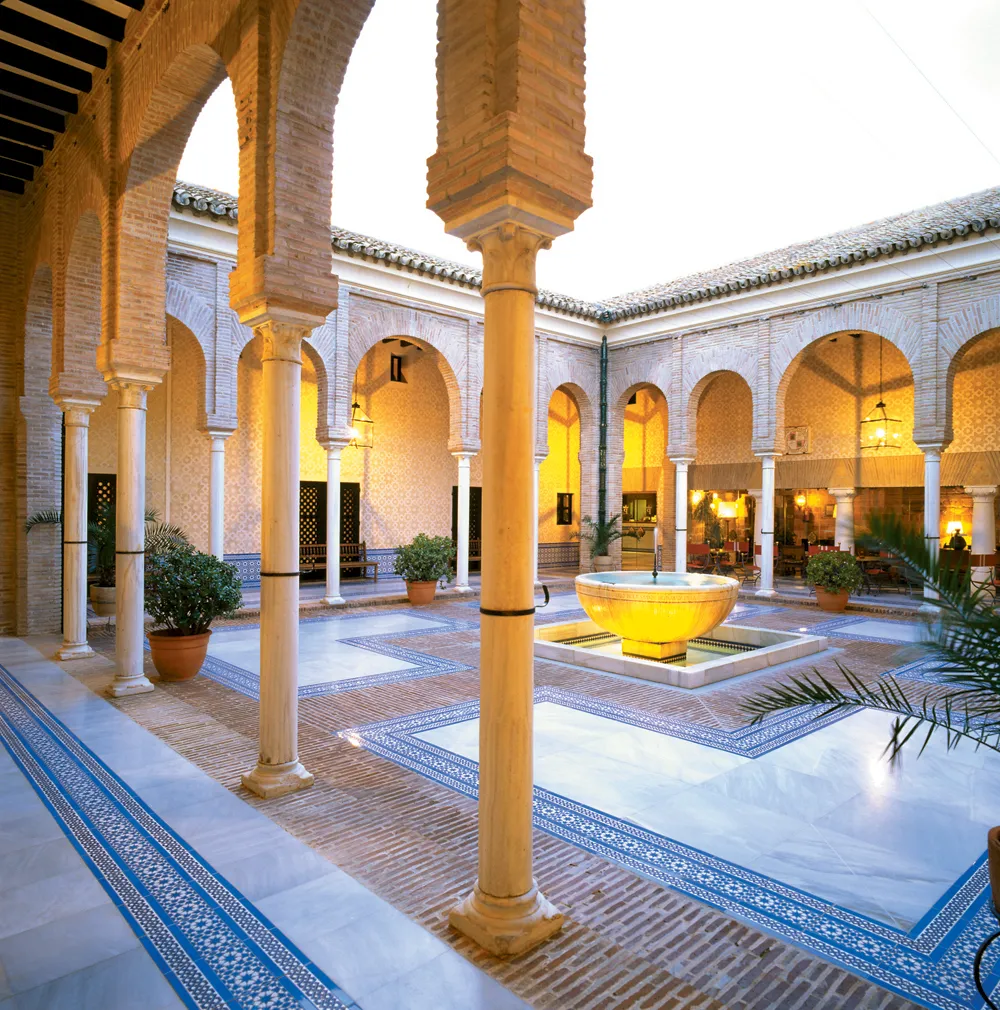
Converted from a 14th-century Moorish castle and overlooking the scenic plains of Carmona, this hotel features an Andalusian Courtyard with Moorish columns and a fountain, a stone vaulted restaurant, swimming pool, and garden. Your room is equipped with a private bath with hair dryer, air conditioning, mini-bar, TV, and phone.
Parador de Ronda
Ronda, Spain
Originally a medieval town hall, this parador boasts a stunning location on a cliff overlooking a dramatic gorge. It features gardens with footpaths and sweeping vistas of the gorge and surrounding mountains. Your room is equipped with air conditioning, private bath with hair dryer, in-room safe, mini-bar, TV, and phone.
Parador de Ubeda
Ubeda, Spain
Located in the main square in historic Úbeda, this parador is a former 16th-century Renaissance palace that has been converted to an intimate and lovely lodging. A beautiful inner courtyard highlights the parador's public rooms; other amenities include a restaurant featuring Andalusian specialties and a bar. High-ceilinged guestrooms have air conditioning, private bath with hair dryer, mini-bar, TV, and phone.
Wellington Hotel & Spa
Madrid, Spain
This old-world European-style hotel is located in the prestigious Salamanca neighborhood, near several of Madrid’s most prestigious boutiques and cafés. The hotel features a swimming pool with terrace; Internet access; laundry and dry-cleaning services; wellness center with sauna and massage; hair salon; snack bar; and two restaurants, including a Michelin-rated Japanese restaurant and an elegant Grille Room. Fully air-conditioned guest rooms feature private bath with hair dryer, safe, mini-bar, TV, and phone.
Activity Description
Expectations: One of our Classic Land Journeys, this is a comprehensive tour that is well paced and finely tuned. Expectations include longer touring days with many full-day motor coach excursions and stays in seven different hotels. Many hotels are historic buildings that have been restored or renovated as hotels; although modern in most amenities, they can sometimes require additional walking to get to guest rooms (and several do not have an elevator).
Expect many full-day excursions lasting from four to six hours, with seven afternoons at leisure; standing and walking for long periods of time during city tours, museum visits, and outdoor activities; daily walks of up to four miles over sometimes difficult terrain that includes cobblestones and city hills, uneven pavement (especially archaeological sites), stairs without handrails, and no elevators; longer walks to get to city centers where coaches are prohibited. There are three longer coach rides of approximately four hours duration.
Please note that dinners are typically served later in the evening in Spain. The majority of the dinners on this tour will take place at approximately 8:30 pm.
Appropriate for: Travelers who are physically fit and comfortable with longer days of touring (both walking tours and coach time).
Reading List
*As an Amazon Associate, Smithsonian Journeys earns from qualifying purchases.
Highly Recommended



Also Recommended
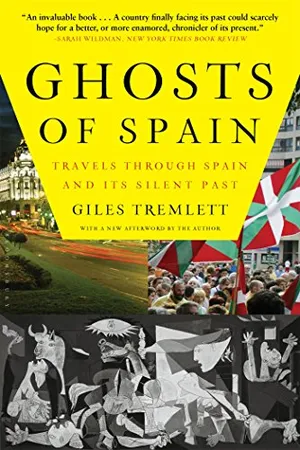
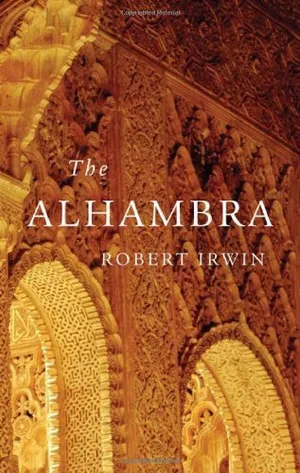





Additional Recommended Reading for Barcelona Extension


Special Air Rates/Services
The Flexible Travel Option program allows air-inclusive guests to customize their travel experience in several ways.
Please contact us if you want to customize your arrival and departure dates.
Air-inclusive guests are free to take advantage of any or all these benefits:
- Arrive at your destination up to three days before the tour’s scheduled start date
- Extend your travel beyond the tour’s end date
- Reserve transfers from the arrival airport to the tour’s first hotel, or from the tour’s final hotel to the departure airport, to coincide with your alternate travel dates
- Reserve extra nights at the first and/or final hotel on your tour to coincide with your alternate travel dates
Testimonials
What our travelers are saying...
— Joyce M.Portugal and southern Spain are not to be missed by Smithsonian Journey's travelers. This is a bucket list trip that will encourage you to visit these lovely countries. The tour director is fabulous and goes above and beyond to make the trip so special.
Travel Insurance
For the convenience of our travelers, Smithsonian Journeys includes a basic medical expense and evacuation plan through Trip Mate, a Generali Global Assistance & Insurance Services brand, at no additional charge. This plan provides post-departure Medical and Dental coverage of $250,000 per person and Emergency Assistance and Transportation coverage of $1,000,000 per person (U.S. Residents Only). Note: For full details regarding these coverages please review the following Plan Documents here.
In addition, we recommend that travelers purchase a travel protection plan to help protect their travel investment from unforeseen events such as cancellation due to illness, flight delays due to adverse weather, baggage loss, and more. For your convenience, Smithsonian Journeys offers an optional Travel Protection Plan administered by Trip Mate, a Generali Global Assistance & Insurance Services brand. For those interested, optional "Cancel for Any Reason" coverage is available for an additional charge. Note: Certain eligibility requirements apply and Cancel for Any Reason coverage is not available to New York residents. For full details regarding this coverage please review the following Plan Documents here.
To learn more about the Travel Protection Plan, you may visit https://www.generalipartner.com/smithsonianjourneys or call the administrator, Trip Mate, a Generali Global Assistance & Insurance Services brand at (866) 501-3252.
Related Tours
/https://tf-cmsv2-journeys-media.s3.amazonaws.com/filer/1d/1c/1d1ceba8-b598-4a12-976b-b599ababa18f/prt_porto_riverboats_dt_xl_34217183.jpg)
Portugal's Historic Cities: A Tailor-Made Journey to Lisbon and Porto
7 days
|
from:
$5,950
Suggested Itinerary
/https://tf-cmsv2-journeys-media.s3.amazonaws.com/filer/27/6c/276cf53e-8d69-4dd0-9f0e-6475a158351e/spa_barcelona_casabattlo_dt_xl_22709136.jpg)
Spain: A Tailor-Made Journey to Madrid, Valencia, & Barcelona
10 days
|
from:
$7,440
Suggested Itinerary
/https://tf-cmsv2-journeys-media.s3.amazonaws.com/filer_public/14/e0/14e01cb6-c549-4c63-bea1-7fb744fa7f39/ama_ship_amavida_porto_aerial.jpg)
Cruising Portugal’s Enticing Douro River Valley
8 days
|
from:
$5,349
Multiple departures between 2026 & 2027
/https://tf-cmsv2-journeys-media.s3.amazonaws.com/filer_public/8d/b2/8db2b1b8-07bf-476e-941c-923774afcbf6/spa_valencia_ist_1599023049.jpg)
/https://tf-cmsv2-journeys-media.s3.amazonaws.com/filer_public/7e/01/7e01c3fd-c97d-4502-b6e8-f7117dd2a5a3/prt_active_azores_man_hiking_sao_miguel_island_ss_2247556651.jpg)
/https://tf-cmsv2-journeys-media.s3.amazonaws.com/filer_public/05/32/0532ed7f-3365-4124-a8fc-8647f406cc4d/fra_perigordvalley_cave_ist_383113685.jpg)
Prehistoric Caves of France and Spain
10 days
|
from:
$7,995
Multiple departures between 2026 & 2027